
Finding a Voice Across Languages: Cody Woelders and the Power of Multilingual Connection

Finding a Voice Across Languages: Cody Woelders and the Power of Multilingual Connection
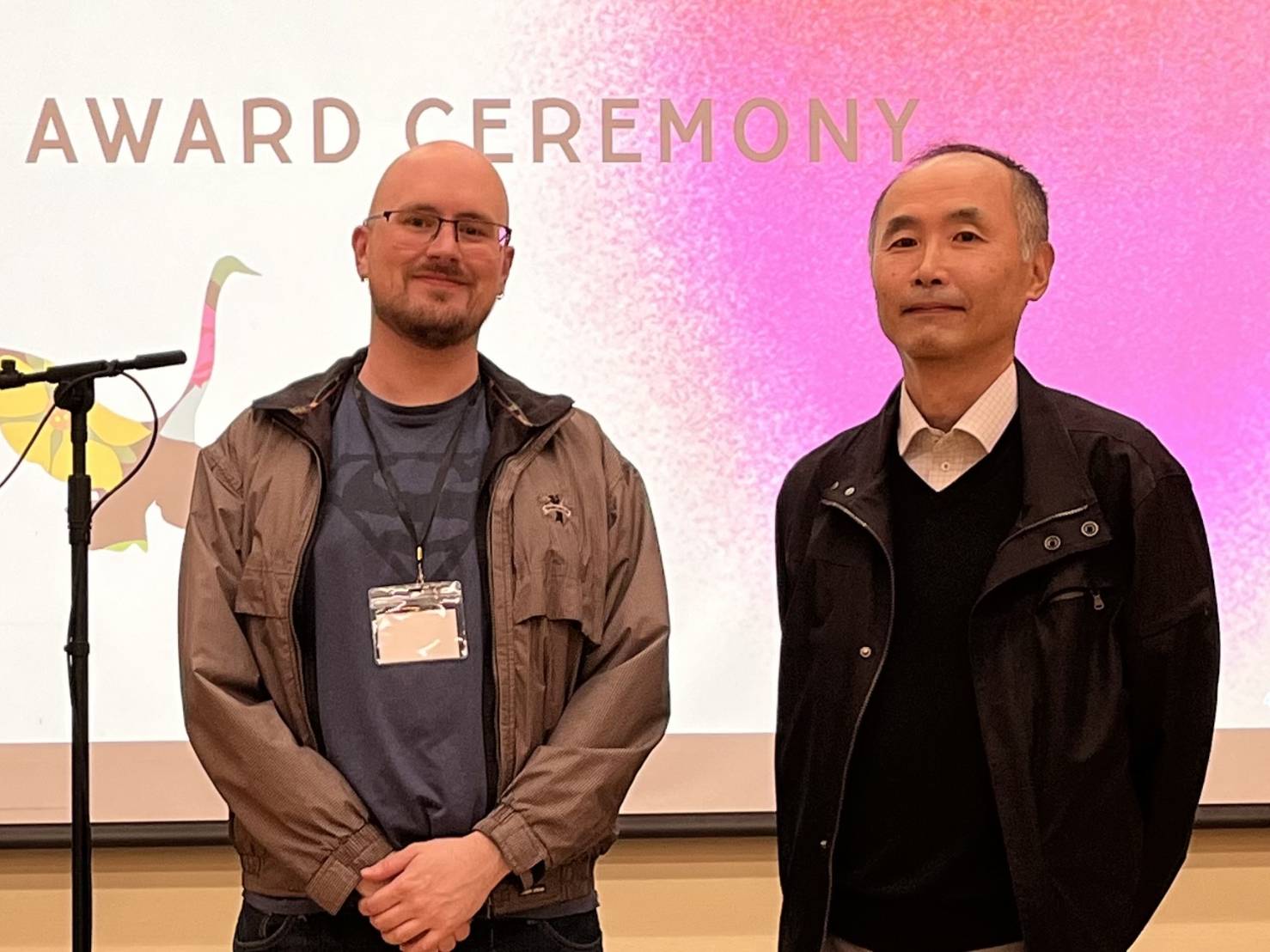
On March 7th, 2026, at the Asian Centre at UBC, a room filled with language learners, judges, and quiet anticipation. Among the tension, Cody Woelders, a French major student at UFV, stepped onto the stage to deliver a speech in Japanese — entirely from memory. Moments later, he walked away with second place in the University–Intermediate category at the 38th BC Japanese Speech Contest.

But for Cody, the achievement wasn’t just about a ranking or a trophy. It was about something much deeper: language, identity, and what it truly means to belong in Canada.

A Return to Education with Purpose

As a returning adult learner at UFV, he is pursuing a French major alongside a TESL (Teaching English as a Second Language) proficiency certificate—and he is aiming for a Japanese language certificate as well. Outside of his coursework, he actively tutors students and has gained hands-on experience helping newly arrived Canadians learn English.

His path into linguistics is a bit unconventional. While he is now fully immersed in the world of languages, it wasn’t French that started it all. It was actually Japanese, first encountered in high school, that sparked his lifelong curiosity about how language shapes the way we think and understand the world.


Building a Message

Cody didn’t originally set out to compete in the BC Japanese Speech Contest; he only applied because his instructor suggested it as a way to earn some extra credit. When he found out he had been selected, the experience shifted from a small academic opportunity into a true personal challenge.

His speech, “The Heartfelt Welcome of Canadians” (カナダ人の心からの歓迎), was actually inspired by an unexpected source: a French class on colonial history. After studying the Négritude movement and thinkers like Aimé Césaire, Cody began connecting those concepts of identity to Canada’s multicultural reality. His TESL practicum, where he worked closely with newcomers, solidified this perspective. “All of it made me realize Canada is truly the one country where you are welcomed to bring your old culture with you,” Cody says.


Nerves, Resilience, and a Little Humor

Preparing for the competition was intense. Cody spent a month writing, and then weeks practicing — reciting lines while driving or doing chores until the entire speech was committed to memory.

The hardest part, however, wasn’t the grammar or vocabulary — it was the nerves. “The panic leading up to the presentation? That requires self-management skills, and those are complicated.” In fact, the stress caught up to him in a hilariously unexpected way: while rehearsing at a barber shop the day before the competition, he briefly passed out. “Apologies to that barber. It all worked out,” he adds with a laugh.

Once he finally stepped onto the stage, the practice kicked in and the performance felt natural. When he was announced as the second-place winner, his first reaction was immediate relief. He jokes that while he would have gone to the national competition if he had won first place, he is “secretly relieved, lol” not to have to go through the pressure again.


A Lens into Human Cognition

For Cody, studying at UFV is about more than just checking off academic boxes; it is about “cross-linguistic synthesis”—exploring how different languages encode meaning and what they reveal about human cognition.

Even in an age of AI and instant translation, Cody is passionate about the necessity of language programs. He argues that understanding how language works — and the nuance that comes with it — is becoming more important than ever in our globally connected world.

Ultimately, Cody’s journey is a story of growth. It’s about returning to education with purpose and discovering that when you learn a language, you aren’t just memorizing words — you are connecting people. It becomes personal.
From an English Major to a Curatorial Practicum: Kellyn Leclerc’s launch into uncharted territory

Kellyn picture -credits for Skylar Janzen

From an English Major to a Curatorial Practicum: Kellyn Leclerc’s launch into uncharted territory

Kellyn picture -credits for Skylar Janzen
credits: Skylar Janzen

When we think of curators, we often imagine individuals with backgrounds in Visual Arts or Art History, meticulously assembling exhibitions with years of specialized training. But what happens when a storyteller, a writer with a passion for community engagement, steps into the role?

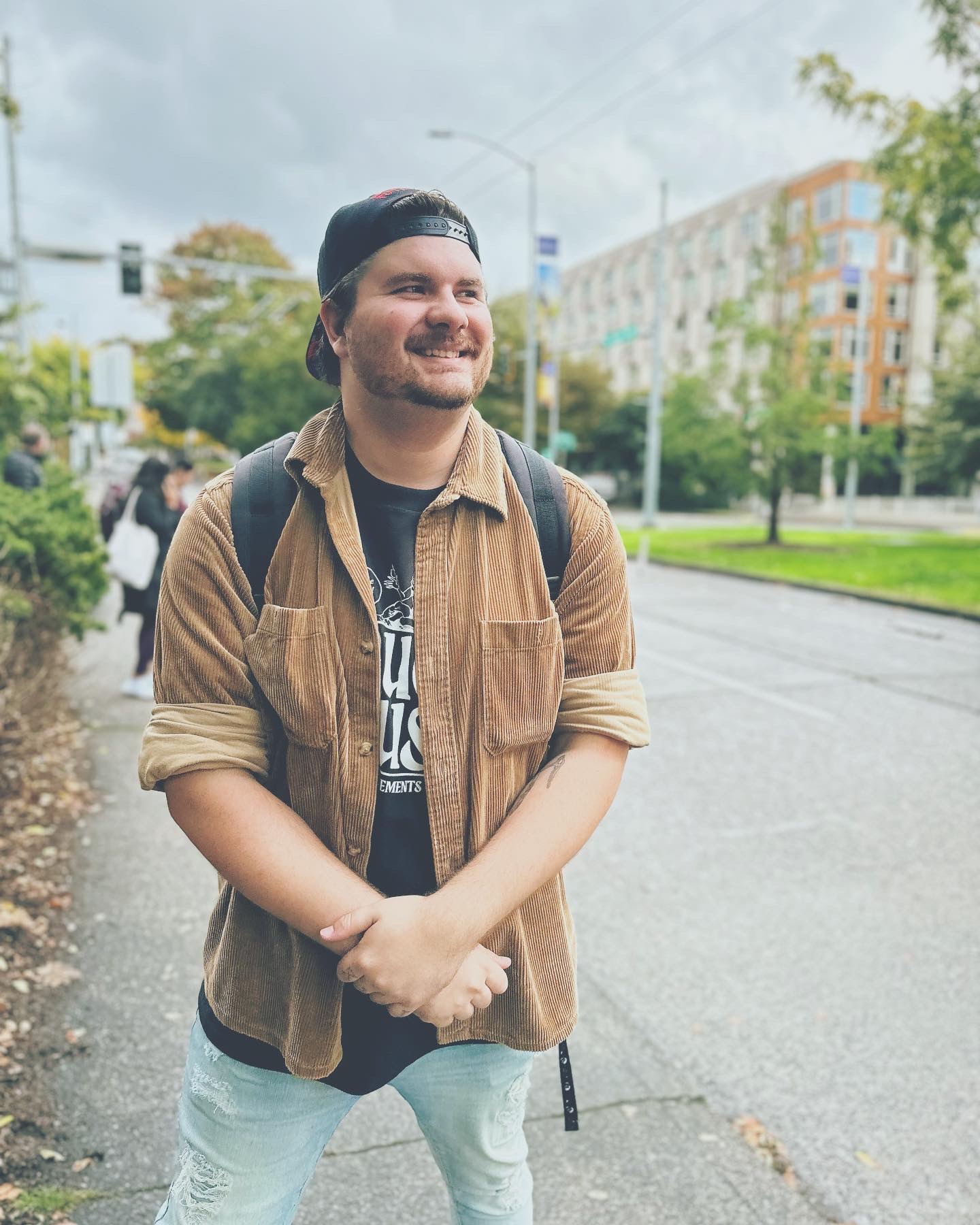
Meet Kellyn Leclerc, a Bachelor of Arts student whose love for storytelling carved an unexpected path into curation. Kellyn’s journey twisted with the unpredictability of a well-spun tale, leading him to The Reach Gallery, where he transformed words into visual narratives and sparked conversations through art.

From a young age, Kellyn was drawn to the art of storytelling. While initially planning to pursue Social Work, he found himself captivated by the world of literature, eventually transitioning into full-time English studies.

Taking a leap into the unknown

Despite not having a background in Visual Arts, Kellyn saw an open position for UFV’s student curatorial role at The Reach Gallery. This is a competitive eight-month internship that is typically offered to UFV’s BFA and VA students.  Instead of doubting his qualifications, he took a leap of faith:

“When I first got the email invitation to apply for the position, it was one of those moments in my life where I figured, why not? I don’t have a background in Visual Art or Art History, but I do have a passion for community engagement and discussion.”

What Kellyn discovered was that curation wasn’t just about art—it was about storytelling. His experiences in Social Work courses and his time as a concert promoter in the local punk music scene helped shape his ability to organize events with a strong thematic narrative.

“As a curator, it’s critically important to have a nuanced understanding of the type of community you’re working in, and how the works you select for presentation might connect to said environment. Years ago, when I organized all-ages punk shows, I thought not just about the bands, but about how their identities created a larger story through the night. That same mindset helped me as a curator, crafting a visual art experience that could inspire meaningful, reflective discussion.”

After months of preparation, Kellyn’s curated exhibition debuted at The Reach Gallery. It was a night to remember for the audience and for all those who had taken a chance on him.

“What I witnessed during the intro to the exhibit you curated at The Reach was nothing short of magical. You were so in tune with the artist’s work and intentions. It has been a pleasure to watch you tap into your creative passions and talents over the past year. Despite any personal obstacles, you have only demonstrated resilience and professionalism—without compromising who you are.” – Tamara Courage, Arts External Liaison Coordinator at UFV – College of Arts.

“When I was a child, my family was told I might not graduate high school due to my diagnosed learning disability. So, now it feels incredibly surreal to be this far into my degree.”

Looking to the future

So, what’s next for Kellyn?

He is currently weaving his first horror novel into existence: a Lynchian-inspired ghost story set at an evangelical Christian summer camp. Writing remains his deepest passion, but his love for community arts continues to grow, shaping a future where storytelling extends beyond the page and into the heart of the world around him.

When asked what advice he would give to students considering a practicum, Kellyn doesn’t hold back:

“How do you expect to find a job post-graduation if you haven’t built a network of contacts or a portfolio of real-world experience? Do you think you’ll just be handed a degree and land a job instantly? Practicums are the key to unlocking doors—they let you prove your skills to the very people who can shape your future.”

For those considering English as a major, Kellyn’s advice is just as bold:

“Keep an open mind. Say yes to opportunities—even when they seem outside your comfort zone. An English degree isn’t a limitation; it’s a launching pad. Whether you go into journalism, publishing, editing, community programming, or teaching, the only limit is how wide you’re willing to open the door.”

Kellyn’s journey—from horror writer to gallery curator—proves that storytelling isn’t confined to books. It lives in art, music, conversation, and the spaces between words, shaping the world in ways we least expect. Whether through literature or curating, his ability to craft meaningful narratives has opened doors that once seemed out of reach.

And sometimes, the biggest opportunities come from simply asking yourself: ‘Why not?’

Roots of Knowledge: Stories That Shape Our Learning

Roots of Knowledge: Stories That Shape Our Learning

In the heart of our university, where stories of heritage and identity intertwine, a program stands out for its deep impact on students and the broader community. The Power and Place program is more than an academic pursuit—it’s a journey of discovery and reconciliation. Today, we spotlight Meghan Hilton, one of our remarkable students whose experience in this program has been nothing short of transformative.

“I was motivated to enrol in the Power and Place program as I am a Metis student studying Indigenous Studies,” shares Meghan, currently in her final year pursuing a Bachelor of Arts degree at UFV. The decision to join the program stemmed from a desire for an immersive, hands-on learning experience that would deepen her understanding of Indigenous studies.

As she recounts her journey, the passion and dedication to her studies are evident. When asked about a specific moment or lesson that deeply resonated with her, Meghan finds it challenging to pinpoint just one.

“It is challenging to pinpoint a single moment or lesson from the Power and Place program that resonated with me the most, as each class and lesson contributed uniquely and significantly to my understanding of Indigenous studies and Stó:lō history. Each lesson resonates differently with everyone, while providing support and guidance on how to apply this knowledge in meaningful ways in the world around us.”

When asked about the impacts of the Power and Place program and how she felt empowered to contribute to genuine reconciliation between Indigenous and settler communities, Meghan says:

“The Power and Place program has given me the tools I need to positively contribute to reconciliation efforts between Indigenous and settler communities. Through this program, I have gained a deep and complex understanding of Canadian Indigenous peoples’ history, cultures, and worldviews. Thanks to the intensive program structure I feel more prepared to advocate for Indigenous peoples’ rights and facilitate respectful conversations about these topics. Through engagement with real-world scenarios and case studies, we as students have gained a greater awareness of the structural challenges and injustices that many face. Additionally, community engagement and collaboration are prioritized in the program’s approach to complex problems. Respecting the knowledge and experiences of Indigenous peoples, you learn to collaborate in a way that prioritizes and encourages culturally appropriate efforts.”

For those considering enrolling in the Power and Place program, Meghan’s advice is both heartfelt and practical.


“I would advise students who are considering enrolling in the Power and Place program to make the commitment. I advise approaching every lesson and class discussion with an open mind and an intent to participate wholeheartedly. The Power and Place program is a life-changing opportunity that engages students in an immersive learning environment and teaches many skills necessary to support efforts towards truth and reconciliation in a good way.”

As we celebrate the stories of students like Meghan, we are reminded of the power of education to transform lives and bridge communities. The Power and Place program continues to be a beacon of hope and understanding, shaping the next generation of advocates for truth and reconciliation.