
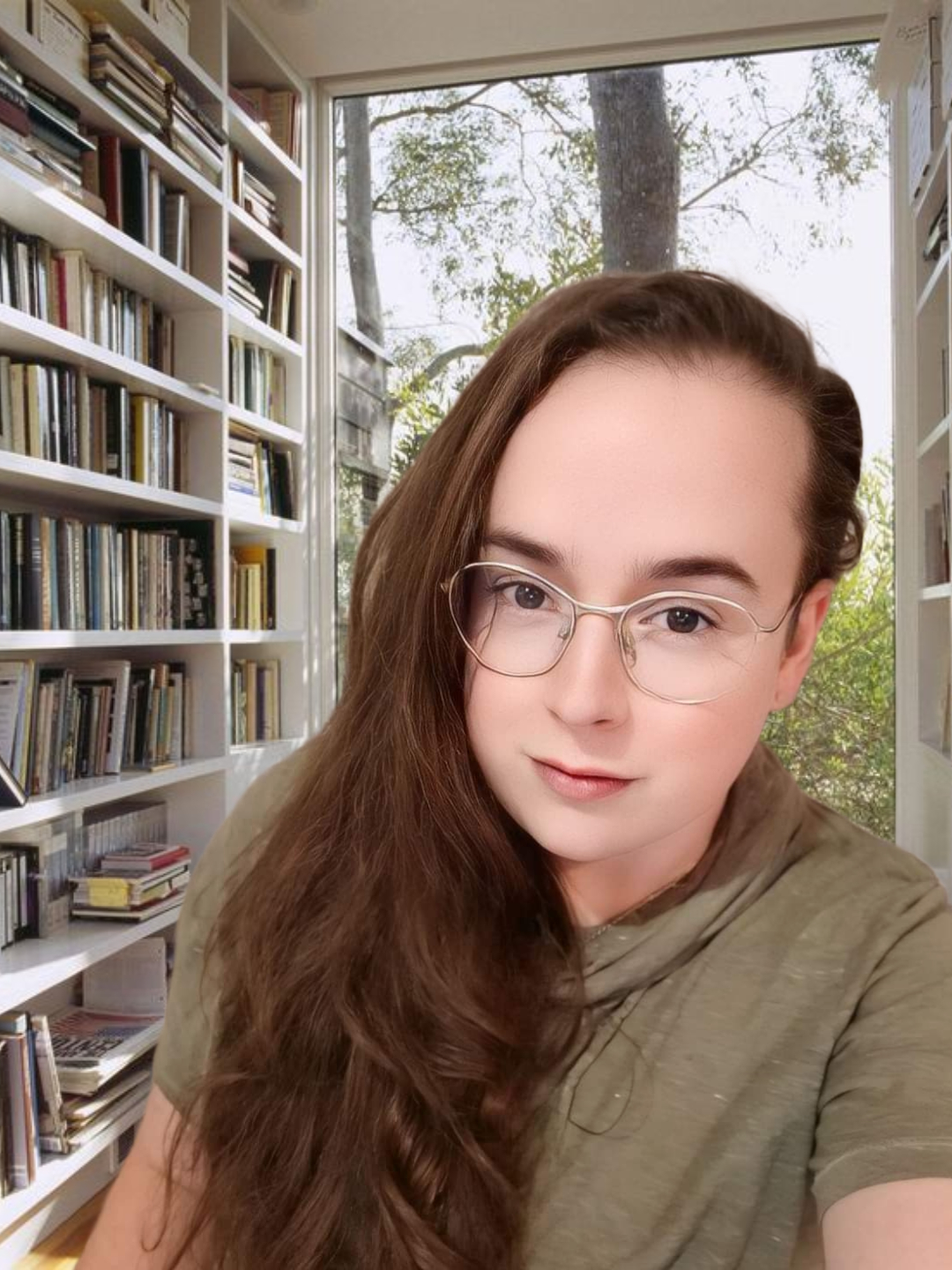
Sociology With Heart: Spotlight on Dr. Sol Underwood
 For Dr. Sol Underwood, sociology isn’t just an academic discipline. It’s a way of seeing the world that illuminates everyday experiences, reveals hidden structures, and helps people understand why life feels the way it does. Sol’s teaching style is rooted in empathy and accessibility; Sol works tirelessly to meet students where they are, accommodating their individual learning needs and helping them connect sociological concepts to their own lives in meaningful, transformative ways.
As a Sessional Instructor in the School of Culture, Media, and Society, Dr. Underwood continues to bring compassion, curiosity, and a deep sense of purpose to her work. We interviewed Sol to learn more about the values Dr. Underwood hopes to pass on to students.
College of Arts: Welcome to the College of Arts! Could you start by sharing a bit about your journey as an educator?
Sol: My journey as an educator goes back several decades. In the early years, I worked as a peer tutor at the Douglas College Learning Centre and the SFU Learning Commons, where I was trained in one-on-one instruction. At the University of Toronto, I worked as a teaching assistant for many years before training with Dr. Christian Caron in an upper-year PhD pedagogy seminar. I have since taught courses ranging from sociological theory to 2SLGBTQI+ families, as well as core courses in the sociology of families, gender, and sexualities, with a particular lens on race, class, and gender.
College of Arts: What inspired you to specialize in your field?
Sol: As an undergraduate student, I designed a directed readings course on gay fathers under the supervision of Dr. Travers at Simon Fraser University. At the time, it was difficult to find literature on this topic. I was also determined to become a queer parent myself, yet I had no models of gay fathers in my life. Given this, I set out to research the social conditions of co-parents who were both assigned male at birth.
College of Arts: What do you hope your students take away from your classes?
Sol: I have a deep love for sociology because it has offered me so much insight into what makes life challenging. It has also offered key lessons on how to transform my social context to make it more responsive and navigable, especially for people like me whose lives operate on the margins of our social structures. My great hope as a teacher is to share these lessons and inspire students to make use of sociology in their own professional and personal careers.
College of Arts: Reflecting on your career so far, what has been the most rewarding aspect of being an educator?
Sol: I am most rewarded by small moments with my students: when I see them advocating for themselves, when their eyes light up with the courage to ask for help, and when they apply sociological lessons to their own lives. Most rewarding of all is when I hear them describe how their training in sociology has inspired and empowered them to pursue their ambitions beyond the classroom.
College of Arts: If you could leave a lasting message or piece of advice for your students and community, what would it be?
Sol: Strong students ask for help.
Dr. Underwood teaches with a blend of clarity, compassion, and presence. Sol’s classrooms are places where students feel seen, supported, and encouraged to connect academic ideas with their lived experiences. Dr. Underwood reminds learners that sociology is not just the study of society — it’s a toolkit for understanding ourselves and for reshaping the world into something more humane, inclusive, and just.
Dr. Underwood’s message is both simple and powerful: asking for help is a sign of strength. And in the classroom, students learn that strength, empathy, and curiosity can guide them not only through their studies, but through life.