
Finding a Voice Across Languages: Cody Woelders and the Power of Multilingual Connection
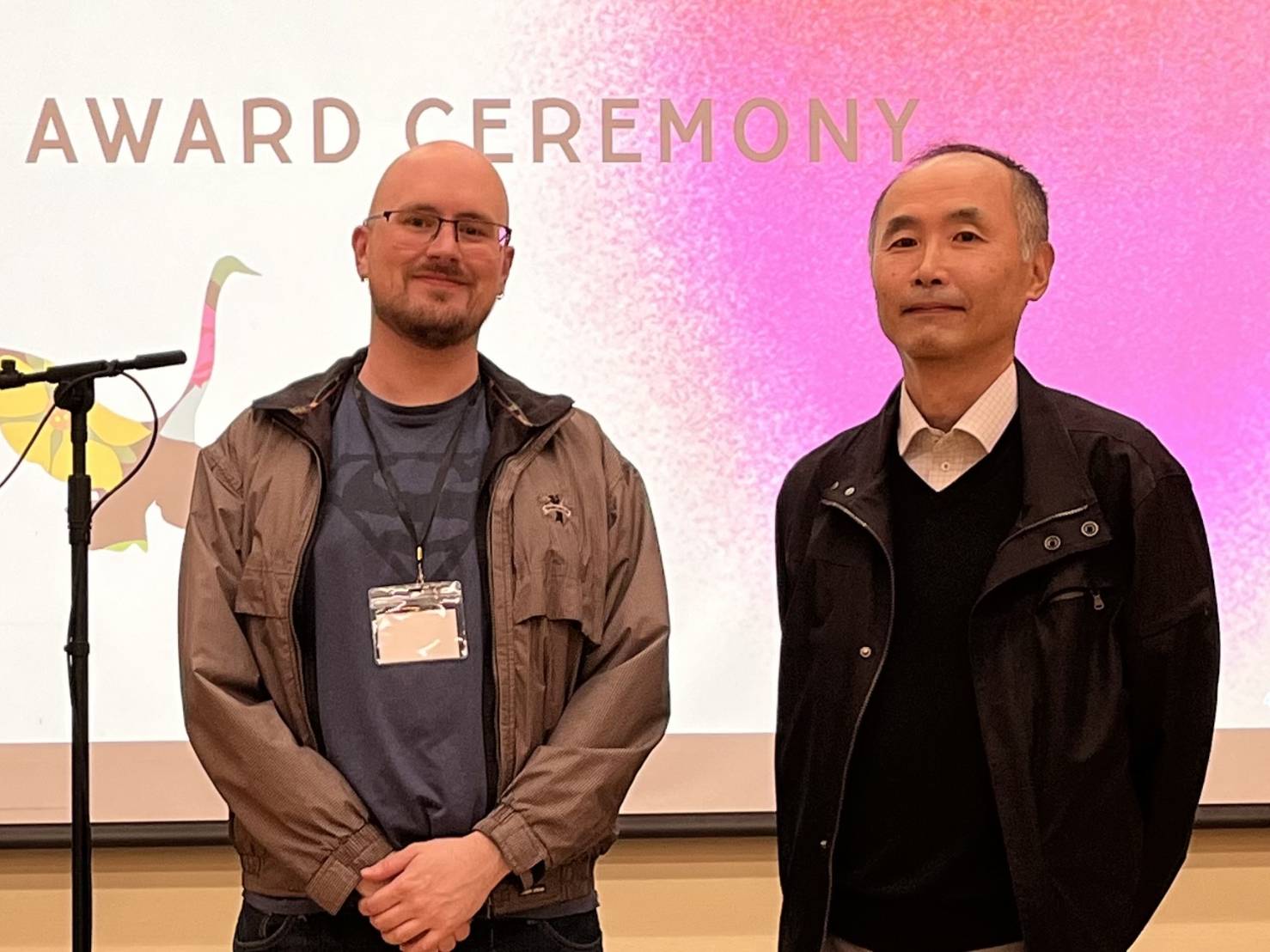
On March 7th, 2026, at the Asian Centre at UBC, a room filled with language learners, judges, and quiet anticipation. Among the tension, Cody Woelders, a French major student at UFV, stepped onto the stage to deliver a speech in Japanese — entirely from memory. Moments later, he walked away with second place in the University–Intermediate category at the 38th BC Japanese Speech Contest.
But for Cody, the achievement wasn’t just about a ranking or a trophy. It was about something much deeper: language, identity, and what it truly means to belong in Canada.
A Return to Education with Purpose
As a returning adult learner at UFV, he is pursuing a French major alongside a TESL (Teaching English as a Second Language) proficiency certificate—and he is aiming for a Japanese language certificate as well. Outside of his coursework, he actively tutors students and has gained hands-on experience helping newly arrived Canadians learn English.
His path into linguistics is a bit unconventional. While he is now fully immersed in the world of languages, it wasn’t French that started it all. It was actually Japanese, first encountered in high school, that sparked his lifelong curiosity about how language shapes the way we think and understand the world.
Building a Message
Cody didn’t originally set out to compete in the BC Japanese Speech Contest; he only applied because his instructor suggested it as a way to earn some extra credit. When he found out he had been selected, the experience shifted from a small academic opportunity into a true personal challenge.
His speech, “The Heartfelt Welcome of Canadians” (カナダ人の心からの歓迎), was actually inspired by an unexpected source: a French class on colonial history. After studying the Négritude movement and thinkers like Aimé Césaire, Cody began connecting those concepts of identity to Canada’s multicultural reality. His TESL practicum, where he worked closely with newcomers, solidified this perspective. “All of it made me realize Canada is truly the one country where you are welcomed to bring your old culture with you,” Cody says.
Nerves, Resilience, and a Little Humor
Preparing for the competition was intense. Cody spent a month writing, and then weeks practicing — reciting lines while driving or doing chores until the entire speech was committed to memory.
The hardest part, however, wasn’t the grammar or vocabulary — it was the nerves. “The panic leading up to the presentation? That requires self-management skills, and those are complicated.” In fact, the stress caught up to him in a hilariously unexpected way: while rehearsing at a barber shop the day before the competition, he briefly passed out. “Apologies to that barber. It all worked out,” he adds with a laugh.
Once he finally stepped onto the stage, the practice kicked in and the performance felt natural. When he was announced as the second-place winner, his first reaction was immediate relief. He jokes that while he would have gone to the national competition if he had won first place, he is “secretly relieved, lol” not to have to go through the pressure again.
A Lens into Human Cognition
For Cody, studying at UFV is about more than just checking off academic boxes; it is about “cross-linguistic synthesis”—exploring how different languages encode meaning and what they reveal about human cognition.
Even in an age of AI and instant translation, Cody is passionate about the necessity of language programs. He argues that understanding how language works — and the nuance that comes with it — is becoming more important than ever in our globally connected world.
Ultimately, Cody’s journey is a story of growth. It’s about returning to education with purpose and discovering that when you learn a language, you aren’t just memorizing words — you are connecting people. It becomes personal.
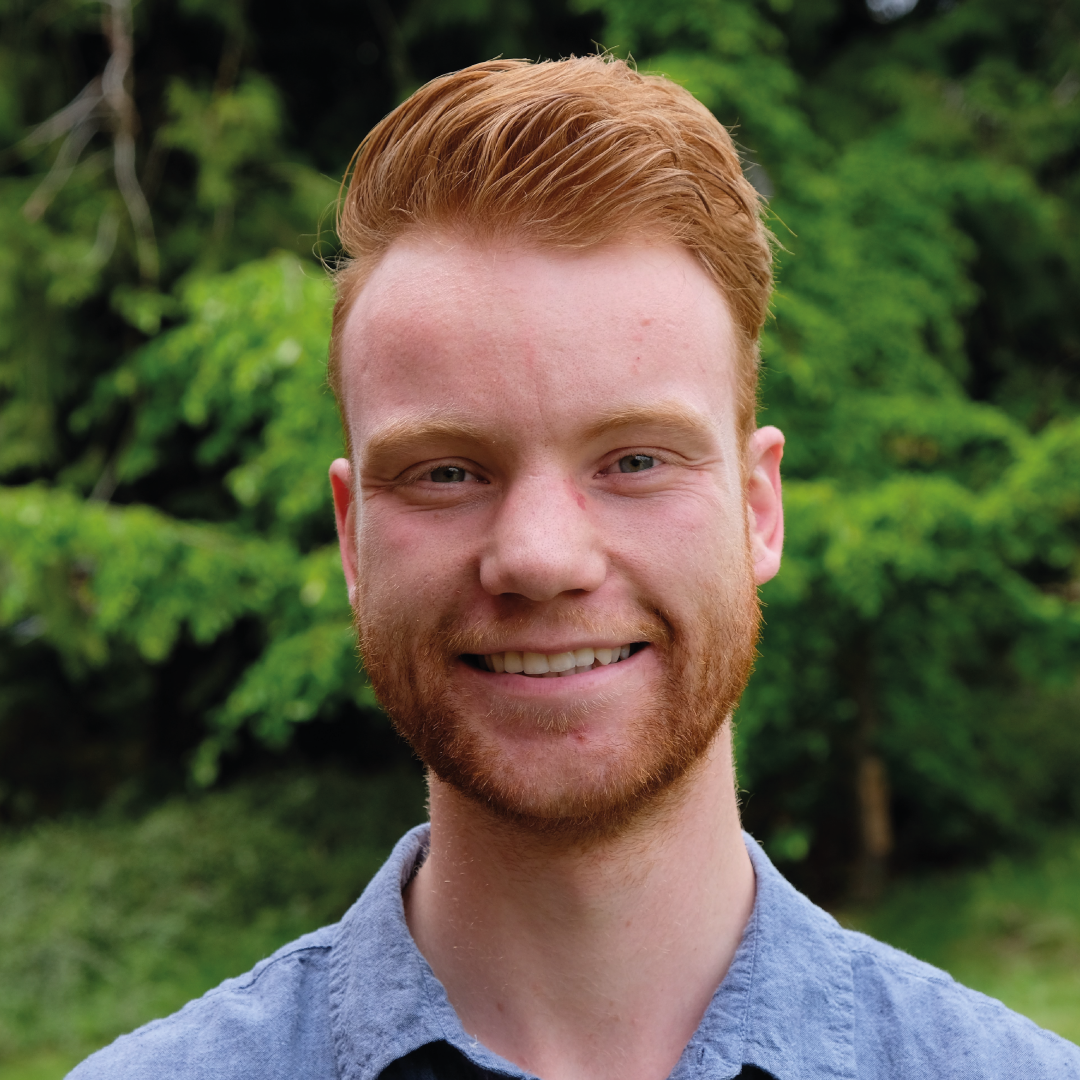
 “I went to Victoria for University Model Parliament” says Raymond Kobes. It was there in January 2018, that the UFV French alumnus and member of Universities Model Parliament was selected to be the Minister of Multiculturalism, Official Languages and La Francophonie for a weekend.
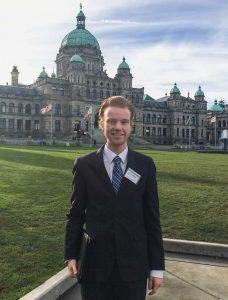 To be an effective member of parliament, Kobes recommends becoming a good orator because a large part of the job will include giving speeches and asking or responding to questions from either side of the House of Commons. He also recommends becoming bilingual. “The best part about [being a Minister] was that I got to use my French in the House… and got to share with other people why those things are important” says Kobes.