
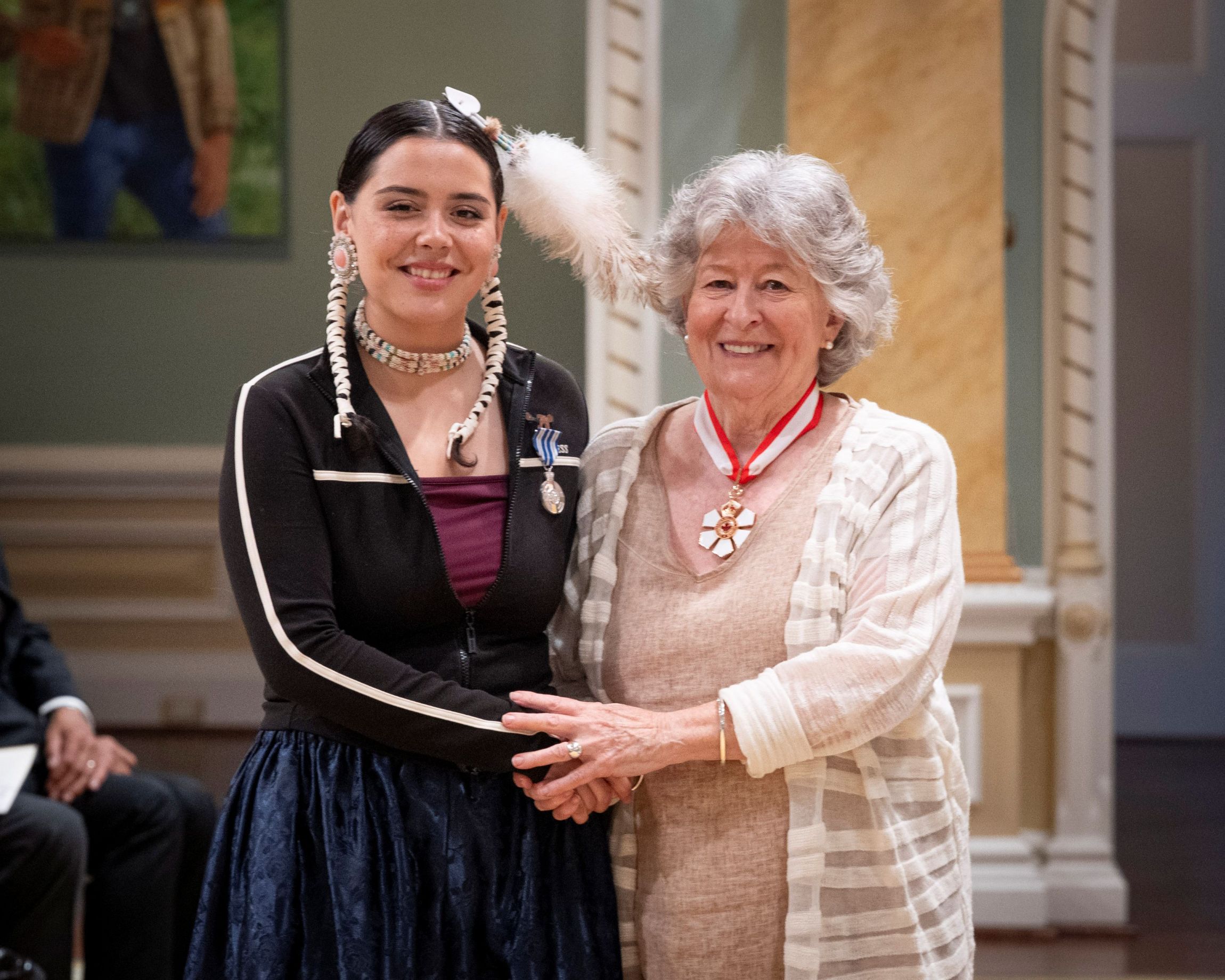
For anyone familiar with Marcella Sunshine’s work, it may come as little surprise that she was selected to receive a Governor General’s Meritorious Service Medal. At just 26 years old and while completing her Bachelor of Arts at the University of the Fraser Valley, Marcella received the honour in Ottawa this past June.
There she stood alongside recipients such as Solomon Ratt, who founded the first bachelor’s degree program in Cree at First Nations University of Canada.
“The medal was an honour, but the best part was being in a room with others who had dedicated their lives to building something for their communities. I left thinking less about the award and more about what I still want to build,” says Marcella.
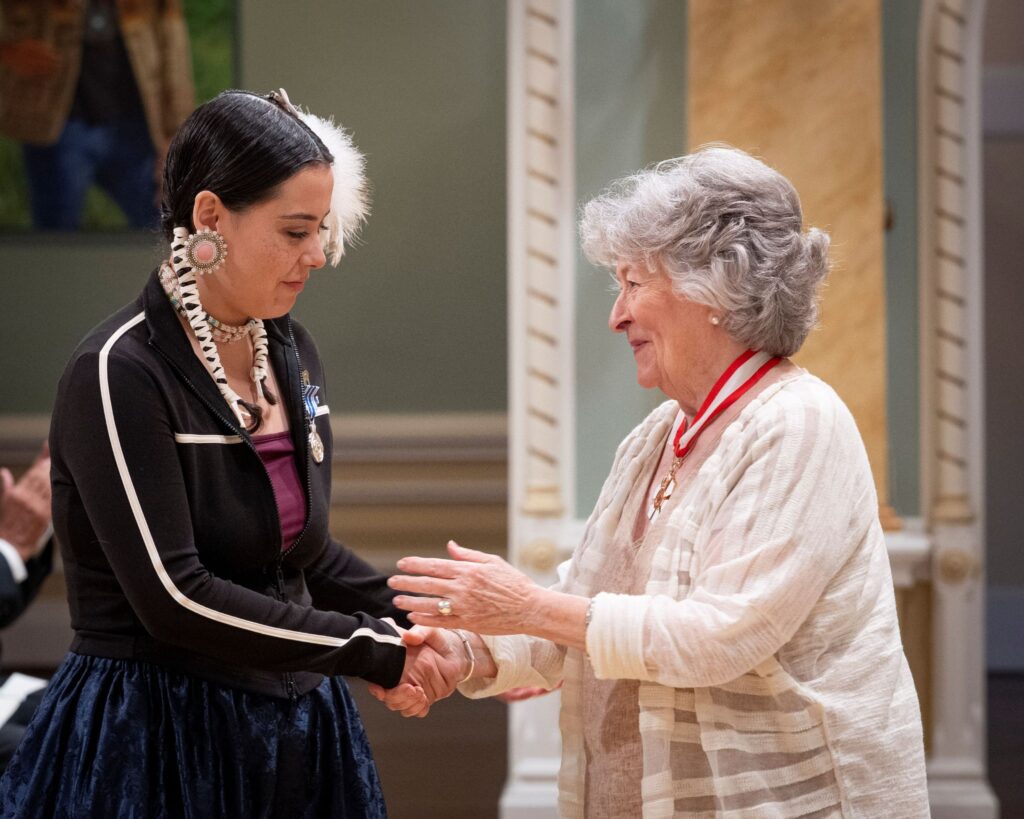
The Meritorious Service Medal recognizes individuals whose work has made an exceptional contribution in Canada across fields including advocacy, health care, research, community service, and humanitarian efforts.
For Marcella, the recognition reflects more than a decade of work with young people, particularly Indigenous youth, across harm reduction, cultural revitalization, community development, and systems change.
Marcella comes from Fishing Lake First Nation in Saskatchewan. She was apprehended from her family at birth and grew up disconnected from much of her family, Nation, and cultural identity. Through her childhood she experienced the foster care system, violence, homelessness, and substance use.
These experiences shaped her understanding of institutions; however, for Marcella they do define the story of her work.
“I was just focused on surviving life. I couldn’t have even known that there was this inherent right to culture that I could have had access to or that I should have known about myself.”
Beginning as a teenager, Marcella became involved in advocacy for young people. She helped develop initiatives including Valley Youth Peers for Overdose Response (VYPOR) and Visionary Youth Peers for Equity and Revitalization (VYPER), while also playing a role in the revitalization of the Mission Powwow beginning in 2021.
Her work has reached thousands of children, youth, families, and community members, but the questions underneath that work have increasingly become just as important to her as the programs themselves.
“I didn’t actually know anything about my culture,” says Marcella, reflecting on her childhood. “I was just focused on surviving life. I couldn’t have even known that there was this inherent right to culture that I could have had access to or that I should have known about myself.”
As she began working alongside Indigenous youth, Marcella also reconnected with culture herself. What emerged was not simply a personal healing journey, but a growing critique of the systems surrounding young people.
“We can dream and do whatever we want. We’re worthy of having a voice.”
In harm reduction work, she began questioning why so many services were designed primarily to respond once someone was already in crisis.
“What would happen if we stopped trying to fix people and instead just changed the conditions of the lives we experience?” asks Marcella. “What could emerge from different conditions — conditions of love and patience and respect and agency and self-efficacy? Not just saying something’s wrong with you.”
That question became central to the way she approached youth programming.
Rather than defining young people through addiction, homelessness, trauma, or other labels placed on them, Marcella wanted programming to create space for imagination, cultural connection, leadership, belonging, and choice.
“They don’t need to be the identity that everybody puts on them,” says Marcella. “We can dream and do whatever we want. We’re worthy of having a voice.”
This approach helped shape VYPER, which grew around the idea that cultural revitalization could be more than an activity offered to Indigenous youth. It could create relationships and conditions in which young people begin seeing themselves differently — as participants, leaders, knowledge holders, artists, dancers, organizers, and community members.
The revitalization of the Mission Powwow became one expression of that work. After returning in 2021, the gathering has continued for five years, creating another space for culture, kinship, celebration, and community connection.
Marcella’s relationship with powwow has continued to grow as well. Dance has become an increasingly important part of her own cultural and creative life, and she is now training in Fancy Feather dance while exploring how movement, storytelling, cultural resurgence, and public education can intersect.
Receiving the Meritorious Service Medal has not marked the completion of Marcella’s work. Instead, she finds herself asking deeper questions: what becomes possible when Indigenous peoples’ experiences no longer begin with colonial institutions as the unquestioned starting point?
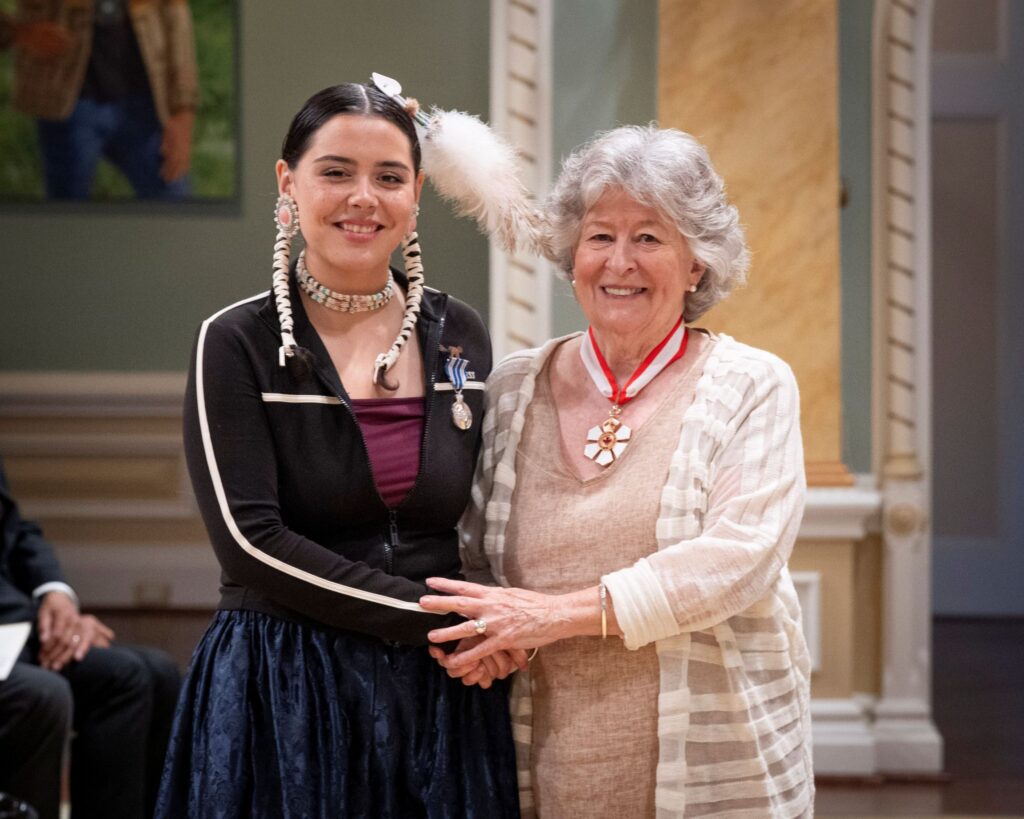
Marcella is currently completing a Bachelor of Arts at the University of the Fraser Valley, studying Political Science and Indigenous Peoples Knowledge, and hopes to continue into postgraduate study. Her focus is on Indigenous governance, Indigenous law, institution-building, relational accountability. She hopes to unravel the assumptions embedded within the systems Indigenous peoples are so often required to navigate.
Her lived experience remains part of how she understands those systems, but it is not the limit of her story.