
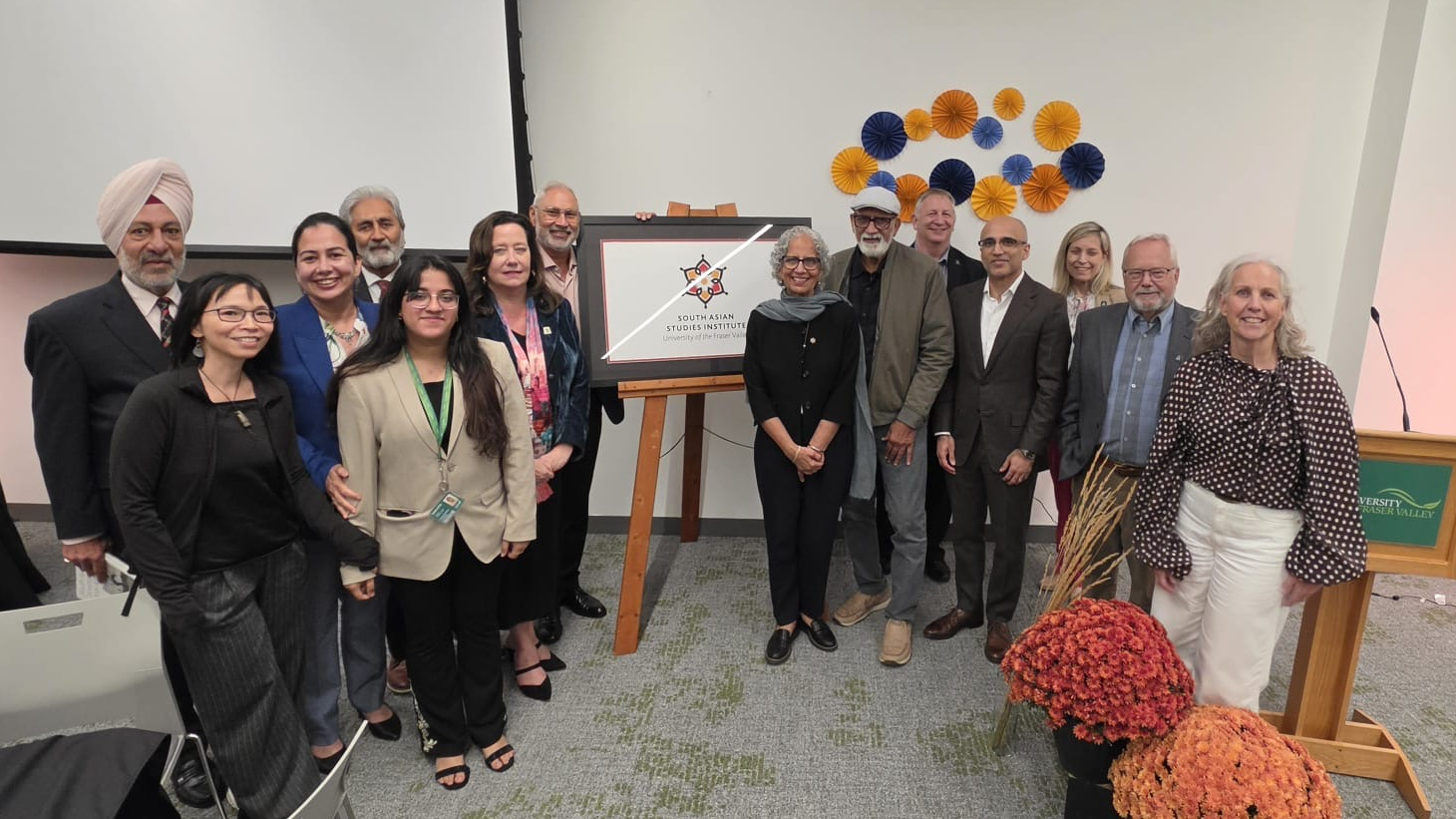
On Thursday, October 8, 2026, the South Asian Studies Institute (SASI) officially launched its 20th anniversary celebrations with the first lecture of its 2026 Fall Lecture Series. The evening featured University of the Fraser Valley (UFV) Professor Emeritus and SASI’s Inaugural Director, Dr. Satwinder Bains, presenting a lecture on Research and Engagement at SASI: A Retrospect – Looking Back and Moving Forward (2006–2026), offering reflection on the people, partnerships, and research that have shaped it over the past two decades. The event also marked the unveiling of the South Asian Canadian Digital Archive (SACDA) Collections Catalogue, featuring more than 75 archival collections documenting South Asian Canadian histories and experiences.
Celebrating Twenty Years of SASI
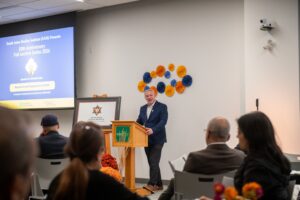 The evening began with Dr. Garry Fehr, UFV’s Associate Vice-President of Research and Graduate Studies, who served as the Master of Ceremonies. Dr. Fehr welcomed guests, delivered the land acknowledgement, and introduced the dignitaries and speakers joining SASI for this special occasion.
Councillor Chahal reflected on the City of Abbotsford’s longstanding relationship with SASI and the importance of recognizing South Asian Canadian history in public spaces. She highlighted the 2023 commemorative naming of Komagata Maru Place, honouring the passengers of the Komagata Maru who were denied entry to Canada in 1914 under discriminatory immigration policies.
President Mandigo congratulated SASI on reaching its 20th anniversary and recognized Dr. Malwinder Dhami, SASI’s first donor, who was present in the audience. Dr. Dhami’s initial contribution of $10,000 helped support the vision for SASI and encouraged further community investment in its work. President Mandigo also spoke about the importance of people being able to find themselves and their families in historical records. He recognized the role of digital archives in making community histories accessible, not only to researchers but also to the families and future generations to whom these stories belong.
Looking Back: The People and Vision Behind SASI
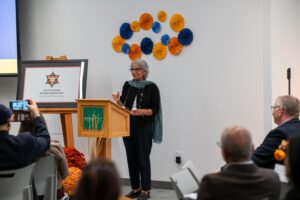 In her lecture, Dr. Bains took the audience through SASI’s beginnings, its growth as a research institute, and the many projects and partnerships that have developed over the past 20 years. She described the period between 2001 and 2006 as the “dreaming” years, when community members and the university began imagining what an institute dedicated to South Asian Canadian studies could become. At the centre of those early conversations were questions about whose histories were being documented, which stories were missing from public records, and how communities could take an active role in preserving their own histories.
These conversations helped establish SASI’s three areas of focus: research, community engagement, and student learning. Dr. Bains emphasized that SASI was never intended to be solely an academic research institute. It was also envisioned as a place where community knowledge and lived experiences could inform research, and where students could develop the skills to continue this work.
A central theme of the lecture was narrative sovereignty: the importance of communities having a voice in how their histories are researched, interpreted, and shared. Dr. Bains reflected on the absence of South Asian Canadian experiences from many traditional historical accounts and the responsibility of ensuring that these stories are documented by and with the communities they represent.
“You cannot silence us,” she reminded the audience, emphasizing the importance of continuing to document and share these histories.
Two Decades of Research, Partnerships, and Community Support
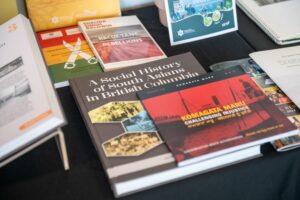 Throughout the lecture, Dr. Bains shared photographs, research publications, archival materials, and stories of the people who contributed to SASI’s development. She highlighted the Institute’s work with educators to bring South Asian Canadian history into kindergarten to Grade 12 classrooms, as well as its efforts to provide students with opportunities to participate in research and community-based projects.
Community support has been equally important to SASI’s growth. Dr. Bains reflected on the Bajwa Dhami Building Bridges Community Golf Day, which raised more than $1.4 million across five tournaments to support scholarly research and Research Endowment Fellowships at the Institute. She also spoke about SASI’s international connections, particularly the relationship between UFV’s Abbotsford and India campuses. Through research internships and academic collaboration, students from UFV India in Chandigarh gained opportunities to contribute to projects in British Columbia, building connections between the university’s campuses and the communities they serve.
The lecture also highlighted the continuing growth of SASI’s archival work. Dr. Bains shared that the Institute holds approximately 100,000 archival records, with millions of additional items awaiting digitization. Among SASI’s recent archival contributions is the Chandra Bodalia photographic collection, which includes approximately three million photographs taken by the late photojournalist, documenting community events, cultural celebrations, religious spaces, and everyday life across British Columbia. Dr. Bains thanked the Bodalia family and the many other individuals and families who have entrusted SASI with their personal and community histories.
Unveiling the SACDA Collections Catalogue
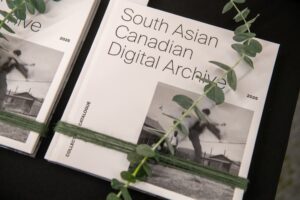 Another highlight of the evening was the launch of the South Asian Canadian Digital Archive (SACDA) Collections Catalogue. Annet Holierhoek, SASI’s Financial Coordinator, introduced the catalogue on behalf of Digital Asset Archivist Thamilini Jothilingam. Featuring more than 75 collections, the publication provides an overview of the historical records preserved through SACDA and offers readers a way to explore the breadth of South Asian Canadian experiences represented in the archive. Each attendee received a copy of the catalogue, providing an opportunity to learn more about the collections and discover the histories available through SACDA.
Looking Ahead
The evening concluded with remarks from SASI’s Interim Director, Dr. Hassan Javid, Associate Professor of Sociology at UFV. Dr. Javid reaffirmed the Institute’s commitment to supporting communities, preserving their histories, and creating space for research and conversations that address both historical and contemporary experiences.
Following the formal program, guests gathered for refreshments, conversations, and an opportunity to reconnect with community members, researchers, and longtime supporters of SASI.The opening lecture offered an opportunity to recognize the people and collective efforts behind SASI’s first twenty years, while also considering the work that remains ahead. As the Institute begins its year-long anniversary celebrations, it continues to build on the relationships, research, and community trust that have shaped its work since 2006.
SASI extends its sincere thanks to President James Mandigo, Dr. Satwinder Bains, Councillor Kelly Chahal and everyone who joined us to celebrate this milestone.