
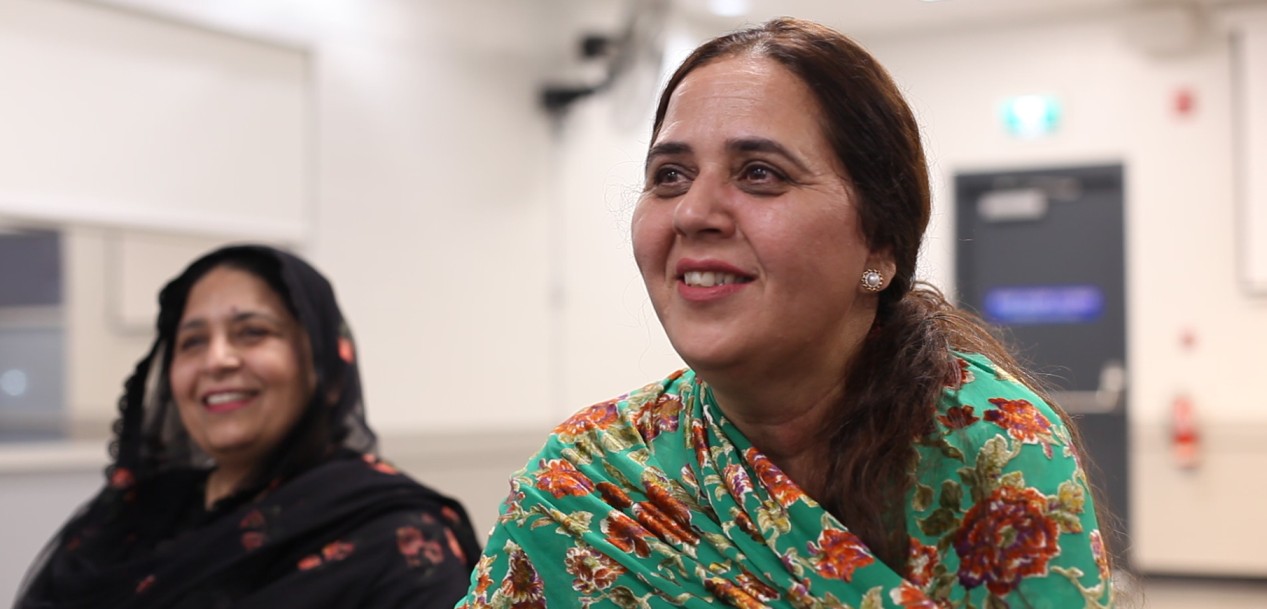
On September 25, the South Asian Studies Institute (SASI) welcomed community members together at the Matsqui Recreation Centre in Abbotsford for Chai & Chat with Dr. Asma Qadri, an afternoon of storytelling, conversation, and shared memories presented in partnership with the City of Abbotsford as part of Culture Days 2026.
The gathering created an informal space for conversation around South Asian folk heritage, storytelling, literature, and the ways cultural knowledge is carried across generations and communities. Dr. Qadri shared reflections from her work in Punjabi literature and Sufi traditions, inviting participants to think about folk heritage not simply as something from the past, but as a living part of community identity and everyday life.
Dr. Hassan Javid, SASI’s Interim Director, opened the program by speaking about the importance of creating spaces where these stories and conversations can be shared, and thanked Dr. Asma Qadri for her work in bringing South Asian folk heritage into conversation with the community. Dr. Qadri was joined in the conversation by Dr. Satwinder Bains, Santosh Pwar, Jaswindr Kaur Hundel, Manmohan jit Kaur and Disha Mehal, each contributing stories and reflections from their own experiences.
Much of the conversation centered on the folk stories people had grown up hearing from parents, grandparents, and other elders. Participants reflected on how these stories were rarely told simply for entertainment. They often carried a lesson, warning, or moral about how people should behave and understand the world. Disha reflected on how children listening to these stories did not always recognize the messages embedded in these stories, but how those lessons could nonetheless become deeply ingrained, remaining with them well into adulthood.
As stories were exchanged, people began recognizing familiar threads in one another’s memories. Some knew the same folk tale but remembered a different version; others discovered shared experiences they had thought were unique to their own families. One particularly beautiful discussion emerged around handwritten letters and th of the dakiya, or postman, at a time when letters were one of the most important ways families stayed connected across cities and even across countries. Participants remembered how the postal worker could become a familiar presence in family life, delivering news of celebrations, milestones, hardships, and loss, and often coming to know the families along their route remarkably well. In remembering this, the group reflected not only on how communication has changed, but also on the relationships and rituals that once surrounded it.
The afternoon also brought memories of family members who are no longer here. For many, the stories they heard as children remain one of the threads connecting them to parents, grandparents, and elders who have passed away. Retelling those stories can bring back a voice, a personality, a lesson, or simply the feeling of sitting beside someone and listening.
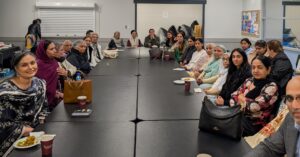
With rainy weather outside, warm chai and pakoras in hand, and a room full of stories moving between past and present, the afternoon was a fitting reminder that folk heritage does not live only in archives or books. It lives in stories people remember, retell, reinterpret, and pass on.
SASI is grateful to everyone who joined us and so generously contributed their own memories and experiences to the conversation, and to the City of Abbotsford for its partnership through Culture Days along with Abby Bhaina (Manmohan jit Kaur and Santosh Pwar) for supporting the gathering with chai and refreshments.
See pictures from the event here.
Dr. Asma Qadri is a SASI Research Associate and Professor at the University of the Punjab in Lahore. With more than 25 years of research experience in classical Punjabi literature and Sufi traditions, her work spans South Asia and the diaspora and focuses on the preservation and understanding of South Asian literary and cultural heritage. The event forms part of SASI’s South Asian Folk Heritage Project, a community-centred initiative led by Dr. Qadri that works to preserve, document, and share diverse South Asian folk traditions through research, public programming, archival work, and community engagement.