LinkedIn Isn’t Just a Resumé: A Practical Guide for Emerging Communication Professionals

Close-up of two students seated in a UFV classroom, listening to a presentation during a CMNSA meeting, with water bottles and laptops on the desk.

Author: Desmond Devnich
Photos: Linden Markham

Earlier this week, I had the chance to share some LinkedIn tips with my fellow charter members of the UFV Communication Student Association (CMNSA). As a newer student group — we only started meeting in January — one of our early goals was professional development.

Communication students gathered around classroom tables during a CMNSA professional development session at UFV, listening attentively and participating in discussion.

We began with something practical: working with a fourth-year Media Arts student to take professional headshots for our members. Naturally, the next question was: Now what do we do with them?

Our president, Malayna Joy , kindly mentioned she admired my existing LinkedIn presence and asked if I would share some tips with the group. I was happy to — not as a LinkedIn expert, but as a fellow learner who has made plenty of mistakes and adjustments along the way.

What really motivated me, though, was something I kept hearing from students.

  • “I don’t have any good jobs to list.”
  • “I don’t really know anyone to connect with.”
  • “I don’t have time for another social media platform.”
  • “It feels awkward to promote myself.”

If any of that sounds familiar, you’re not alone.

Start by thinking like a communicator

One mindset shift helped me the most: your LinkedIn profile is not just a form to fill out, it’s strategic communication.

As communication students at the University of the Fraser Valley , we talk a lot about audience, positioning and message clarity. LinkedIn is simply another place to apply those same principles to ourselves.

Your profile is your professional story in motion. LinkedIn supports thought leadership, a place to showcase you and your ideas.

BUILD: Get the foundation right

During our session, one point really seemed to resonate:

Your headline is not your job title — it’s your positioning statement.

That line sparked a lot of discussion.

Your headline is one of the most powerful pieces of real estate on your profile. It helps people quickly understand who you are, what you care about and where you’re headed. It also supports discoverability through keywords.

A simple formula is role or aspiration + speciality + value or impact. Example: Communication student specializing in digital storytelling | Passionate about community engagement.

Beyond the headline, a few foundational pieces matter most:

Profile essentials

  • Use a professional, approachable photo
  • Choose a header image that reflects your interests or direction
  • Write your About section in first person
  • Naturally include relevant keywords
  • Focus on what you learned and achieved, not just your duties

One pattern I’ve noticed among students is the tendency to undervalue lived experience. Retail, food service, volunteering, student leadership — these roles build real communication skills. Don’t short-change yourself by leaving that story untold.

Close-up of two students seated in a UFV classroom, listening to a presentation during a CMNSA meeting, with water bottles and laptops on the desk.

NETWORK: Start closer than you think

Another hesitation I often hear is: “I don’t know anyone.”

I understand that feeling — but it’s often not as true as it feels.

When I was working as a barista at Starbucks back in 2009, some of my most valuable professional connections started right at the counter. I made a point of getting to know regular customers, learning about their work and asking thoughtful questions about their career paths.

Years later, I would end up working with — and in some cases for — several of those same customers.

The lesson that stuck with me:

Networking doesn’t only happen at conferences. It happens wherever genuine curiosity and relationship-building exist.

Whether you are serving in a restaurant, working retail, volunteering in the community, or participating in student leadership, you are already in relationship-building environments.

For CMNSA members and UFV students, strong starting points include:

  • classmates and peers
  • UFV faculty and alumni
  • local Fraser Valley media organizations
  • community and volunteer connections

Start where you are.

ENGAGE: Visibility builds credibility

One common “red flag” we discussed is the set it and forget it approach.

LinkedIn is social media. A polished profile is important, but engagement is what keeps you visible.

You don’t need to post every day, and you don’t need to be an expert. Some approachable ways to begin:

  • share what you are learning in Communication courses
  • reflect on events or guest speakers
  • highlight projects or volunteer work
  • thoughtfully comment on others’ posts

Small, consistent activity builds familiarity and credibility over time. Then, perhaps set a reminder to review your profile at the end of every semester to update new projects, refresh skills, add courses and certifications, and review your headline.

ADVANCE: Use LinkedIn as a career tool

LinkedIn becomes especially powerful when you move beyond profile-building and start using it strategically.

For emerging communication professionals, this can include:

  • reading job postings to understand required skills
  • following organizations you admire
  • requesting informational interviews or coffee chats
  • connecting with recruiters and hiring managers
  • ask for and give recommendations, endorse others’ skills
  • signalling when you are open to opportunities

As the UFV School of Communication emphasizes, our field values ethical, inclusive and forward-looking communicators. LinkedIn is one place where those professional habits begin to take shape.

A gentle note on confidence

If there was one theme that came up repeatedly in our CMNSA session, it was hesitation. Many students feel unsure about talking about themselves or worry they are “not experienced enough yet.”

From one fellow learner to another: growth in this space is incremental.

Your profile will evolve. Your headline will change. Your confidence will build.

The goal is not perfection — it is intentional progress.

Moving forward together

If you are a communication student at UFV or elsewhere, my encouragement is simple:

  • build your profile thoughtfully
  • engage with your community
  • network both online and in person
  • stay curious about the paths others have taken

Consider reaching out for a virtual coffee or an in-person conversation with someone in the field. And if you’re part of CMNSA or a similar student group, lean into that community. Emerging communication professionals are stronger when we support and cheer each other on.

We’re all still learning. But taken together, small, consistent steps on LinkedIn can open more doors than many of us expect.

School of Communication celebrates book publication

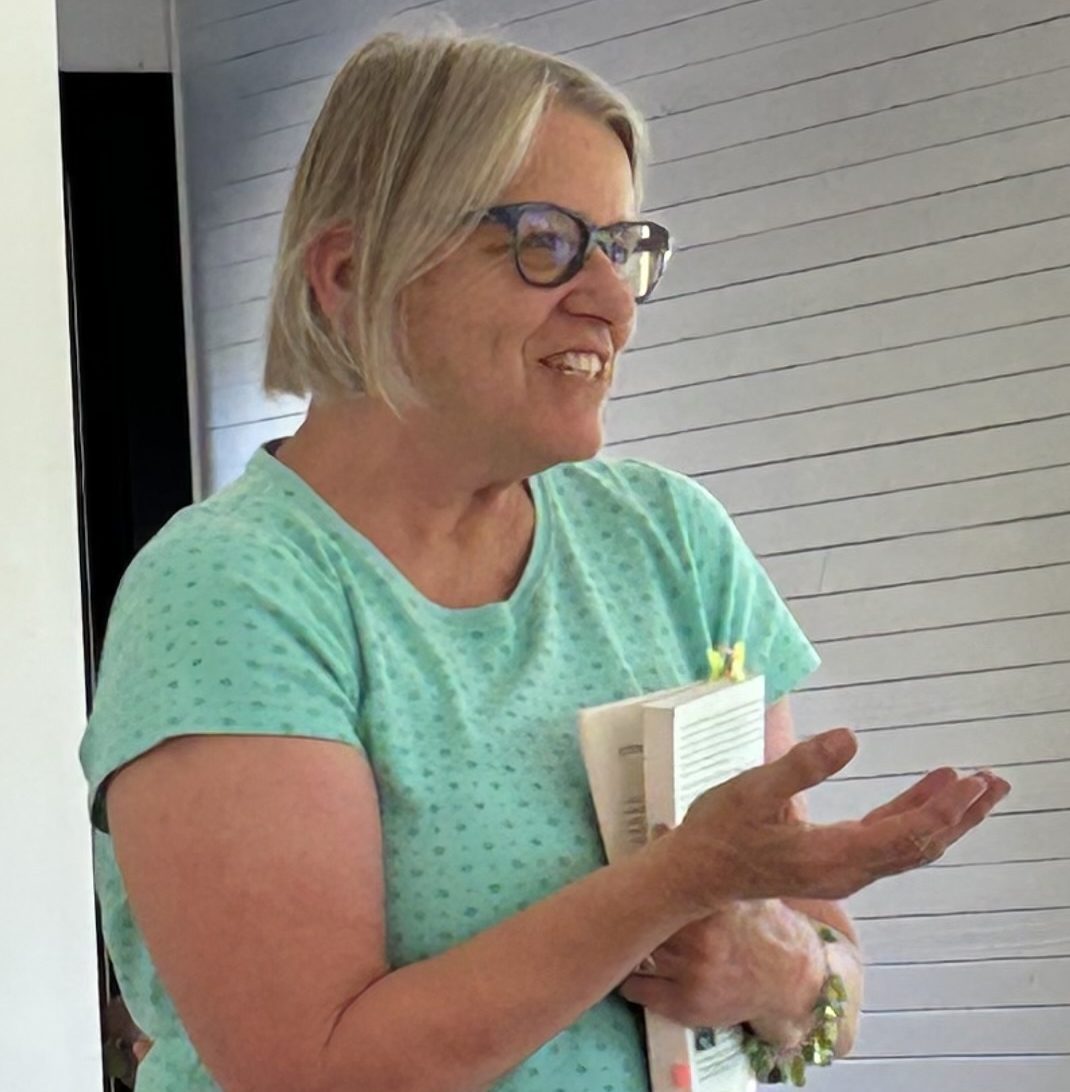
Dr. Marcella LaFever (aka ella Anne) answering questions about her book at the School of Communication retreat on July 25th
Book cover featuring a photo of Cella Anne ready to go on a solo x-country bike trip at the the age of 20

The School of Communication at the University of the Fraser Valley is pleased to be able to help celebrate the publication of Professor Emeritus, Marcella LaFever’s post-retirement book 404 Years: An Autobiography. She came to the School’s retreat on July 25th to do a reading and answer questions, of which many ended up being about the publishing process – not surprising in a university setting.

Using the pen name Cella Anne (a childhood moniker), Dr. LaFever spent the last three years doing a deep dive into genealogy records and archives, along with books and articles about historical events in both Canada and the U.S., to write a book that one of her reviewers called “genre-busting.” Cella says that she wanted to continue her work related to intercultural communication and to Truth and Reconciliation work, because retirement is the perfect time to do things you never have time for when on a teaching schedule.

Dr. Marcella LaFever (aka Cella Anne) answering questions about her book at the School of Communication retreat on July 25th
Cella Anne answering questions about her book at the School of Communication retreat. Photo by S. Hannah

To attain her goal, the book investigates four lines of her ancestor’s lives beginning in 1621 (404 years ago) as the first Haney landed in the Virginia Colony. From slave owning to being in battles meant to subjugate Indigenous peoples, the story of the Haneys, the LeFevres, the Beaman’s and the Stutevilles move across the continent with the bounty of land grants given for fighting in wars and to establish farms to feed the ever growing number of people wanting a better life. Dr. LaFever creates an historical narrative using facts taken from verified records such as military rolls, census records, wills, and obituaries to create scenes as told through the eyes of generations of the women.

Cella Anne parallel’s her own story in alternating chapters – a story that moved her towards a dedication to issues of social justice. Each chapter and scene starts with the year and the Indigenous territory in which it takes place – just one of the ways she found to offer land acknowledgements along the way.

On Friday September 12, Dr. LaFever will have her book on display and be available to answer questions at the College of Arts Faculty Celebration being help in K150 (the south patio). She says she will have copies available for sale as well. You can also contact her ahead of time at cellaanne@404years-thebook.com to make sure she brings one for you.

Other faculty members celebrating books include Barbara Messamore, Adrea Johnson, Jon Heidt, Andrea Albonico, Noah Schwartz, and Marcel Casarini,

Communications Speaker Spotlight

Head to the Communications Speaker Spotlight on March 31 at noon to hear industry experts from Jelly Marketing and the Fraser Valley Regional District talk about the role of communication in the workplace. Former students Lise Nehring and Maaria Zafar join current students Addy Schnider and Perry Mills to discuss the skills they learned in the Communications minor program. Attendees have the chance to win one of two $50 gift cards.

Scan the QR code or click the link to sign up at Eventbrite.

SPEAKERS:

Angelique Crowther is Manager of Communications at the Fraser Valley Regional District, a local government serves residents in the Fraser Valley. Angelique is an experienced communications professional working primarily for the public sector, Angelique has served at the University of British Columbia, Vancouver School Board and abroad with the Cayman Islands Government. Angelique is particularly experienced and interested in public engagement and emergency management.

Sarah Clark is a Partner and Director of Operations and Personnel at Jelly Marketing, a full-service digital marketing agency located in Fort Langley. With a background in event management and marketing from UFV and Mount Royal University, Sarah uses her experiences from the last decade to ensure that Jelly performs at its best each and every day.

Lise Nehring is on her journey towards her Masters in Biology. She sees the crucial role of communication in translating scientific knowledge to everyday settings for maximum results.

Maaria Zafar is a criminal justice student but also one of our active communication minor students. Maaria has taken note of how communication has benefited her academically and professionally and is here to share with us her notes.

Addy Schneider is the President of UFV Enactus Club, a communication minor student who is currently taking some of our upper-level communication courses. She believes having effective communication skills allows better information sharing and network building.

Perry Mills is working toward his Bachelor of Arts degree with a minor in Spanish, business, and communications. He says that communication is integral to all aspects of life, from relationships to work, and everything in between. He hopes that others might also find a passion in learning how to express their thoughts and knowledge.


$500 survey draw winner: Communication skills used in “almost every aspect of life”

Congratulations to University of the Fraser Valley student Garrett Johnson, a 2020 Bachelor of Arts graduate  for having his name drawn from a pool of over 1100 alumni and current students who responded to the recent Communications Department survey. The survey gathered information to contribute to developing a Communications Major within the Bachelor of Arts.

We extend a huge THANK YOU to everyone who responded to the survey!!!

Garrett says he put his knowledge from his Communications 125 course to work immediately in applying to Simon Fraser University and has been accepted to a Masters program  – something we are always happy to hear.

We also liked hearing his answers to our questions below because we know that our students at UFV have an amazing array of plans for the future and reasons why they decide that university is great path to meet their goals. Here are some of the things he had to say:

What are some favourite memories about any of the courses you took?
I took that specific course while studying remotely from Toronto. I found myself really enjoying the course material as I took three online courses. Being able to communicate to both professors and fellow students in a concise and professional manner is key when using technology to communicate. Being able to directly implement the ideas and concepts directly into my other courses was very gratifying!

In what ways have you been able to use any of the communications skills?
I have used the communication skills learned from the course in almost every aspect of my life. I have applied the skills in my various volunteer positions that I hold where I am required to regularly communicate in a professional manner. I have also made use of the skills in applying for Grad school, and to which I owe some credit in regards to my acceptance.

What are your future plans?
Besides preparing for Grad school, I am a freelance translator, translating between English and French. I am very interested in researching, analyzing, and promoting Franco-Columbian literature and authors. I would like to continue my work translating, as well as pursue my scholarly interests into what I hope will one day transition into a career opportunity.

What else would you like to say about yourself?
I am thankful for the variety of courses that UFV offers, despite possibly not having a complete program in [Communications]. I would love to go back and follow more CMNS courses now that I know the benefit from them.

Congratulations again Garrett and best wishes for all your future successes.

“I feel like you aren’t hearing me.”

“I feel like you aren’t hearing me.”

By Hannah Celinski

Have you ever found yourself saying this during a conversation with a colleague or a friend? In recent months, I have sat on a variety of committees and panels where I have experienced or observed obstacles to communication. I have also found myself misunderstood on occasion, and I’ve realized that part of the issue is not being clear, it’s being heard.

I facilitate 3-day sessions called Instructional Skills Workshops. I often run an exercise on the second day, where I have people pair off. First, they sit back-to-back and Speaker A tries to tell Speaker B a quick story. The room is loud, they can’t see each other, and the message quickly becomes garbled. When the pairs debrief, only small sections of information are retained.

Then they switch partners and Speaker B tries to tell a story, while Speaker A does everything they can, short of leaving the room, to avoid what they have to say. Again, not much is retained, and Speaker A often admits that they were so busy trying to get out of the room, they didn’t pay any attention to what Speaker B was saying.

Finally, the speakers sit face-to-face and engage in Active Listening techniques. The message clears up immediately, and information is exchanged fluidly.

The next time you find yourself sitting in a meeting, thinking only about what you are going to say next, consider doing this instead:

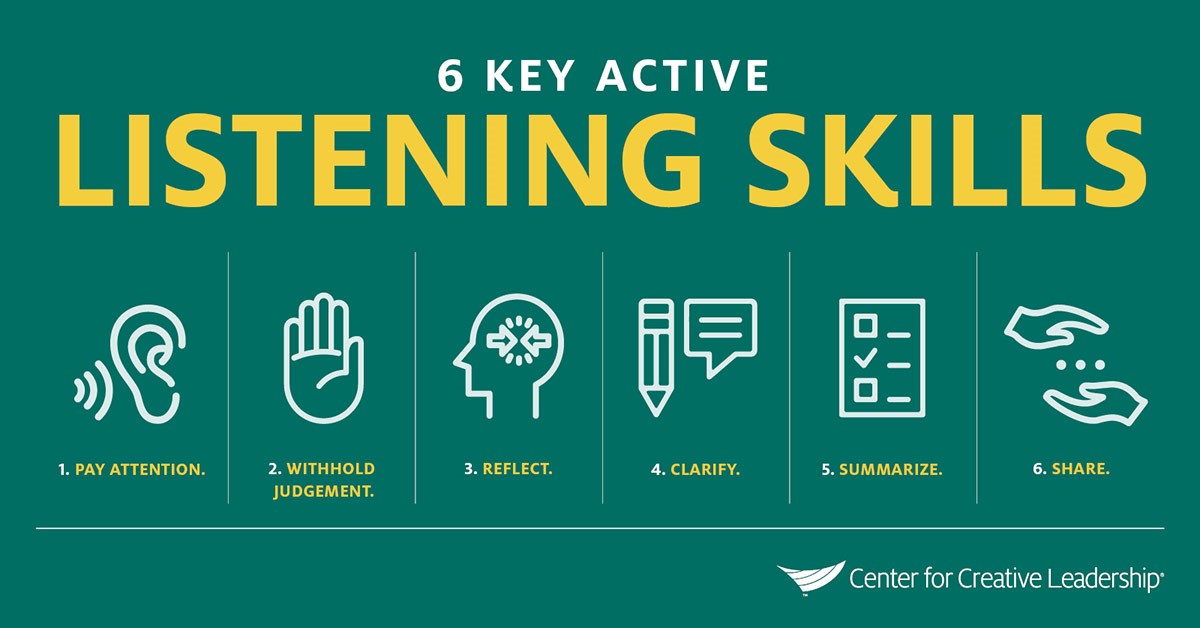
  • listen carefully to what the other person is saying with no judgement one way or the other
  • carefully consider their point, shelving the potential bias of your own opinion
  • reflect on how their input might be useful with regards to the topic at hand
  • clarify any points the speaker made that might seem out of place, or perplexing
  • speak their points back to them to be sure you have understood their intention and nuance
  • share your own perspective while building on their offering

Use Active Listening to Coach Others

Another way to foster success during meetings is to prepare a living document that identifies how the group wants to work together during the session, or over the course of the committee duration. Identifying strategies to navigate difficult subjects or dissent is paramount to success in these instances.

Consider adopting practices like “ouch,” “oops.” If someone says something hurtful, you acknowledge the moment by simply saying, “ouch.” The person who was speaking says, “oops,” then a conversation can unfold around the issue by addressing it before the meeting is derailed through misunderstandings or microaggressions. (You can find more about ouch/oops here: https://www.diversityinclusioncenter.com/archives/ouch_files/Archives/Ouch_Vol5No1.html )

Finding ways to communicate effectively is vital. I was reminded of the importance of these practices recently, as I found myself disengaging from a discussion to temper my anger. This resulted in a lack of engagement on my part, and I know I missed valuable information while I was bringing myself down to a workable mental space.

We expect our students to listen actively, but sometimes it is important to remind ourselves of the tenants of Active Listening, so we don’t end up tuning in for, “I feel like you aren’t hearing me.” You probably aren’t. Let’s instead aim for: “That was productive. Thank you all for listening.” I know I’ll be going into future meetings with this as my goal.

I’ve included further resources for Active Listening from The Centre for Creative Leadership here: https://www.ccl.org/articles/leading-effectively-articles/coaching-others-use-active-listening-skills/

You can find more about Effective Listening through the UFV Student Services here: https://ufv.ca/media/assets/counselling/Learning+from+Lectures.pdf

Interested in learning effective ways to communicate better> At UFV, we offer a Professional Communications Certificate. To find out more information, go to ufv.ca/communications.

UFV Practicums, College of Arts

UFV Practicums, College of Arts

By Jennifer Barkey, ABT Practicum Student

Earlier this week, I sat down with Elise Goertz, Internship & Practicum Coordinator, and learned a little about UFV’s College of Arts practicum program. This was a fascinating experience, since I am also a UFV practicum student hailing from the Continuing Education Department.

What’s the scoop?

What exactly is a practicum, anyway?

Practicums are hands-on learning experiences outside of the classroom that offer students the chance to put theory to practice and actually work in their chosen field of interest.

These types of experiential learning opportunities are available to all qualifying students within the College of Arts. Students can gain actual work experience and make invaluable connections while studying–and will receive credits towards their degree! Most practicum courses are 3 to 6 credits, depending on the number of hours required.

Experience is essential

Practicum and internship opportunities are so valuable because they allow students to gain a hands on experience with the career or field that they are working towards. The completion of a practicum during a degree program gives graduating students a huge advantage! They walk into the workforce with both experience and education under their belt.

Is it a fit?

Have you ever thought that a specific job would be perfect for you, only to land it and find out you dislike it?

While completing a practicum, students gain practical knowledge that can only be found by working in the chosen field or profession. They then have a better gauge on their satisfaction level within the potential position as well as being able to identify gaps in their current education level when it comes to the practical application of knowledge. The earlier students can critically analyze their educational paths and future career choices, the easier it is to redirect to an educational or career path that is a better fit.

Is it required?

As was stated above, a practicum can be set up for any student within the College of Arts, however, only Criminology, Communications, Global Development and Graphic Design currently require a practicum. Although practicum and internship courses are not a requirement for all Degree and Certificate programs within the College of Arts, they are recommended.

Practicum courses also help students meet the ‘Civic Engagement’ piece of their degree requirements.

The Benefits

  • Hands-on practical training which help streamline future job choices
  • Identifying educational strengths
  • Can lead to future job placements
  • Development networking skills
  • Credits toward degree completion
  • Gaining actual experience
  • Classroom learning is put into practice
  • Students able to “try out” a job/field of interest before completing their degree
  • Students are paired with compatible employers
  • Practicum courses meet Civic Engagement requirements

More Info!

Don’t miss the exciting Practicum & Internship Lunch and Learn Information event happening on March 31, 2020 from 12:00pm to 1:00pm in B101. Come and hear more in depth information about practicums and internships within the College of Arts. Bring your lunch and come learn about how you can get involved!

This event features:

  • Testimonials from prior practicum students
  • Linda Pardy sharing on domestic practicum placements
  • Cherie Enns sharing about the exciting Queen Elizabeth Scholar Internship, and international practicum placements
  • Q & A with an expert panel

You will want to attend in order to hear about the QE Scholar Internship program where you can travel abroad to East Africa, specifically Tanzania, Kenya, and India, for your internship. There is only a 2-year window for this program before the funding runs out which is at almost $7,000!

So, come to B101 on March 31st and hear about these exciting opportunities then take the next step and begin your practicum journey.

The Next Step

Find a full list of current practicums and internships that are offered by the College of Arts here. But don’t stop there, if you don’t see what you are looking for, make sure you drop by Elise’s office anytime Mondays, Wednesdays, and Fridays between 9:00am and 2:00pm, Tuesdays and Thursdays between 9:00am and 4:30pm, or email her for more information!

Once you have discussed possible practicum ideas, she will send you the application and you will need to fill it out and send it back with your updated, vetted resume. This resume will be shown to potential employers so it must reflect current experience and education. The Career Centre is available for examining your resume and helping you reflect your current information.

Again, I invite you to join the Practicum Information Session “lunch and learn” on March 31st from 12:00pm to 1:00pm in B101 for your first step towards concrete practical knowledge application.

*Photos by UFV photographers and captured from UFV’s Flickr page

Back for season three: The Riverdale Universe: Ride or Die conference returns

Back for season three: The Riverdale Universe: Ride or Die conference returns

Jess Wind
Photos by Sarah Sovereign Photography, used with permission from Raspberry.

Academics, nerds, and fans alike will gather on March 13 for the third annual Riverdale-themed semi-academic conference about the Archie Comics adaptation and its expanding universe.

What started as a joke on Twitter in 2017 quickly ballooned to an interdisciplinary, multi-year conference and accompanying anthology (Riverdale: A Land of Contrasts due out in 2020), that explores and critiques themes represented (or lack thereof) in the CW’s Riverdale, Netflix’s Chilling Adventures of Sabrina, and other Archie Comics content. Previous years have featured a body-positive, feminist photoshoot, tales from a casting agency, cross-property conspiracy theories, and an annual Choose-Your-Own-Adventure-style interactive fanfiction, along with a healthy dose of academic critique.

The Riverdale TV show is the latest in an expansive property featuring America’s favourite blundering redheaded teen, the two women that fight over him, and his burger-loving best friend. Though many scholars and critics have pointed out this contemporary adaptation bears little resemblance to the “All-American teen” on which it is based.

What we’ve come to refer to as the Riverdale universe is an ever-expanding media-verse, including now three TV shows including Chilling Adventures of Sabrina (Netflix), and Katy Keene (CW), and tie-in comic book series.

Riverdale and Chilling Adventures of Sabrina are both filmed in the Fraser Valley and Vancouver areas, giving the show a strong sense of place for those of us that drive past Rocko’s diner in Mission, or the Fort Langley Community Hall regularly. Riverdale is not just “anywhere USA”, but also distinctly BC’s lower mainland. One thing continues to be true as we prepare event logistics for the third time: this “semi-academic” conference made up of fans, industry professionals, and scholars, could only exist here.

“What we’re doing is not quite academic, and not a fan convention, but something weird, and strange, and fun — fun being the key thing” says Heather McAlpine, conference organizer and associate professor in English at UFV in an interview with Raspberry last year.

What this have to do with communications?

In communications, we spend a lot of time talking about people. We talk about audience, and the relevance of purpose. We talk about inclusivity and barriers. We talk about stories.

The Riverdale Universe: Ride or Die conference breaks these conversations out of the classroom and gives them more real world significance. Engage in the public exchange of ideas in a laid back atmosphere that does away with long-held stereotypes of the stuffy academic lecture-style presentation.

That said, Riverdale itself doesn’t always burden itself with questions of audience relevance, inclusivity, or storytelling, and past presentations have critiqued how, why, and what we expect of our entertainment. McAlpine explains the relationship between audience and content in Riverdale.

“Audiences are totally starving for better, more thoughtful, more inclusive representation in our media,” she says. “And we get so excited when we’re promised that kind of representation, but in many cases we’re let down by tokenism or representation that actually ends up reinforcing negative stereotypes.”

Whether Riverdale is “good” television (it’s not) isn’t a question. It is, however, exceedingly enduring (Archie first appeared in Pep Comics in 1941), problematic at times, campy and nostalgic at others. It fails (often) and gets back up (always). And it’s these in-between spaces that offer rich ground for critique and push boundaries, and where we situate the third annual Riverdale-themed semi-academic conference.

The conference is an interdisciplinary effort made up of faculty from UFV Communications, English, and elsewhere across the College of Arts, as well as UFV alumni. Presentations this year include the return of Citizen of Riverdale, a Choose-Your-Own-Adventure-style fanfiction, staged readings and new conspiracy theories, a preview of the upcoming academic anthology: Riverdale: A Land of Contrasts, and a fresh dose of scholarly criticism.

The Riverdale Universe: Ride or Die conference takes place on March 13, 2020 in the South Asian Studies Institute (F Building) on Abbotsford campus with panels beginning at 9 am. The building is accessible, registration is free, and anyone from UFV and the public is welcome to attend.

See you there!