
Nov 10, 2026 · @María Eugenia De Luna
(English translation follows)
Este otoño, las y los estudiantes de SPAN 201 participaron en el Proyecto Ofrenda, una experiencia que nos permitió vivir el Día de Muertos más allá del salón de clases. Juntos montamos un altar en el Crit Space del campus de Abbotsford, que estuvo abierto al público del 23 de octubre al 5 de noviembre, y tomamos un taller de pan de muerto en Rise Baking Lab, en Chilliwack. Ninguna de estas actividades fue evaluada, ya que la tarea consistió en que cada estudiante escribiera sobre su propia experiencia de aprendizaje, reflexionando sobre lo que había descubierto acerca de una tradición que une las creencias indígenas mesoamericanas sobre la muerte y la memoria con prácticas católicas, y que sigue transformándose hoy, también entre las comunidades latinoamericanas en Canadá.
Un altar hecho entre todas y todos
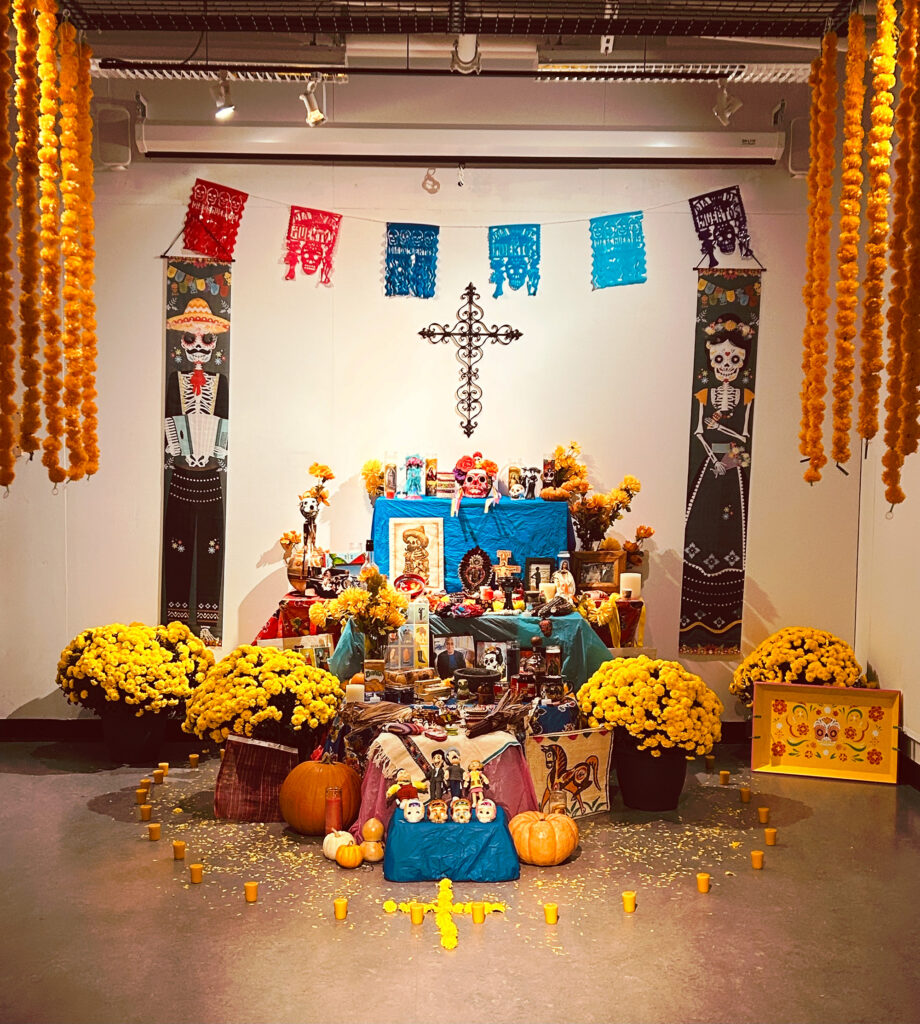
El jueves 22 de octubre, el grupo de SPAN 201 transformó el Crit Space en un espacio de memoria: colgaron el papel picado y las guirnaldas de cempasúchil, acomodaron las ofrendas en los distintos niveles del altar y colocaron los paneles bilingües que explicaban la historia de la tradición, las partes del altar y el significado de cada elemento, desde las velas y el agua hasta el pan de muerto y las calaveritas de azúcar. Cada estudiante aportó su tiempo y su creatividad, de modo que el resultado final fue un trabajo verdaderamente colectivo.
El altar también invitó a la comunidad universitaria a participar, ya que quienes lo visitaron podían dejar una pequeña ofrenda o compartir el recuerdo de un ser querido en el muro de recuerdos. Poco a poco, el altar se llenó de fotos de abuelas y abuelos, madres, amistades y hasta mascotas, así como de mensajes llenos de cariño, convirtiéndolo en un espacio compartido para recordar y celebrar la vida.
Taller de Pan de Muerto
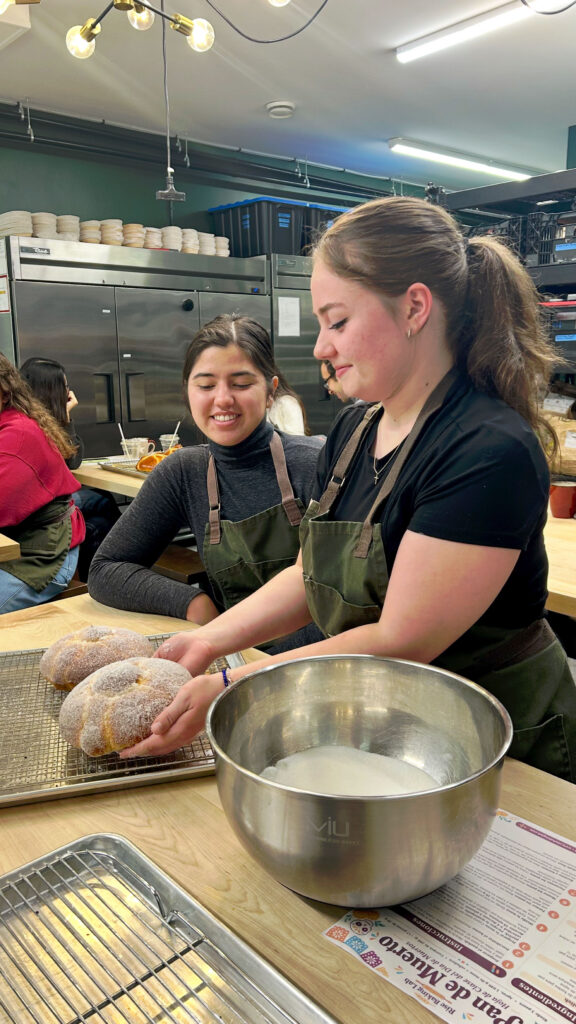
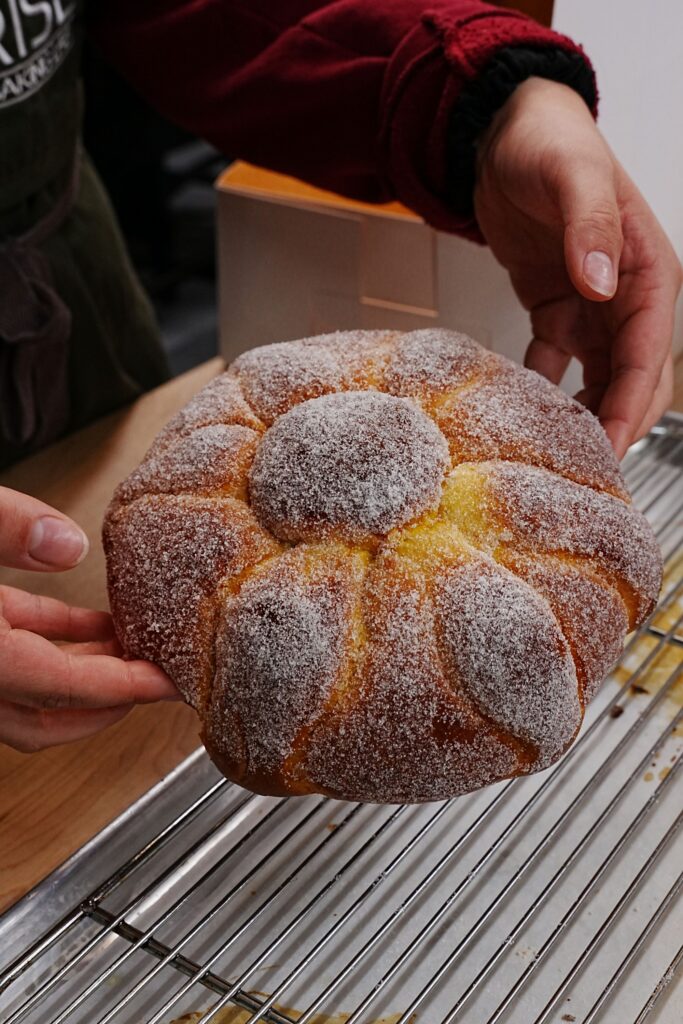
El martes 3 de noviembre, el grupo se trasladó a Rise Baking Lab, en Chilliwack, para aprender a preparar pan de muerto, uno de los símbolos más queridos de esta celebración. Entre harina, risas y el aroma del pan recién horneado, las y los estudiantes amasaron, formaron los huesitos que decoran el pan y descubrieron que cada detalle tiene un significado: la forma redonda evoca el ciclo de la vida y los huesitos representan a quienes ya partieron. Al final, pudieron disfrutar del pan que prepararon, lo que hizo de la experiencia fuera a la vez deliciosa y significativa.
Gracias
Queremos agradecer de corazón a las y los estudiantes de SPAN 201, cuyo entusiasmo y dedicación hicieron posible este proyecto, así como a todas las personas que visitaron el altar y compartieron con nosotros sus recuerdos. Agradecemos también al equipo del Crit Space por su apoyo, y a Rise Baking Lab por abrirnos sus puertas y enseñarnos a preparar el pan de muerto. Experiencias como esta nos recuerdan que aprender una lengua también significa vivir su cultura, honrar su memoria y construir comunidad. ¡Nos vemos el próximo año!
Day of the Dead 2026 at UFV: learning a language by living its culture
This fall, our SPAN 201 students took part in Proyecto Ofrenda, an experience that let us live Día de Muertos beyond the classroom. Together, we set up an altar in the Crit Space on the Abbotsford campus, open to the public from October 23 to November 5, and joined a pan de muerto workshop at Rise Baking Lab in Chilliwack. Neither activity was graded: the assignment was for each student to write about their own learning experience, reflecting on what they discovered about a tradition that brings together Mesoamerican Indigenous beliefs about death and memory with Catholic practices, and that continues to evolve today, including among Latin American communities in Canada.
An altar built together
On Thursday, October 22, our SPAN 201 students transformed the Crit Space into a place of remembrance. They hung the papel picado and marigold garlands, arranged the offerings on each level of the altar, and set up bilingual panels explaining the history of the tradition, the parts of the altar, and the meaning of each element, from candles and water to pan de muerto and sugar skulls. Every student contributed their time and creativity, making the altar a truly collective project.
The altar also invited the UFV community to take part. Visitors could leave a small offering or share a memory of a loved one on our memory wall. Little by little, the altar filled with photos of grandparents, mothers, friends, and even beloved pets, along with heartfelt messages, becoming a shared space to remember and celebrate life.
Pan de Muerto workshop
On Tuesday, November 3, the group travelled to Rise Baking Lab in Chilliwack to learn how to make pan de muerto, one of the most beloved symbols of the celebration. Surrounded by flour, laughter, and the smell of fresh bread, students kneaded the dough, shaped the little bones that decorate the bread, and learned that every detail carries meaning: the round shape evokes the cycle of life, and the bones represent those who have passed away. At the end, they enjoyed the bread they had made themselves, an experience that was both delicious and meaningful.
Thank you
Our heartfelt thanks go to our SPAN 201 students, whose enthusiasm and dedication made this project possible, and to everyone who visited the altar and shared their memories with us. We also thank the Crit Space team for their support, and Rise Baking Lab for welcoming us and teaching us how to make pan de muerto. Experiences like this remind us that learning a language also means living its culture, honouring its memory, and building community. See you next year!