
Voice of Transformation: Embracing Public Speaking as a Path to Personal Growth

Rayna Nasses at UFV Abbotsford campus

by Matthew Michaud

In an engaging conversation, we reconnected with Rayna Nasser, a sophomore in the General Studies program. Rayna’s reflections on her time in CMNS 235, Public Speaking, offer an insightful glimpse into her academic journey and personal growth. As a student transitioning from General Studies to Media Arts, Rayna explores the challenges and revelations encountered in a course that pushed her beyond her comfort zones, particularly in the realm of public speaking. Her account reveals a transformative experience, marked by the discovery of confidence and the importance of adaptability in communication.

What program are you in at UFV? Are there any activities/groups that you are part of?

Currently I’m enrolled in the General Studies diploma; however, I’ll soon be switching into the Media Arts program and will pursue that as my main studies. As I’ve been trying to navigate where I fit in academically, I have yet to join any extracurriculars at UFV, but I feel that’ll change once I hone in on my studies.

Tell us a little about yourself and what you are up to these days?

Coming from a first-generation Lebanese immigrant family, I’ve been very fortunate to live a life filled with opportunity and access. Life lately has been fairly quiet, consisting mainly of school and work. I bartend at a restaurant, meaning that I get my fill–and then some–of social interactions. In whatever free time I can find, I’m typically doing one of three things to re-charge my social battery: 1) reading 2) watching a movie 3) building miniature dioramas.

What was your overall impression of taking CMNS 235 in person at UFV?

I enrolled in CMNS 235 on a whim, thinking to myself: “what do I have to lose, it could be fun”. My first impression of the class frankly was a little all over the place; I was looking forward to the speaking aspect of the speeches, but after the first day of class I began doubting myself and feeling nervous about the workload. It truly was one of those “trust the process” moments. The course structure is unlike any that I’ve seen before, with it seeming intimidating and overwhelming at first, but once you got into it you realized that’s not the case. The expectations for the assignments are clear, while still allowing individuals the flexibility to speak of things that are more so in one’s element. Public speaking is inherently a scary thing, but I can say with confidence that taking this course has been the best thing I’ve done so far during my time at UFV.

What were the biggest challenges of undertaking CMNS 235?

The biggest challenges I encountered in CMNS 235 would have to the impromptu speaking. This might seem like an unpopular opinion, but I thrive on structure, especially when it comes to my speeches. Therefore, I’d much rather memorize an 8-minute speech down to the specific word, rather than making it up on the spot. However, after attempting to actually memorize an 8-minute speech, I realized that impromptu speaking is a skill just as important and necessary as memorization; being able to think quickly on the spot and bounce back from a setback is what makes a great speaker. What helped me improve this skill would definitely be the 30 second on-the-spot speeches we did about random topics, which helped me think quickly on my feet and reminded me to always make it seem like I knew what I was talking about (even if I didn’t at times).

What did you get out of the course?

My thoughts on this course are simple: take it. I never imagined how big of a role public speaking would play in my life, whether it’s in my classes or at my job. Talking to my peers has become easier, talking to my boss has become less daunting, and it’s these small things that add up to make my life a little easier. I’ve become aware of the small mannerisms that impact the delivery of my speaking, all the ums and erms. Being able to consciously limit that type of vocabulary from my every-day speaking has taught me to be more confident in my words and to say things with purpose, which to me has been the biggest takeaway after taking CMNS 235.
From Ice to Academia: A UFV Student’s Journey Beyond Hockey

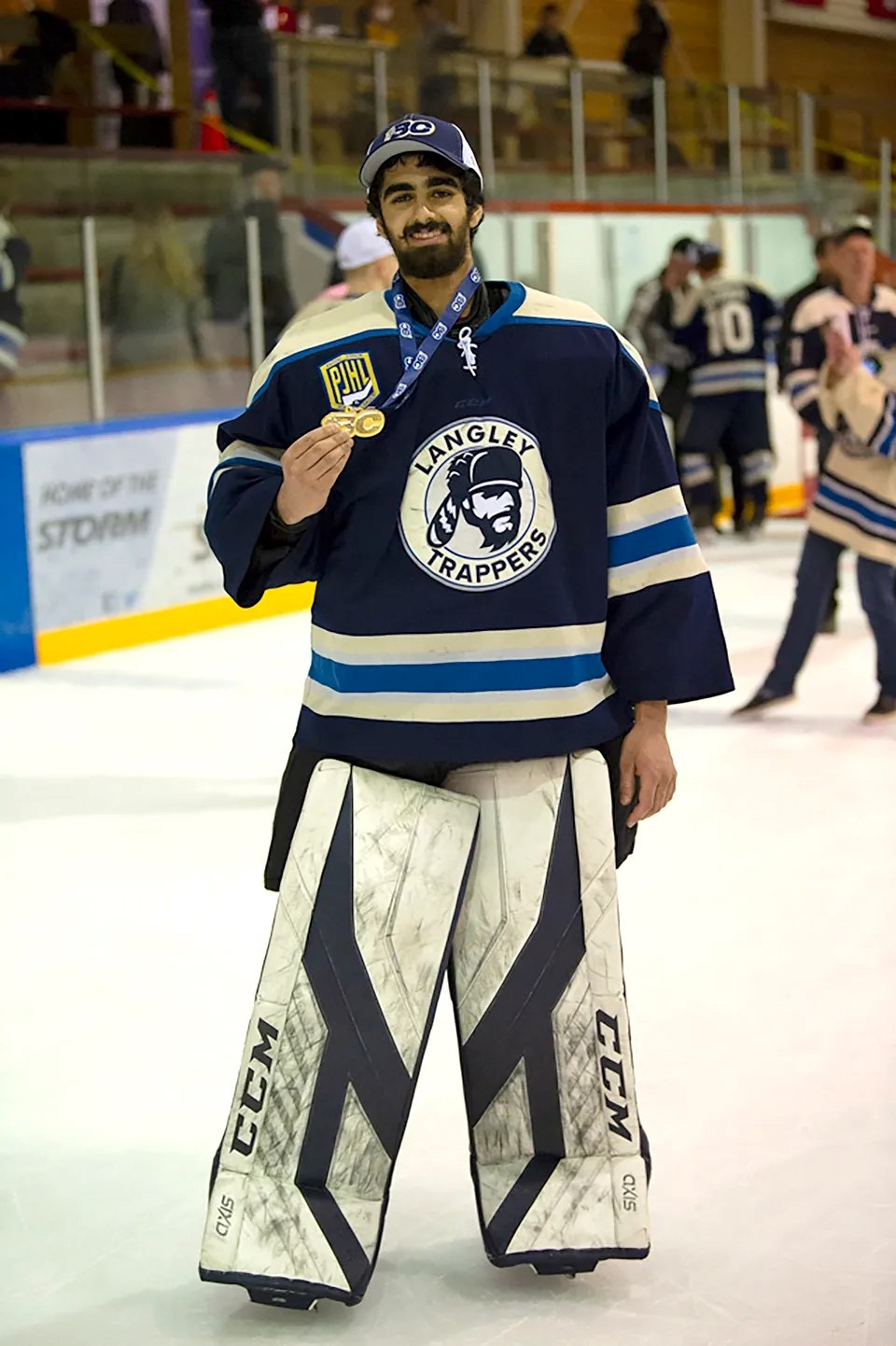
Ice hockey player on hockey field

by Matthew Michaud

A former competitive hockey player transitions to university life at the University of the Fraser Valley (UFV), bringing the discipline and resilience from the rink to the classroom. Enrolled in communications and philosophy, this student is on a quest to explore a broad academic landscape without rushing into a major. The early university experience is marked by the application of lessons learned in sports—such as teamwork and time management—to academic challenges. In CMNS 125, the focus shifts from physical agility to the art of concise and clear communication, reflecting a new kind of strategic thinking. This story is about leveraging past experiences to navigate new beginnings and the pursuit of personal growth in an unfamiliar field.

 What are you studying at UFV?

 For my first semester at UFV, I was able to enroll into both Communications 125 as well as Philosophy 100. With life, hobbies, and work evolving rapidly, I haven’t yet declared a Major. This gives me time to try out an array of courses and gain as much knowledge and experience; without having to tie myself down to anything before I’m ready. Overall, these first couple months of my university career have been exciting, fast, and engaging – and I look forward to many more to come!

Tell us about yourself

 Prior to my UFV journey, my life revolved around school and sport. For the past thirteen years, I have played hockey at a competitive level. Throughout this journey, I had learned many valuable lessons from an early age. These include discipline, time-management, work ethics, grit, and passion. These are some key words that I carry with me no matter where I go, or what I do; core values so to speak. It was an absolute privilege to play such an exciting game for as long as I did.

As I reflect on my career, the highs and lows of it all, here’s what comes to mind: as a nine year old – born and raised in Langley, I had the ability to watch The Langley Rivermen play. I continued my early days in Langley Minor, honing in my skills as a young goaltender and learning every day. In my early teens, I had the chance to join an academy team in their inaugural year – St. George’s Hockey Academy. Not only was this a private, prep school, but it was also a school run much differently than the other academies in the league. Hockey was either before or after school and was never in conflict with a school day. School was the priority, and it was up to the athlete to effectively manage their time to stay academically focused.

St. Georges is located by UBC, and I lived in Langley. The next three years of my life were a cycle of early mornings, long days, and late nights. For example, a morning practice would occur before school hours. This would be a 6am start. Living sixty kilometres away, I would be up bright and early at 4:30 am sharp. Once practice wrapped up, I would complete a full high school day, and head home. The bus ride home allowed me to complete school work, catch up on sleep, and prepare for a night of homework and studies – and I’d get home around 5-6pm. Some days, we’d have no morning skate, but a workout, video, and skate after school. On these days, I was able to sleep in until 5:45 am, bus to school and complete the day, then take a team bus to the rink. Our “hockey day” would begin at 4pm and go until about 7:30 pm. Once completed, I would head home and sleep in the car or complete homework if possible; all to repeat the same schedule for the next day, and the day after. On top of all this, we would travel by bus or plane for our tournaments, games, and showcases.

From grade eight to ten, I learned some of my most valuable traits. I was able to practice them daily and had no choice but to be at the top of my game both on and off the ice. After my academy career, and when COVID struck, hockey and school both took a dramatic turn. Asynchronous classes took over, and hockey would have to wait. This gave me time to grow, train, and take some time away from the busy life I had come to know. The season after, I had the chance to try out for the team I grew up watching, the Langley Rivermen. As a seventeen-year-old rookie, junior hockey was a huge step up from academy. I had the ability to play both with the Rivermen and Trappers in my first year and develop my skills with both teams. During my year with the Trappers, I was able to be one of the top goaltenders in the regular Season, only losing one game in fourteen starts – posting a .930 Save Percentage during that time. Playoffs came and I was the youngest starter in the league. In these playoffs’ games, our team reached new heights and went on a “Cinderella run”. During this time, I had the honour of setting a playoff record, posting a .946 Save Percentage across thirteen games. We’d go on to win our League and Provincial Championships – and it was an absolute privilege to do this all in my first year Junior Hockey. After a great and productive summer, filled with training and fine tuning, I was ready to make the full jump to Junior A hockey. I was so excited to play for the team I grew up watching, and couldn’t wait to start the year.

Unfortunately, a concussion in the last game of preseason would take me out for the first half of my season. Now, concussions have been the only injury I encountered in my years of playing, and this was strike four. After making a long but full recovery. I was able to return to action. This year was full of ups and downs, and unlike the year prior, this would be a more realistic “Rookie Season”. I had a lot to learn about the game, playing against college commits and NHL Prospects and draft picks nightly, all in front of 1,000-4,000 people on any given night. I learned a ton about both myself and the game that year. Once the season concluded, I knew I faced a decision. After four concussions, I knew that, on March 25th, 2023, I had played my last game. After various chats with our trainer, specialists, and family, I had made the decision that the risk of long-term effects of repetitive concussions was not worth it. I value my quality of life and would hate to take that away from my 60-year-old self. My career wrapped up last season, and I now find myself pursuing other things. I started working for a gym in June and have been a consistent top salesman for the company in consecutive months. I now have the opportunity to take on a management role and look forward to a new chapter in my late teen life.

What was your overall impression of taking CMNS 125 in person at UFV?

 As I progress through the term, I have been introduced to a variety of topics in regard to writing. The main takeaway from this term has been profession vs academic writing. CMNS puts weight into writing professionally, and that has been something we continue to work on as we progress. I enjoy our structured writing, and the format that comes with it. We are learning to apply precise structures to our work, and this allows me to be more professional and clearer when it comes to my entries.

Since I started in this course, I have really enjoyed learning how to format different styles of text. From Reference lists to letters of bad news, I have found an interest in the art of formatting words. This has allowed me to further build my skills in the workplace and deliver more articulate responses to my team and clients in my workspace. Additionally, CMNS 125 has challenged me to work on being concise. I have always enjoyed writing, and lots of it. I do find myself going over word counts and having to edit my papers to make them more concise, and CMNS has challenged me to do that. It’s a great way for me to work on this, and I have enjoyed the challenge of writing more clear- and thought-out entries. Think – “Less is more”…sometimes.