
UFV Research Excellence 2026: Jelena Brcic looks to astronauts for insight on team dynamics
Many of us experience various types of group dynamics while working in teams: some positive and some negative. But at the end of the day, we can go home to our families or blow off steam through fitness, hobbies, or relaxation.
What if you were living and working alongside your workmates 24/7 for days or even months at a time in a remote and isolated and even dangerous environment?

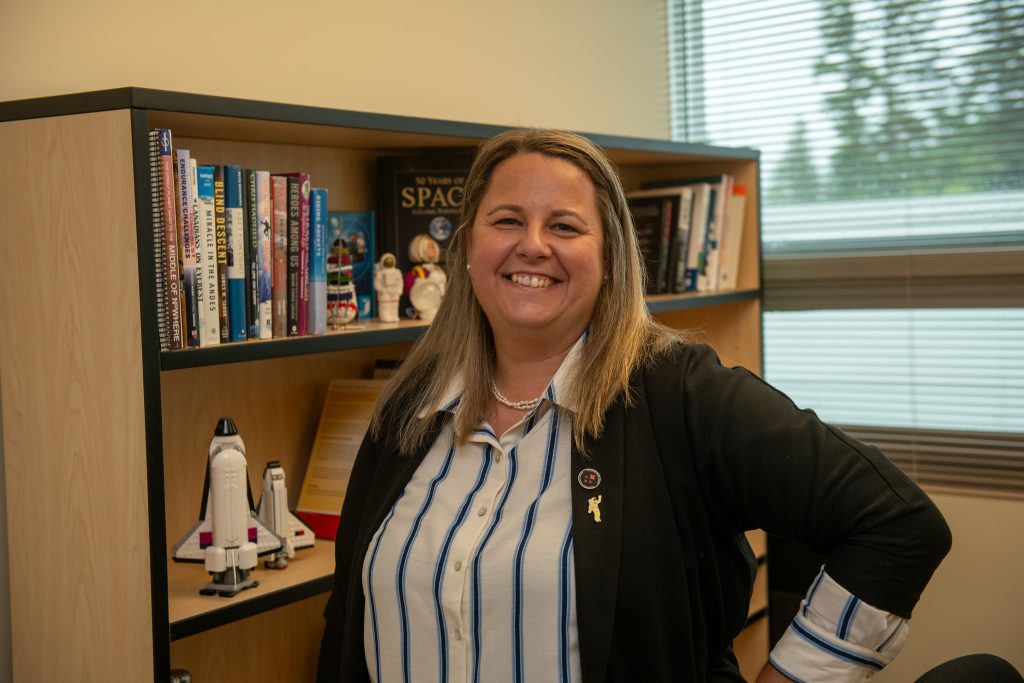
That has been the focus of Dr. Jelena Brcic’s research for more than 15 years. In recognition of her impactful research on teams in extreme unusual environments, Jelena has been selected as the 2025 recipient of the Research Excellence Award at the University of the Fraser Valley (UFV).
In 2025 Jelena, an associate professor at UFV’s School of Business, focusing on organizational behaviour, received $1,145,460 research grant from the Canadian Space Agency to for a six-year investigation into how astronauts experience long-term missions on the International Space Station (ISS). Jelena and her national research team will work with astronauts to understand how they manage stress and find meaning in their work. Her team will work closely with astronauts who typically spend six months on the station.
“We’ll track both the challenges astronauts face and the positive emotions — such as gratitude, compassion, and awe — that help them thrive,” Jelena says.
They’ll be far away from their loved ones, and Jelena suggests their job performance, physical health, and psychological well-being will depend on an ability to navigate the negative and capitalize on the positive. Her team will explore how astronauts aboard the ISS cope with daily stressors, how they experience self-transcendent emotions (e.g., gratitude, compassion, awe) and how they build meaning and experience significance from their daily work.

Jelena’s broader research focuses on how small, skilled, mission-oriented teams cope with working and living in extreme and unusual environments such as the ISS, fields of combat, isolated research stations, or tops of the world’s highest mountains. She also researches the human dynamics of search and rescue teams, a topic she shifted to during the pandemic when her space-related research was paused.
Jelena involves students in her research and brings her findings back to the classroom through challenges and group projects related to teamwork and extreme environments.
She has been published in multiple academic publications and has given academic talks in Canada, the United States, Europe, and Asia.
It all started when she considered her own experience in competitive volleyball and wondered why some teams seemed to be very skilled but were not successful at working together as a cohesive group.
“It was as simple as wondering why some teams had skilled players but still couldn’t deliver results,” she recalls.
A common thread throughout her research findings is human resilience.
“We are tougher than we think,” she says. “We can learn and grow from our challenges. Even under the most difficult circumstances, people experience resilience, which helps them get through challenges, and growth, which helps them change for the better. Throughout my research, I am trying to tease apart how teams find the pathway to growth.
Asked how she feels about receiving UFV’s Research Excellence Award, Jelena says it has been a validating experience.
“In academia, one can feel like a continuous imposter. These past few months that feeling has started to lift for me,” she says. “It’s like a nice bow on top of a present, to be acknowledged by others that your work is valued. I’m making progress in defining how I want my career to go. I feel like I’ve arrived, which is a different feeling than anything else in my academic experience so far.
“My topics tend to involve slow research and ask big questions. It’s meaningful, looking at people in their real place of work, doing things that are very hard for us to imagine. However, the research results can be meaningful and applicable in many different environments and places of work.”
She is also grateful for the support she has received along the way.
“None of the work I do would be possible without the support of my husband, family, friends, the many brilliant collaborators, and the funding from the Canadian Space Agency and Public Safety Canada.”