
From patient to researcher: Cynthia Thomson is changing how chronic pain is treated
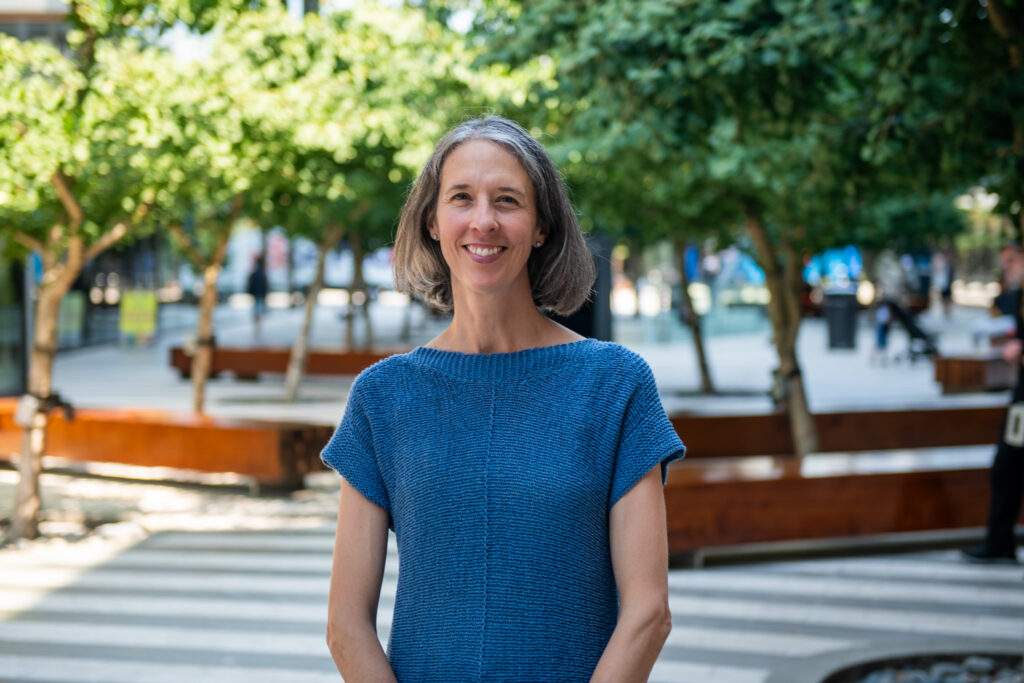
After living with chronic pain for more than a decade, University of the Fraser Valley (UFV) researcher Dr. Cynthia Thomson is helping reshape how clinicians across Canada understand and treat it.
Supported by Fraser Health, Cynthia, an associate professor of kinesiology at UFV, is leading a national advisory panel planning project to develop a guide, supportive tools, and training for clinicians. It’s work that she hopes will help modernize the treatment of chronic pain.
“One in five Canadians experience persistent pain,” Cynthia says. “Unfortunately, many are recommended sub-optimal treatments.”
In an article recently published in the Canadian Journal of Pain, which she produced in collaboration with a team of health-care professionals and patient partners, Cynthia advocates replacing the traditional biomedical model of pain diagnosis and treatment with the biopsychosocial (BPS) model.
Put simply, the biomedical model focuses primarily on physical causes and treatments, while the biopsychosocial model recognizes that biological, psychological, and social factors all influence how pain is experienced. Cynthia has published two recent papers on the subject, including one that was recognized as paper of the year by the Canadian Pain Society.
Cynthia’s work is grounded in lived experience.
“For more than 10 years, I lived with chronic pain that affected every aspect of my daily life,” she says. “And the idea in my head was always that it was nerve stuff, something being pinched, something that was wrong structurally or out of alignment.
“But during the pandemic, I lost access to so-called physical treatments, and that’s when I turned to the literature and discovered the neuroscience of pain.”
Cynthia learned that pain is profoundly influenced by thoughts, emotions, and learned experiences — concepts that, she says, had never been discussed by any of her clinicians.
“As a researcher, I dove into it full on, and just learning about the science of pain improved and, although it took some time, eventually eliminated my own pain,” she recalls. “If everything is perceived in the brain, why should pain be any different? Once I recognized that, I was able to recognize the activities and thought patterns that triggered this vicious cycle and started training my brain.”
Cynthia was floored by her relatively quick recovery. Everything she had ever been told suggested chronic pain was something to be managed, not cured.
“I know not every story is like mine, but many members of my research team have had similar experiences,” she says. “They got through their pain by learning about pain science and retraining their brain, and now we all have this mission to share knowledge that is strongly supported in the scientific literature but isn’t translating into clinical practice.”
In her most recent study, participants had lived with chronic pain for an average of 14 years, and discussions with clinicians rarely addressed the neurological aspects of pain.
“They were always prescribed medication, physical therapy or surgery, and they were surprised they hadn’t heard anything about the mental aspects of pain from their health-care professional, especially because it would have given them something they could do to help themselves,” Cynthia says. “It made me realize that what’s happening in practice is very much not aligned with the current state of evidence.”
Cynthia is quick to say that this isn’t out of apathy or stubbornness. Clinicians have traditionally been trained using the biomedical approach, and only recently has the biopsychosocial model gained traction in medical school curricula, despite being accepted practice for decades.
“If you think about Indigenous ways of knowing, the medicine wheel views health as having mental and spiritual components in addition to physical,” she notes. “But our colonial ways became so focused on medicine, and it’s only in the last few years that it’s starting to change.
“There’s a feeling among some clinicians that they’re not equipped or comfortable educating patients about the biopsychosocial model, or they simply don’t know enough about it,” she says. “Getting health-care professionals to change their behaviour is hard, and you have to think of every way to help them adopt it as easily as possible.”
Between Pain Canada, Pain BC, and Ontario-based Power Over Pain Portal, Cynthia says there are strong partners ready to house the resources her team is creating. The next big step will be implementation — getting the information into the hands of the clinicians who can use it.
Ultimately, she believes her team’s work will positively impact many people who have lost hope.
Cynthia recalls one woman from a study who wasn’t able to cut vegetables because of chronic pain. After seeking out the resources, she attended a garden harvest with friends and realized she had been chopping peppers for two hours.
“She started to cry because she realized she wasn’t in pain,” Cynthia says. “I put my heart and soul into my work, and those stories make it worth it. They keep me going. I’m motivated to do more and make sure more people know about this.”
Story by Eric Welsh – eric.welsh@ufv.ca