
From local conversations to national impact: preparing communities for the future

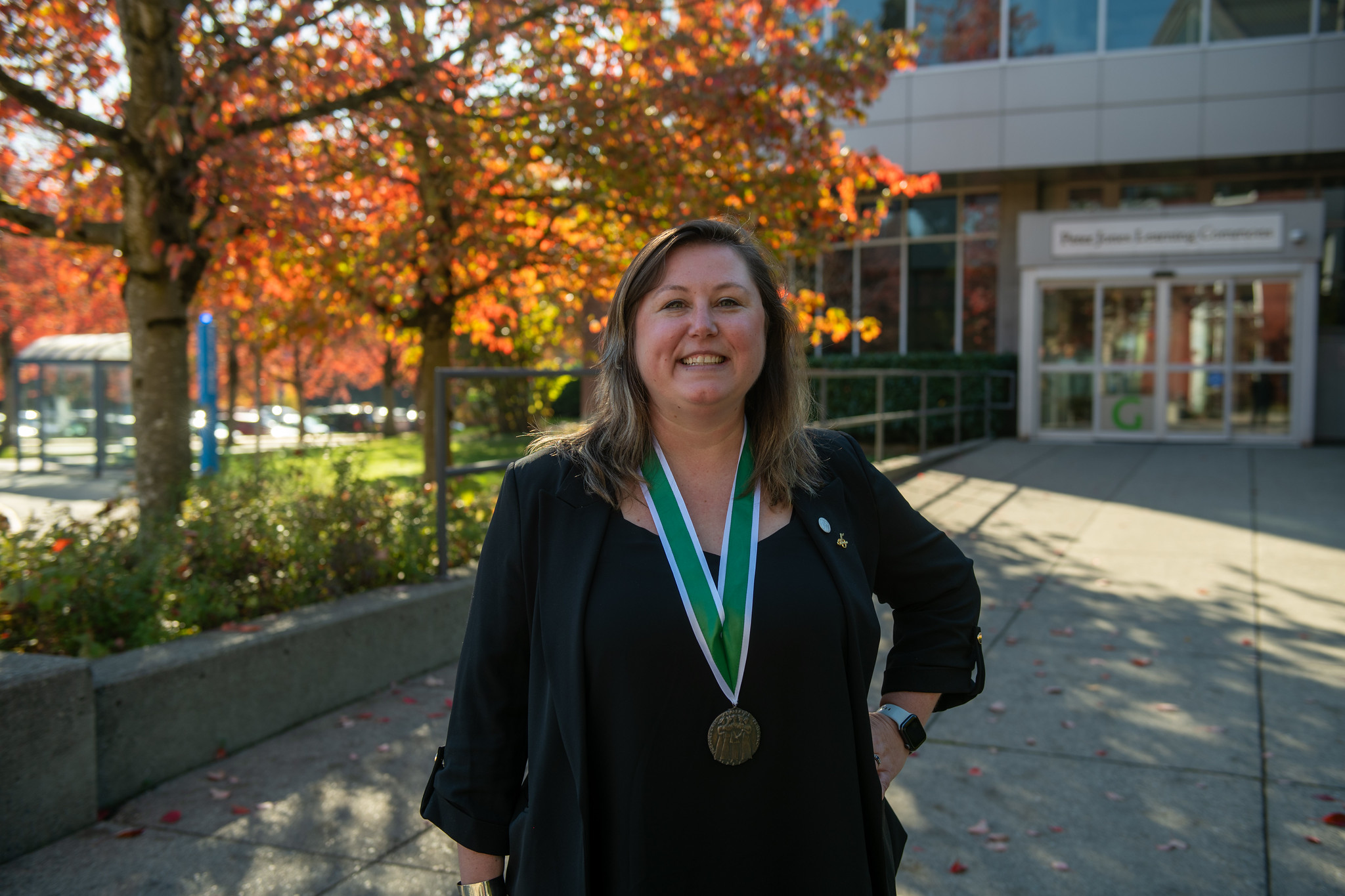
Community Engagement Perspectives, by Susan Mide Kiss, Vice-President, UFV Community Engagement
Over the past several weeks, I have had the opportunity to participate in a number of conversations across British Columbia, including UFV’s Grounded Innovation 3.0 Summit, the RBC Community Partner Event in Vancouver, and the Surrey & White Rock Board of Trade’s Education for Growth discussion with Minister Jessie Sunner.
Later in May, discussions at the Greater Vancouver Board of Trade featuring Prime Minister Mark Carney and the Fraser Valley Economic Summit reinforced a common theme: the future of our communities will be shaped not by any one organization or sector working alone, but by our ability to collaborate, build trust, and move forward together.
At the Fraser Valley Economic Summit, leaders from business, government, education, Indigenous communities, transportation, energy, manufacturing, infrastructure, and public affairs came together to discuss both the opportunities and challenges facing our region.
What became more evident throughout the Summit was how interconnected these challenges have become. Conversations about economic growth are now inseparable from discussions about workforce readiness, housing, transportation, infrastructure, energy demand, sustainability, and long-term regional planning.
As UFV prepares to celebrate its newest graduates this June, the university’s alumni community has now grown to more than 56,000 people contributing across the Fraser Valley and beyond. The UFV Alumni Association has reached an important milestone this year as we celebrate their 25th anniversary. That continued connection between learners, communities, and regional workforce development is an important part of building long-term economic resilience.
The Fraser Valley is increasingly becoming a hub for some of British Columbia’s most important conversations around trade, transportation, housing, workforce development, innovation, and sustainable growth. According to the Fraser Valley Regional District’s 2025 Regional Economic Review, the region’s population is projected to exceed 500,000 residents by 2050 — an increase of approximately 48 per cent from 2021. Growth on that scale reinforces the importance of long-term planning, workforce development, housing, infrastructure, and regional collaboration. As pressures around affordability, infrastructure, labour shortages, and population growth continue to intensify, so does the need for coordinated regional leadership and long-term planning.
One idea that stayed with me from these discussions was the reminder that in uncertain times, one of Canada’s greatest strengths is trust — trust built through relationships, partnership, and a willingness to work together in meaningful ways.
The Executive Panel: From Local to National Impact highlighted how decisions and partnerships taking place in regions like the Fraser Valley increasingly contribute to broader provincial and national conversations around economic development, sustainability, Indigenous partnership, infrastructure, and innovation.
The panel brought together leaders from across sectors, including UFV honorary degree recipients Susannah Pierce and Cathy Press, alongside Chief David Jimmie, Chief and CEO of Sqwála First Nation and a future UFV honorary degree recipient, as well as leaders from finance, manufacturing, and regional business.
Their perspectives reflected the importance of bringing diverse lived, cultural and professional experiences, industries, and leadership approaches together to address increasingly complex regional and national challenges.
It was also striking to see how many regional leaders, community partners, and UFV alumni were contributing throughout the Summit — on stage and throughout the room. It served as a reminder that post-secondary institutions contribute not only through education and research, but through the long-term relationships, leadership networks, and community connections that help regions grow and adapt over time.
As communities continue to evolve, post-secondary institutions have an important role to play in supporting workforce development, fostering applied research and innovation, creating opportunities for collaboration, and helping connect regional priorities to practical action.
What struck me most throughout the Summit was the alignment across sectors. Business, government, post-secondary institutions, and community leaders are increasingly asking many of the same questions:
How do we build clearer pathways between education and industry?
How do we support learners in ways that also strengthen our communities and economy?
And how do we lead through rapid change, uncertainty, and emerging opportunities?
What gives me optimism is that the Fraser Valley is not waiting for solutions to arrive from somewhere else. Across the region, Indigenous communities, municipalities, educational institutions, businesses, and community organizations are building partnerships, identifying opportunities, and creating momentum together.
Examples of this work are already taking shape across the region through initiatives like the emerging Mission Living Lab, where municipal, educational, community, and regional partners are exploring collaborative approaches to innovation, workforce development, and community resilience through community-engaged research and partnership. The Fraser Valley Economic Summit, proudly hosted at the University of the Fraser Valley, reflected the kind of regional collaboration that will be essential in the years ahead. The question is no longer whether change is coming — it is whether regions are prepared to lead through it.
None of this work happens alone. Progress depends on communities, organizations, institutions, and leaders being willing to move forward together — particularly during periods of uncertainty and change.
The conversations taking place across British Columbia right now matter deeply. But equally important is what happens after the conversations end.
How we strengthen partnerships.
How we build trust.
How we prepare communities for change.
And how we ensure that growth, innovation, and opportunity continue to benefit the people and communities we serve.
The Fraser Valley has an important role to play in Canada’s future. Continuing to build strong regional relationships, support collaborative leadership, and create space for meaningful dialogue will be essential to ensuring communities across the region are prepared not only to respond to change, but to help shape what comes next.
With gratitude,
Susan Mide Kiss
Vice-President, Community Engagement
University of the Fraser Valley
_____________________________
Media Contact
Stacy Kirpichova
Acting Director, Communications
University of the Fraser Valley
stacy.kirpichova@ufv.ca