
UFV alumni play behind-the-scenes role at soccer’s World Cup
Three University of the Fraser Valley (UFV) alumni have played a fun and vital behind-the-scenes role at one of the world’s premier sporting events.
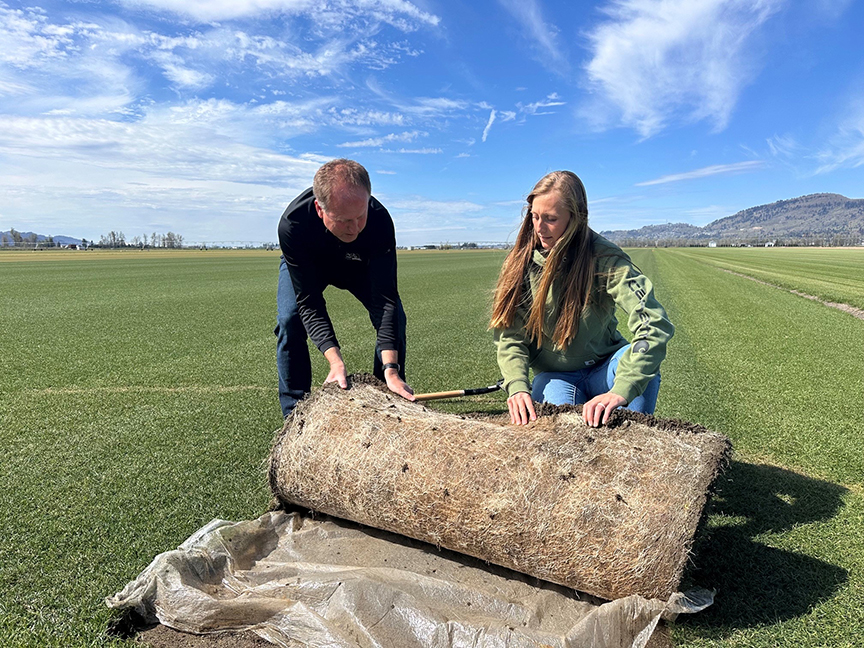
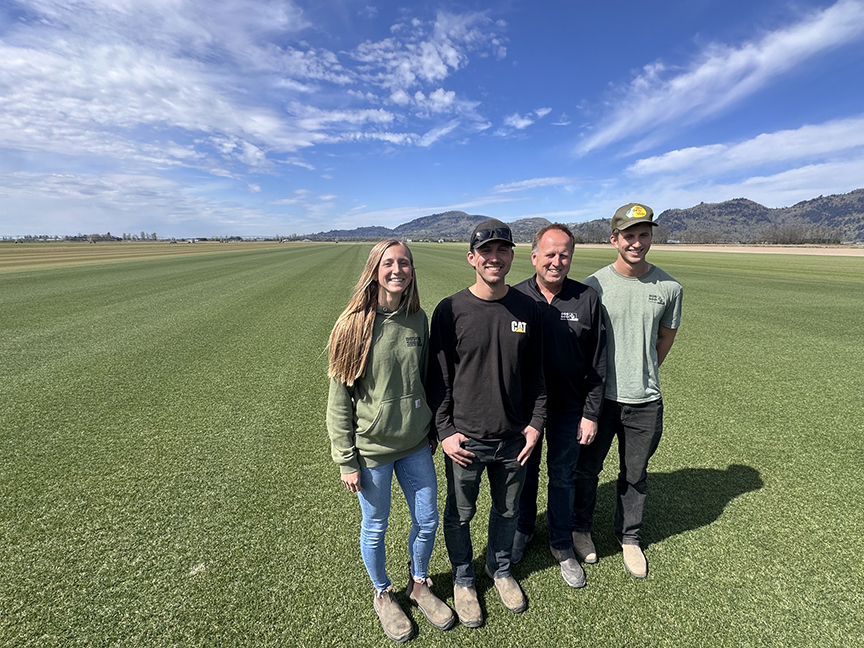
As international soccer squads have hit the field at B.C. Place Stadium throughout June, and now into July, they’ve done so on a grass field carefully created by Abbotsford’s Bos Sod Farms. Nicoline Van Oort, a graduate of UFV’s Agriculture Technology program, has worked alongside her father Bert and two brothers, Caleb and Jaron (both UFV business diploma grads).
“It’s been a blast, such a cool experience,” Nicoline says. “We’ve learned a lot and met a lot of interesting people who have experience in different areas. We’ve built relationships with people we wouldn’t have otherwise met and had a lot of fun working on a unique, high-caliber project taking place in our own backyard.”
Since opening in 1983, B.C. Place has been exclusively an artificial turf sporting venue, but grass pitches are a necessity for the World Cup. There’s been talk over the years about whether it would be feasible to have grass in the stadium full time, but it’s never been deemed feasible.
When FIFA approached Bert in early 2024 with the idea of installing a grass field in the stadium, even for a short time, he was skeptical. Nicoline found the idea exciting, but shared Bert’s apprehension.
FIFA specifications insist that turf fields be grown on plastic, creating a denser root structure and a more robust playing surface. Nicoline wasn’t sure it could be done.
“We were thinking, how’s this going to work? Can we put holes in the plastic for drainage because we live in the Fraser Valley and we get rain? Some farmers said yes, some said no,” Nicoline recalled. “Once we crossed that bridge, we were confident we were capable and had the tools to do it, and we pursued the opportunity hard.”
Bos Sod Farms went from the FIFA shortlist to the chosen candidate, and the growing of the grass began in June 2025, a long process filled with months of monitoring and testing. Bert likened the process to ‘driving with the emergency brake on,’ wanting to go faster, but needing to go slow.
“It was a patience game of doing quite a bit while also not doing too much,” Nicoline noted.
In the end, they had two acres of grass carefully mowed to FIFA specifications, between 20 and 22 millimetres. Over three days and 24 trips starting May 7, the grass was transported to the stadium for installation.
The Bos family handed off the field at that point.
“We’ve taken a back seat since then, watching it on TV like everyone else,” Nicoline laughs.
Five matches have been played on the pitch so far, including two games featuring the host Canadian team. Nicoline watched Canada make history on the field with a 6-0 victory over Qatar on June 18, her country’s first-ever triumph at the World Cup.
“It’s nice that we did something for our country, but it’s just as nice to have done it for our province and city,” she said.
Following that match, Canadian player Alistair Johnston told The Athletic’s Joshua Kloke that the playing surface was “The best that pitch had ever been,” better than others that he’s played on.
Johnston’s teammate, Luc de Fougerolles, said it never felt dry – a criticism levied at the grass pitch installed at New York’s MetLife Stadium.
“It (B.C. Place) wasn’t so short that the ball would skid off, but it’s also not so long that the ball just slows down a bit,” Luc said.
Nicoline loved hearing that.
“You never know, you’re always questioning yourself,” she said. “What FIFA was looking for is not maybe what you’d expect. You’d think lush and plush, but they’re also looking for durability – something strong and robust that will take the wear and tear of the play.”
Two more matches will be played – a Round of 32 showdown on July 2, and a Round of 16 game on July 7.
The field will then be taken out as the Canadian Football League’s B.C. Lions and Major League Soccer’s Vancouver Whitecaps move back into the stadium.
Nicoline never imagined when she was at UFV that she might one day be growing grass for the World Cup, but she’s thankful that her time at the university helped prepare her for the moment.
“While my program wasn’t geared towards turf, UFV helped shape me as a person, gave me exposure to industry, and gave me insight into what’s involved in those industries,” she said. “I did a practicum at a pepper greenhouse, which was an amazing experience that opened my eyes. I learned a bit about soil and conditions for plant growing.
“Because of my time at UFV, I grew as a person and I went into the World Cup experience with more knowledge, and I’m thankful for that.”