
Dr. Lolehawk Laura Buker wins award for teaching excellence
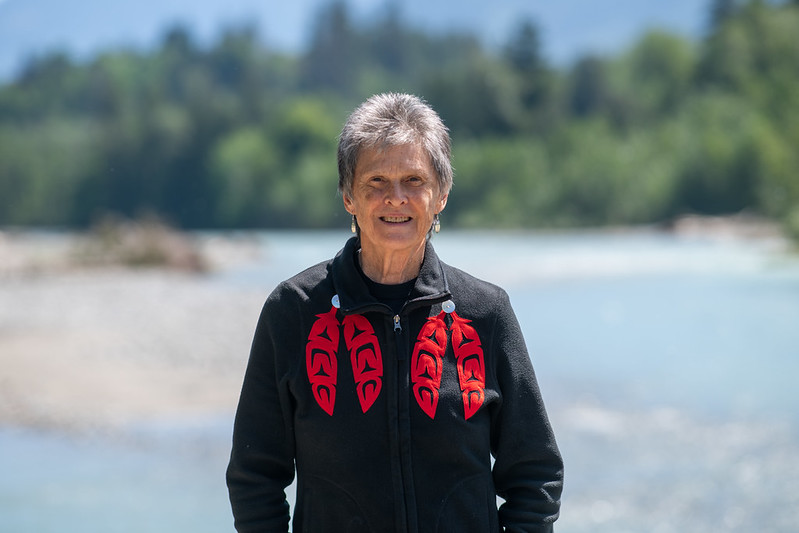
In Dr. Lolehawk Laura Buker’s first semester as an education major at the University of British Columbia, she was so unsure she’d make it that she called home in tears. 40 years later, she’s been awarded the West Coast Teaching Excellence Award for her commitment to student engagement and her reflective, intentional approach to teaching practices.
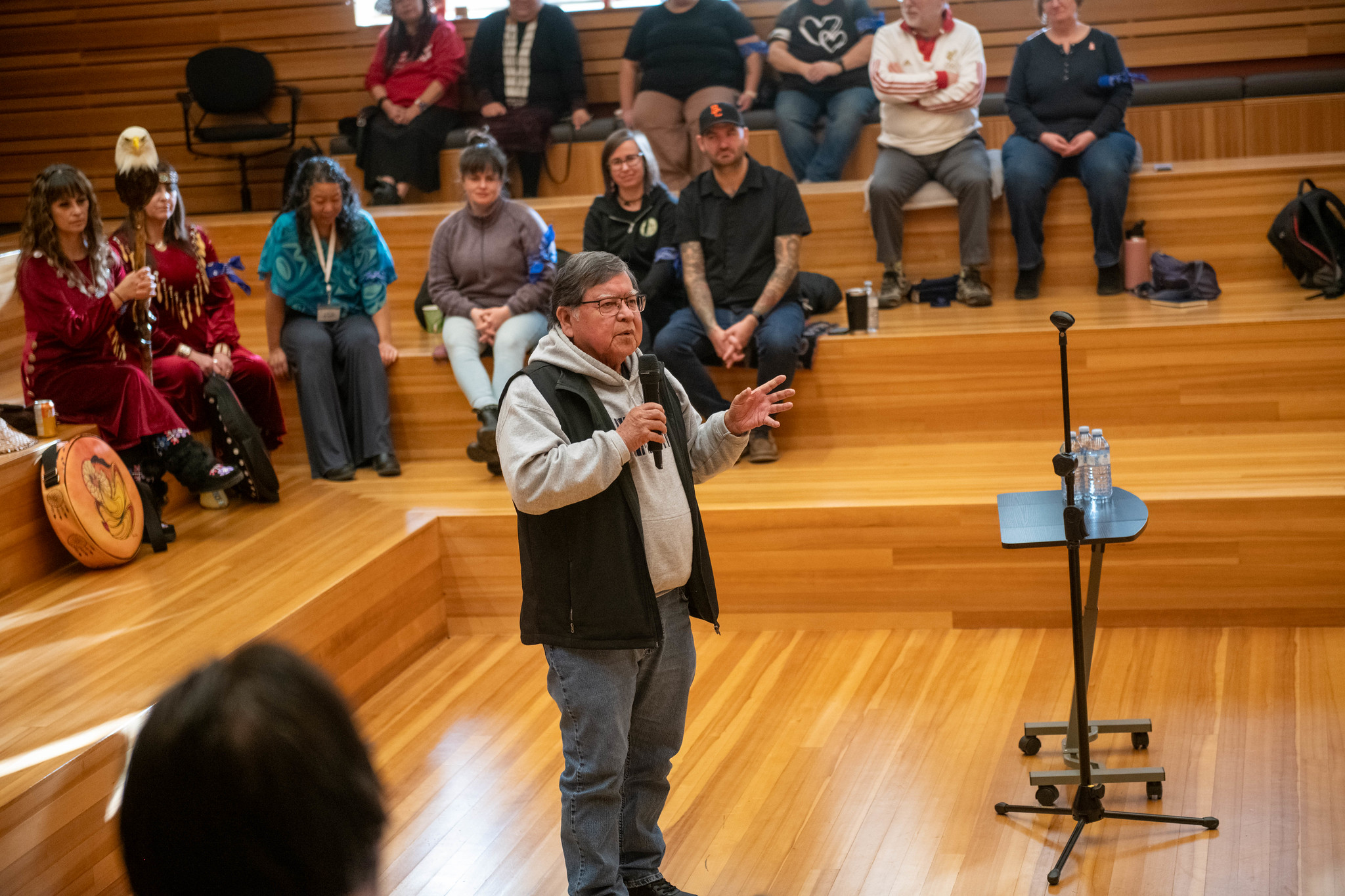
The Indigenous Studies professor has been sharing her expertise with UFV students since 2018. Indigenous Ways of Knowing are deeply embedded in her teaching, assessment, and curriculum designs. Lolehawk uses song, land-based learning, language revitalization, storytelling, and resilience-focused pedagogies to help others find their voices and apply their learning in the world.
She believes good teaching should engage both hearts and minds. (In Halq’eméylem: “Lets’e mot, Lets’eth’ále.”) On the first day of every class she teaches, she starts by saying, “This is a journey together. And in that journey, we’re inviting you into an imaginary canoe. Our canoe is taking us together into places that we don’t know yet. But we are paddlers, all of us, including me. We can disagree on things or question things, but we do it in respect because we’re pulling together for each other to understand.”
The commitment to excellence recognized by this award was shaped by Lolehawk’s years as an athlete. She was the first Stó:lō woman on the UBC women’s volleyball team and spent years training to win the team’s first national championship. In 2013, her team was inducted into the UBC Sports Hall of Fame.
“You never forget the training that you do to become a national champion,” she explains. “We spent tons of hours training, and you kind of lean into that.”
After more than 40 years of teaching, this award has Lolehawk reflecting on her gratitude to her family and her students. For her father, a WWII veteran, who drove all the way from Mission to UBC to bring her home after that brokenhearted phone call in her first year. For her mother and grandma, strong matriarchs of the family, who prepared her favourite meals and took her fishing without mentioning a single word about it. Her family, who’d believed in and supported her as the first of their relatives to go to university, loved her back together for a week, then sat her down at Saturday dinner with an announcement: if it was too hard, Lolehawk never had to go back.
“But by then, I was feeling strong and ready to go again,” Lolehawk recalls. “I said, ‘No, I’ll go back and I’ll see how I do at Christmas exams.’ And I won’t say I got through with a bunch of A’s, because I didn’t, but I got through enough.”
From there, she became a history-making national volleyball champion, then a secondary school teacher and coach in North Vancouver, later finding work in higher education. Lolehawk taught and researched at Lakehead University, bringing the first four-year Indigenous Teacher Education program to northern Ontario alongside fellow Stó:lō, Dr. Ethel Gardner. At UFV, she’s served as a shining example of how pedagogy can be reimagined for the better. Lolehawk continues her love of learning the river language, Halq’eméylem, and performs as a singer and drummer in the musical group, Good Medicine Songs.
This career-defining award celebrates the distinctive strengths she brings to the classroom: from the foundation her family gave her, Lolehawk builds spaces where students feel safe enough to grow, to challenge and express themselves.
“That’s number one in my lens, to create the safest space for our learning. Because if that happens, then out of that will come amazing work. I’ve become a whole, valued teacher because of my students; they’ve taught me as much as I’ve taught them,” she says.
“I lift my hands up to the UFV students that have walked into my classrooms because not only have they given me tremendous respect, but they have given each other that similar consideration and love. So, I’ve been overwhelmed, really, for the last couple of weeks, having this award. It’s all about the heart, and healing. That’s why it’s emotional to me.”