
UFV’s Lauren Erland becomes a fellow in Royal Canadian Geographical Society
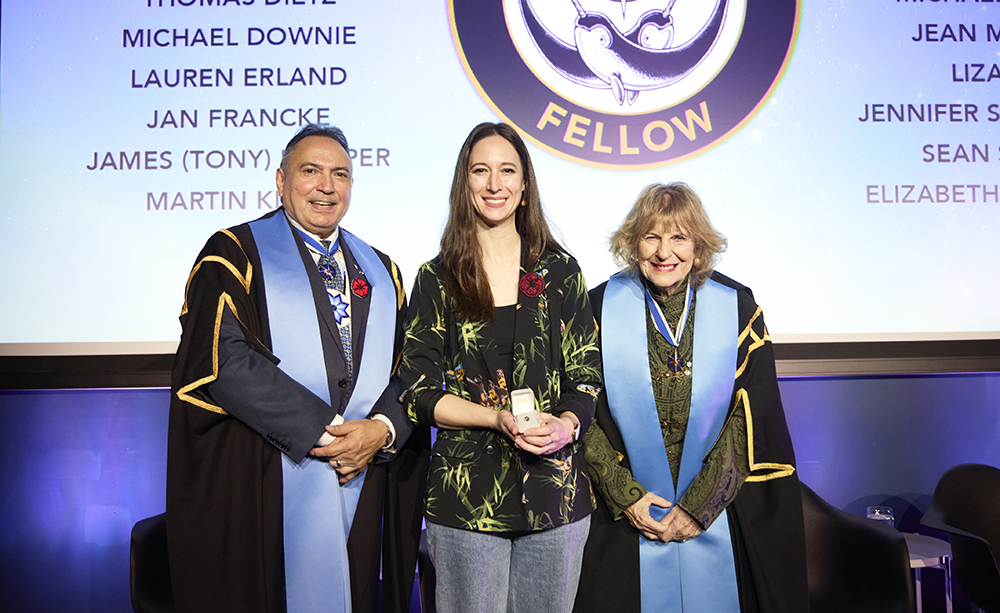
Dr. Lauren Erland’s scientific curiosity has taken her from Fraser Valley berry fields to the Arctic tundra, earning her recognition from one of Canada’s leading geographical organizations.
The University of the Fraser Valley faculty member has been nominated as a fellow of the Royal Canadian Geographical Society (RCGS). The prestigious honour recognizes people who have contributed to scientific knowledge in geography, geographical exploration and related sciences.
The long list of RCGS fellows includes Nobel Prize winner Frederick G. Banting, the co-discoverer of insulin, pioneering anthropologist and explorer Diamond Jenness, Group of Seven artist A.Y. Jackson, and television personality and philanthropist Alex Trebek.
Lauren is in Ottawa this week for a ceremony recognizing new fellows.
“The RCGS College of Fellows has so many people doing meaningful work in Canada, that is making tangible differences in communities and ecosystems nationally,” Lauren says. “I am really grateful for the opportunity to join their ranks.”
An assistant professor in UFV’s agriculture department and director of the university’s Berry Environmental Resilience Research & Innovation (BERRI) Centre, Lauren studies how Canadian plants perceive and respond to environmental changes, including those caused by a changing climate.
In the Fraser Valley, she works closely with berry producers to understand how food production may change in the future and develop strategies to support continued access to healthy, affordable food.
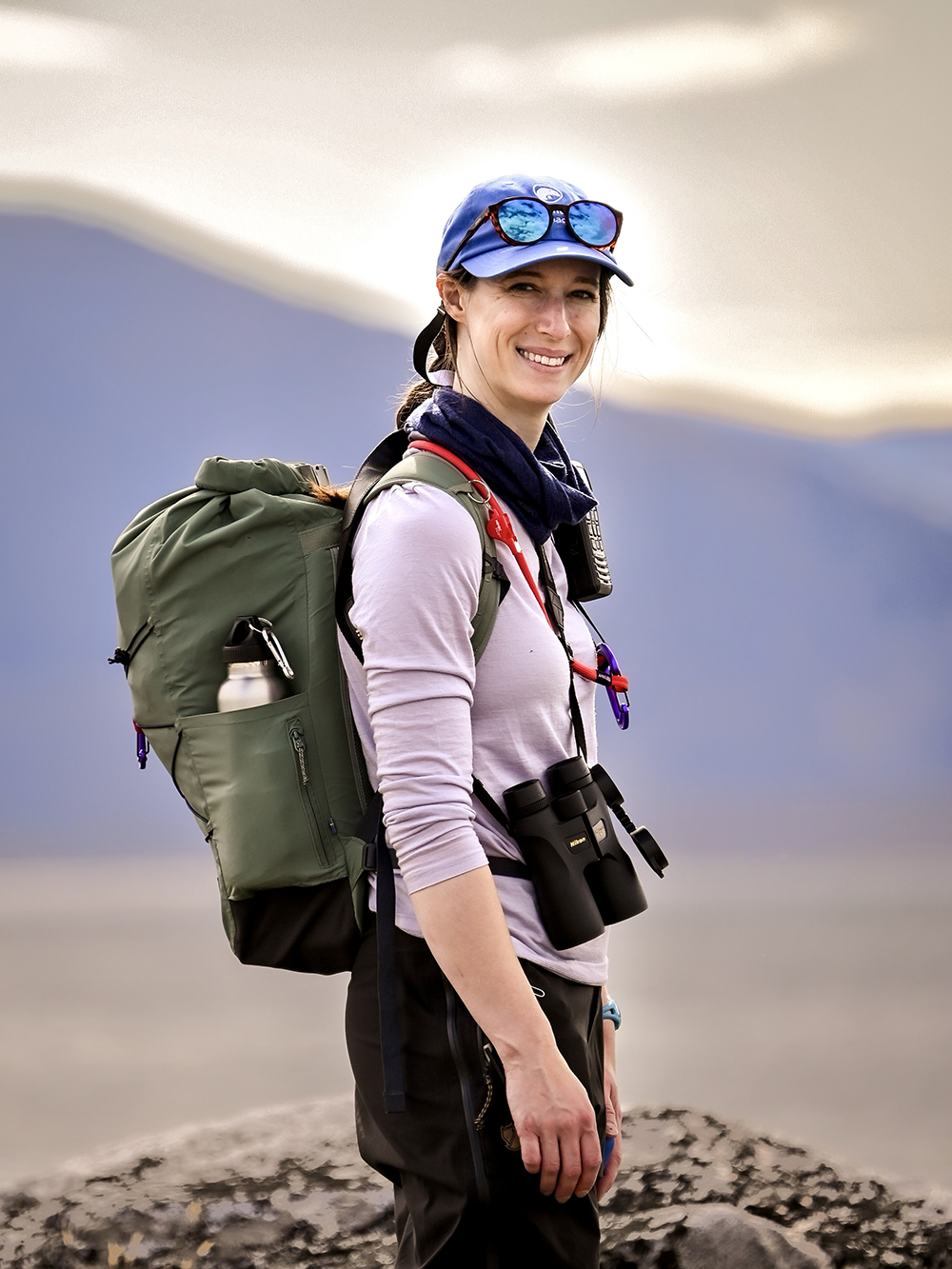
In B.C.’s Okanagan Valley, she’s studied how plants respond to signals from wildfire smoke and how increasingly smoky skies and severe wildfire seasons affect grassland ecosystems.
Lauren is also working with Dr. Cindy Jardine, a UFV colleague and fellow Canada Research Chair, on a project to strengthen food security for Indigenous peoples in northern Canada. In the Northwest Territories, they’ve partnered with Yellowknives Dene First Nation, the Institute of Circumpolar Health and local K-12 classrooms to develop in-class mini-labs and on-the-land geocaching activities. The activities encourage students to explore climate change and its effects on community food security, food sovereignty and access to traditional foods.
For the past three summers, Lauren has also travelled as an expedition botanist aboard Adventure Canada cruises to the Canadian and Greenlandic Arctic, sharing her knowledge of northern plant life with passengers, including celebrated Canadian author Margaret Atwood.
To date, Lauren has published more than 40 peer-reviewed scientific articles, contributing to research on plants, environmental change and food security in the Fraser Valley, across Canada and beyond.
But Lauren’s work doesn’t end when her research is published. She’s equally committed to sharing what she learns, taking scientific knowledge beyond academic journals and into classrooms, community events and public conversations.
She shares her research with elementary and secondary school students, post-secondary students, fellow researchers, industry representatives and the general public through organizations such as Exploring by the Seat of Your Pants and The Explorers Club, of which she is an international fellow.
She’s also spoken at TEDx Abbotsford, appeared in podcasts and news articles, and delivered more than 100 presentations. Those include several talks for UFV Elder College, which offers educational programming for retirees and encourages intergenerational learning and knowledge exchange.
“Fundamentally I believe that research needs to be shared in a way that is accessible and understandable, particularly for the people and places which are involved and impacted,” Lauren says. “If no one knows what is happening, then I am not sure that we are doing our jobs as scientists properly, particularly given the increase in science skepticism in society today.”
Lauren’s fellowship with the Royal Canadian Geographical Society offers another opportunity to show that commitment.
Fellows are expected to contribute their time and expertise through committee work, organizing community events, delivering presentations, fundraising and other activities that advance the society’s mandate.
Their fundraising efforts help the RCGS develop and distribute free educational materials to 28,000 teachers across Canada.
“I am looking forward to working with the RCGS to help to advance their mandate of making Canadian plants, science, and research better known to Canadians and the world,” Lauren says.
Story by Eric Welsh – eric.welsh@ufv.ca