
What’s in a Place Name? Gathering connects languages, lands, and learnings through community
Every day, thousands of people travel through the Fraser Valley, passing signs for places like Skowkale, Chilliwack, and Sts’ailes without giving their names a second thought.
But every one of those names has a history, a meaning, a connection to the land that long predates the roads, neighbourhoods and communities people know today.
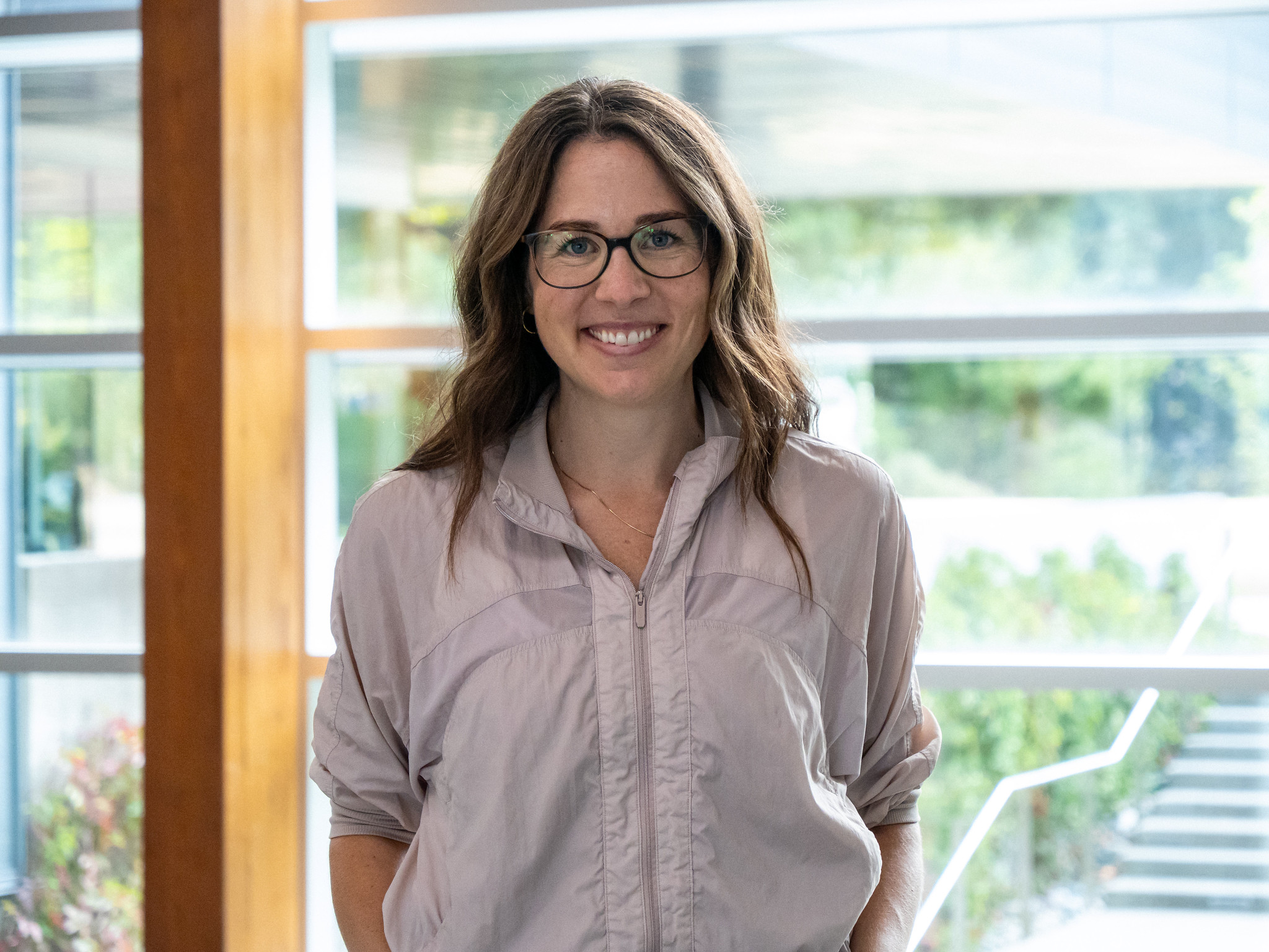
For Heather Campbell, who identifies herself as a settler of Austrian and Scottish descent, that realization began several years ago with a simple question.
What if people could learn the stories behind the names they see every day?
That question became the foundation of What’s in a Place Name?— a Stó:lō-led, UFV-supported initiative that combines Halq’eméylem language, Indigenous Sign Language, and community knowledge to help people better understand the places they call home.
Heather, a nursing instructor at the University of the Fraser Valley, said the idea grew after watching a video created by a member of Squamish Nation explaining the pronunciation and significance of local Squamish place names.
“I thought it would be awesome to have an engaging, youth-focused video series for the local Stó:lō place names we see every day, so we can all practise Halq’eméylem, understand, and show respect,” she said.
For Heather, the project has always been rooted in accountability.
Learning the names of the land — and learning to say them correctly — is one small but meaningful way of acknowledging the communities, histories and languages that continue to shape the Fraser Valley.
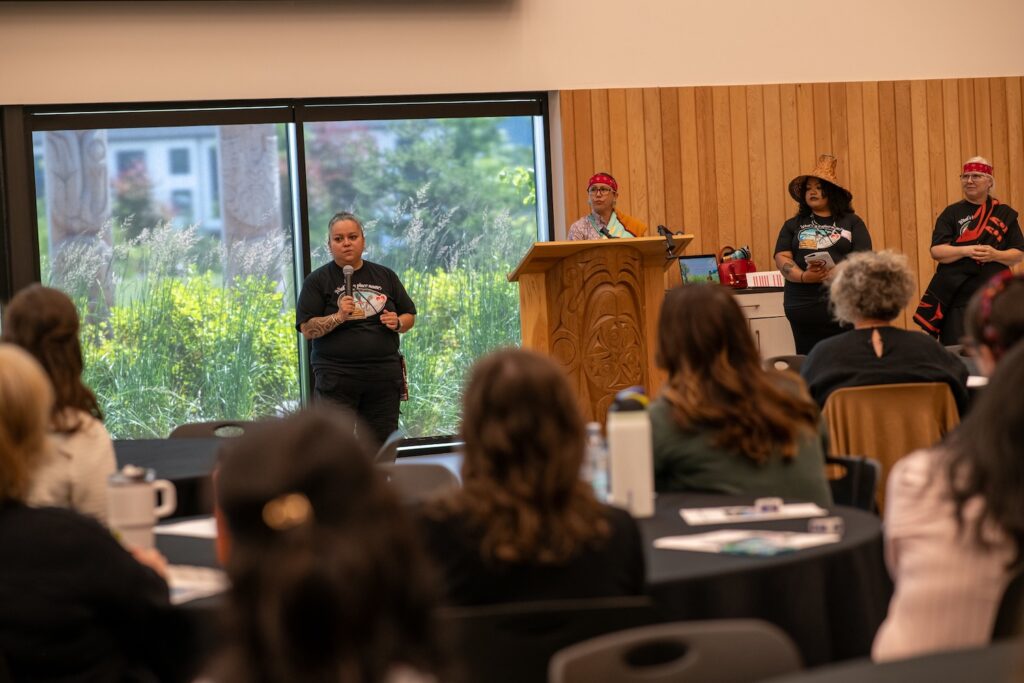
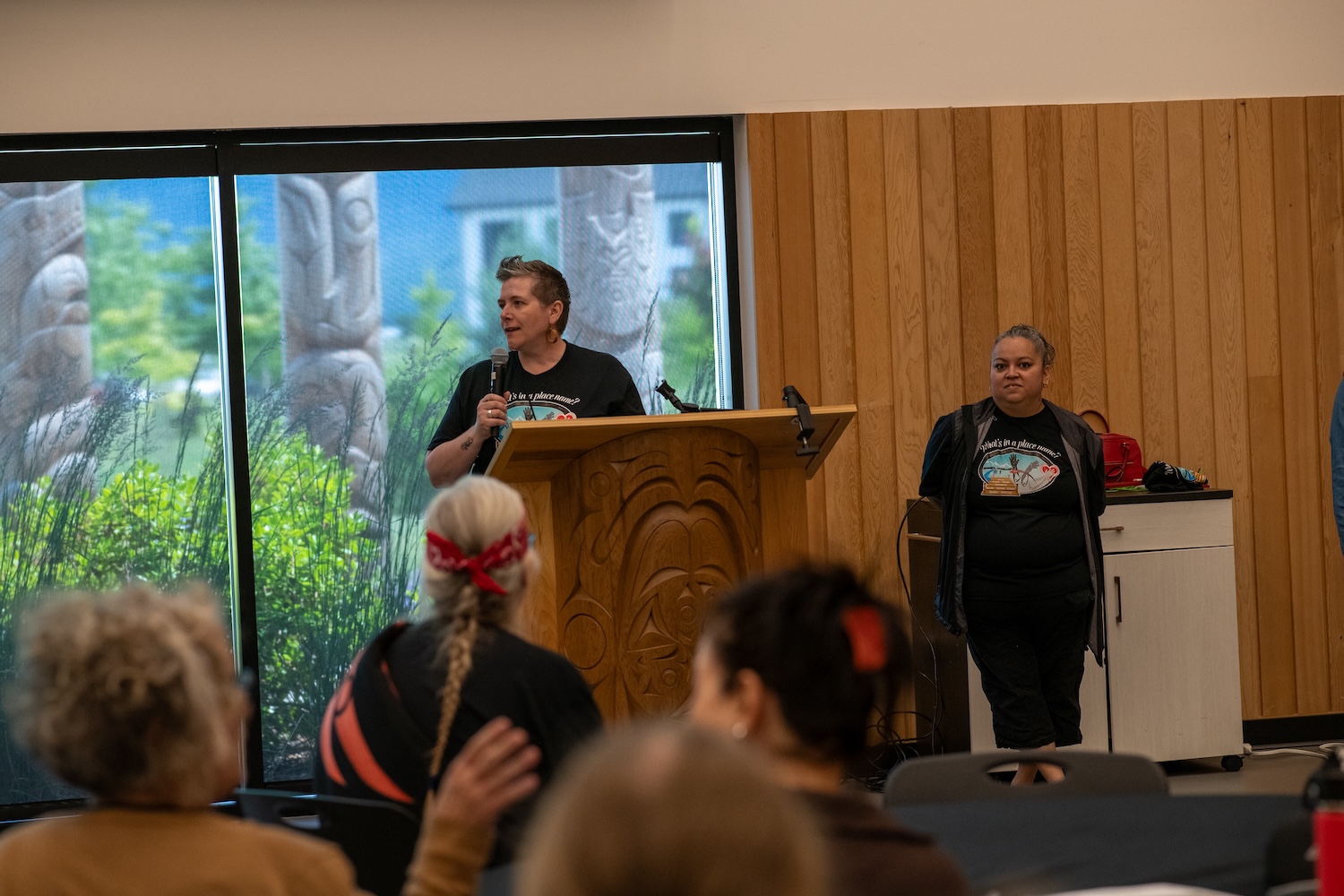
That idea brought more than 80 educators, students, Elders, youth, Knowledge Keepers and community leaders together at The’í:tselíya Health & Community Centre on June 4 for a day of knowledge-sharing, conversation and reflection.
Throughout the gathering, presentations introduced participants to the first phase of the project, including educational videos, local place names and Indigenous Sign Language developed in collaboration with Stó:lō community members, including Leanne Joe (from Ch’íyáqtel), Paula Wesley (from Sqʼewqéyl), Jazmine Horne (from Yeqwyeqwí:ws), and Autumn Malloway (from Leq’amel).
But while the presentations explained how the project works, it was the witness reflections that revealed why it matters.
In Stó:lō tradition, witnesses are called to observe important work and later share what they have seen and heard with their communities, ensuring that knowledge is carried forward through people.
One after another, witnesses stood to reflect on the day’s conversations.
Siyámíya Dianna Kay spoke about the generations of Elders who worked tirelessly to preserve Halq’eméylem through decades of policies that attempted to erase Indigenous languages, cultures and identities.
“Our language is sacred because it’s a part of this land,” she said. “Our language is a human interpretation of what the Earth is telling us.”
Her words were echoed in different ways throughout the afternoon.
For Josephine Charlie, the gathering stirred memories of sitting quietly with her great-grandfather as he communicated using Indigenous Sign Language — something she rarely saw acknowledged publicly while growing up.
“Today,” she said, “seeing young people embrace language, songs, and culture so openly offers hope.”
That hope was a recurring theme.
Chief Darcy Simon Paul described today’s youth as “the eighth generation” — the first generation of healing after generations of cultural loss. Through projects like What’s in a Place Name?, he said, young people are not only learning the language but helping carry it forward for those who will come after them.
As the day continued, it became clear that the project is about much more than pronunciation.
It is about understanding why names matter.
Why a slight change in pronunciation can change meaning.
Why revitalizing Indigenous Sign Language is inseparable from revitalizing spoken language.
And why listening is often the first step toward learning.
As the gathering came to a close, UFV President James Mandigo reflected on St’et’il te Temexw Xwela ye Sqweltel (The Land is Lonesome for the Language) by Good Medicine Songs. Inspired by the teachings of Dr. Siyamiyateliyot Elizabeth Phillips, the song speaks to a simple but profound idea: the land longs to hear its language spoken.
After a day spent listening — to stories, teachings, language and community — Mandigo offered a simple reflection.
“The land is not as lonely anymore.”
But no one in the room suggested the work was close to finished.
Every place name learned, every conversation shared, every young person who picks up a drum, who speaks a word in Halq’eméylem or learns an Indigenous Sign Language sign becomes part of a much longer story—one that has endured generations of attempts to erase it, and one that continues to grow through the people choosing to carry it forward.
Those interested in learning more about the What’s in a Place Name? project, future learning resources or opportunities to get involved are encouraged to connect with Heather Campbell and the project team as the initiative continues to expand across Stó:lō communities.