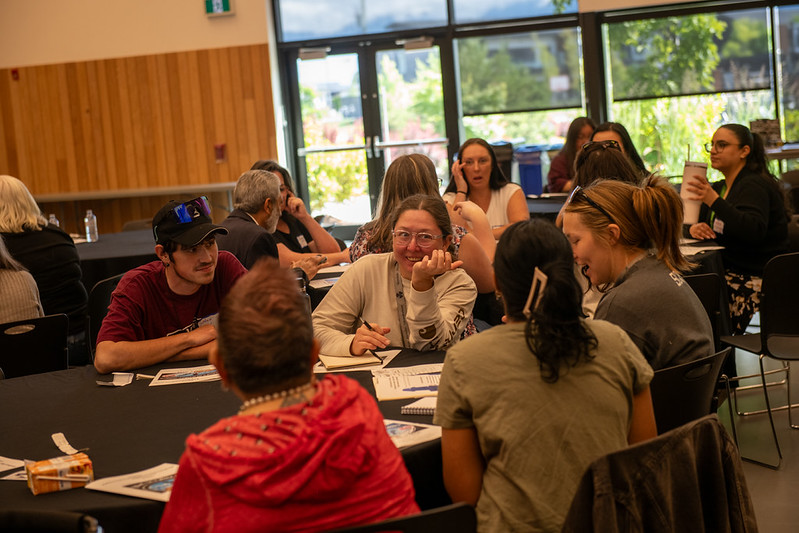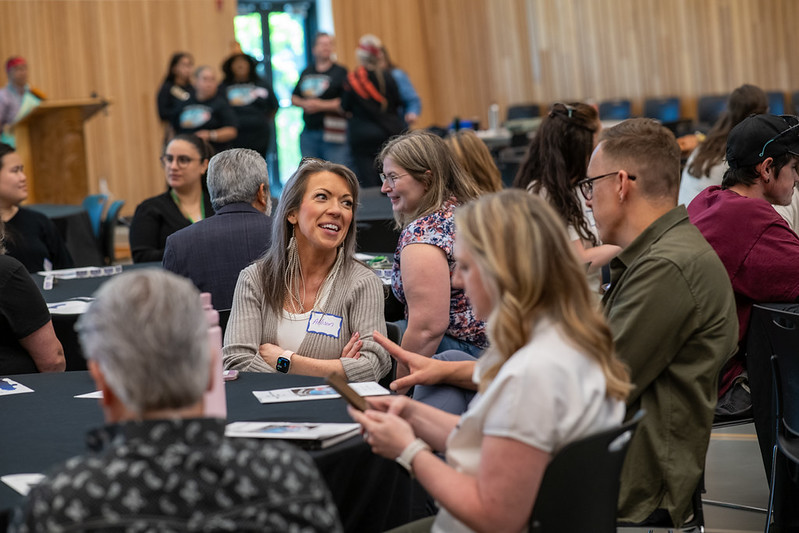
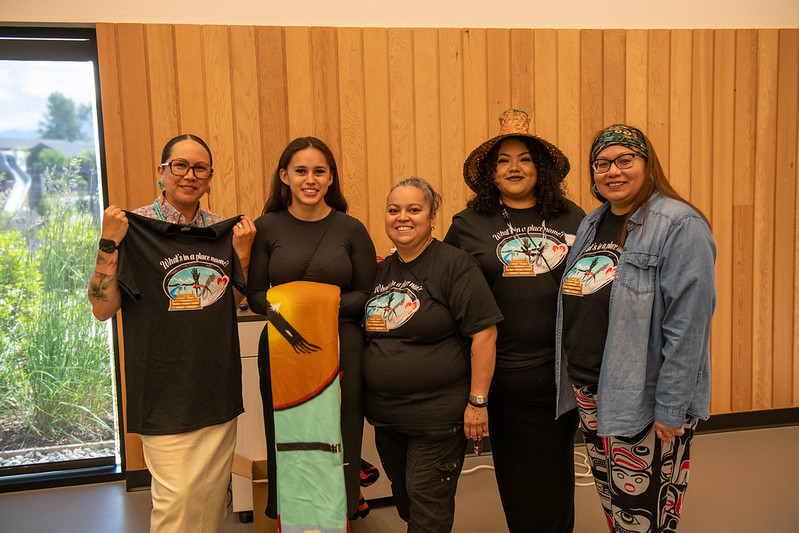
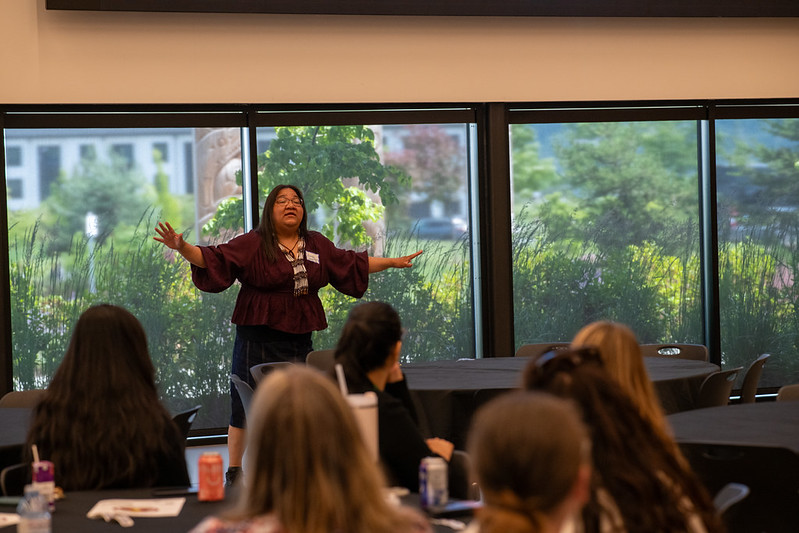
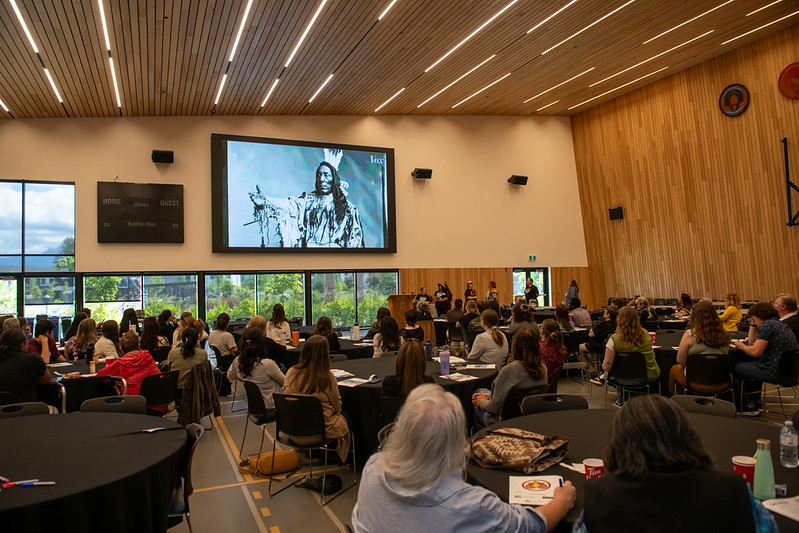
 On June 4, community members, Elders, youth, educators, and university partners gathered at the THE’I:TSLIYA Health and Community Centre (SAY Building) on Skowkale First Nation for What’s in a Place Name? A Gathering of Languages, Lands, and Learnings—a community-led event celebrating the vitalization of Halq’eméylem place names.
The gathering highlighted the deep cultural significance of Indigenous place names and their enduring connection to language, history, identity, and the land. Long before settler contact, Indigenous languages were spoken throughout the territories now known as Canada, carrying generations of knowledge, teachings, and relationships with the natural world. While colonial policies and language suppression disrupted the everyday use of many Indigenous languages, communities continue to lead meaningful efforts to reclaim and strengthen these languages for future generations.
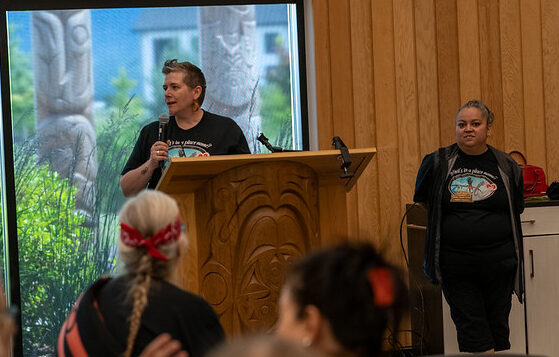 The initiative was developed by Heather Campbell, Project Director and nursing instructor at the University of the Fraser Valley (UFV), and is grounded in a Stó꞉lō-led, community-based approach. Inspired several years ago by a video about Squamish place names, Campbell envisioned an engaging, youth-focused resource that would help people learn the Halq’eméylem names they encounter every day, understand their meanings, and show respect for the language, communities, and land. For Campbell, learning to correctly pronounce Indigenous place names is one meaningful way of acknowledging the histories, cultures, and languages that continue to shape the Fraser Valley.
This Stó꞉lō-led, university-supported initiative recognizes that place names are much more than geographic labels. They reflect stories, histories, and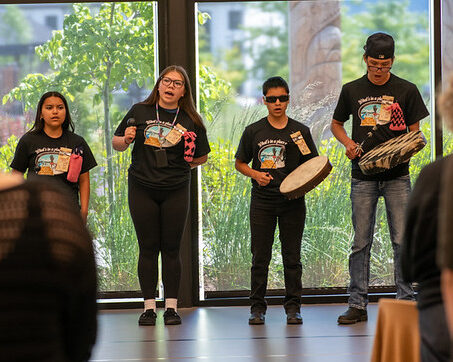 ways of understanding the land that have been passed down through generations. By promoting the accurate pronunciation and use of Halq’eméylem place names, the project contributes to cultural recognition, respect, celebration, and safer, more inclusive educational and community spaces.
One of the project’s highlights is the creation of a series of short educational videos featuring Stó꞉lō youth demonstrating the correct pronunciation of Halq’eméylem place names alongside Indigenous Sign Language (ISL). Developed collaboratively with a Halq’eméylem language teacher and an Indigenous Sign Language expert, these videos showcase a unique approach to language revitalization. Unlike American Sign Language (ASL), Stó꞉lō Indigenous Sign Language expresses place names and relationships to the land without relying on English, offering a culturally grounded way of sharing knowledge across generations.
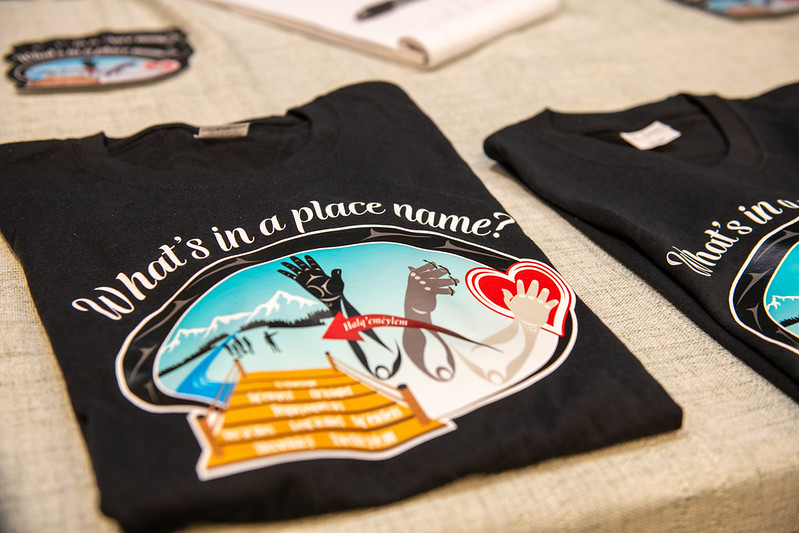
 Attendees also learned about the creative work being undertaken by a local Stó꞉lō artist, who is designing artwork inspired by the project for promotional materials and wearable art, helping to further celebrate and share the significance of Halq’eméylem language and culture.
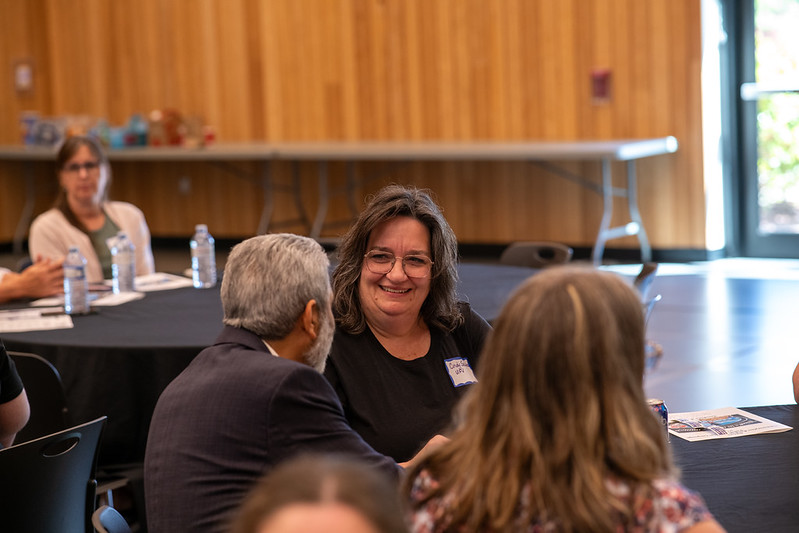
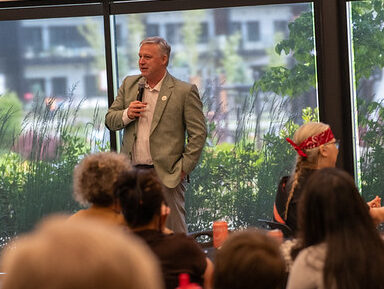
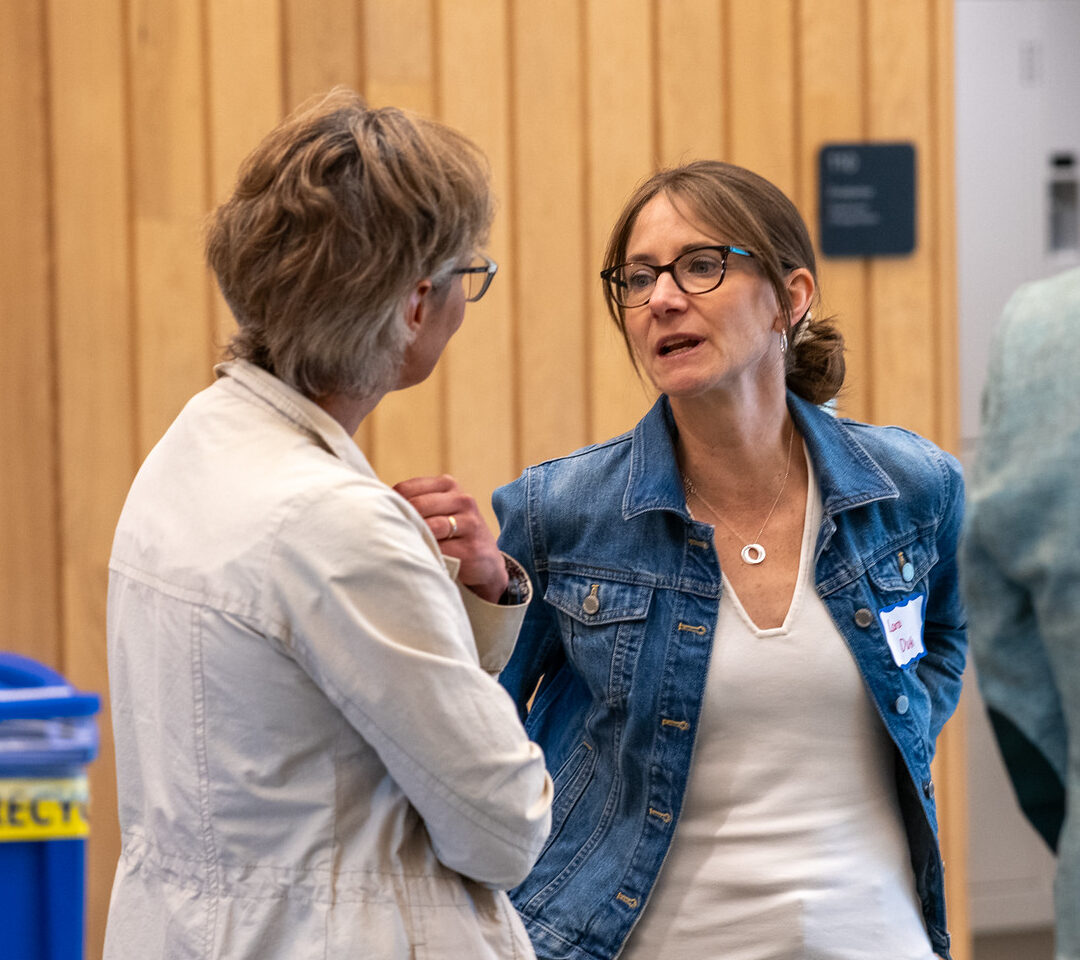
During the gathering, participants enjoyed the premiere of several educational videos and had the opportunity to engage in conversations about language revitalization, Indigenous research methodologies, and the importance of community-led knowledge sharing. The event reflected the collaborative spirit of the project, bringing together Stó꞉lō community members, youth, the University of the Fraser Valley, and regional partners in support of shared learning and reconciliation.
Guided by Indigenous research methodologies and participatory approaches, the initiative places community governance and Stó꞉lō protocols at its centre while complementing existing language and place-based initiatives.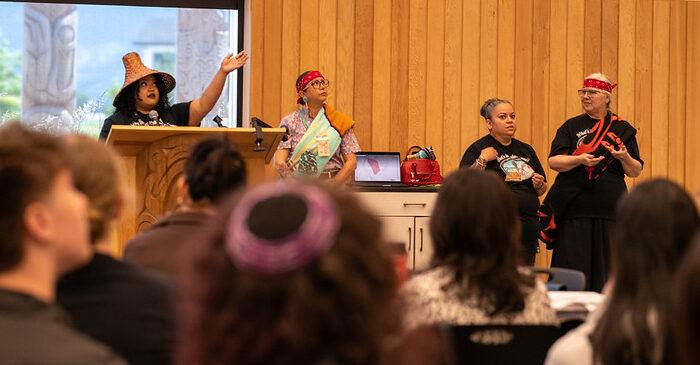
The event served as a meaningful reminder that every place name carries a story. By learning, pronouncing, and honouring these names, we strengthen connections to the land, acknowledge Indigenous knowledge systems, and contribute to the ongoing work of language revitalization. Together, these efforts help ensure that Halq’eméylem language, culture, and teachings continue to thrive for generations to come.