
UFV Continuing Education builds pathways for learners and communities
There is no single path to a University of the Fraser Valley education.
UFV welcomes learners from all walks of life and at every stage of their journey, with many finding their path through the School of Continuing Education (CE).
With a focus on people who may be switching careers, learning new skills in pursuit of a promotion, or re-entering the workforce, CE offers short-term programs and micro-courses for adult learners looking to complete their education quickly.
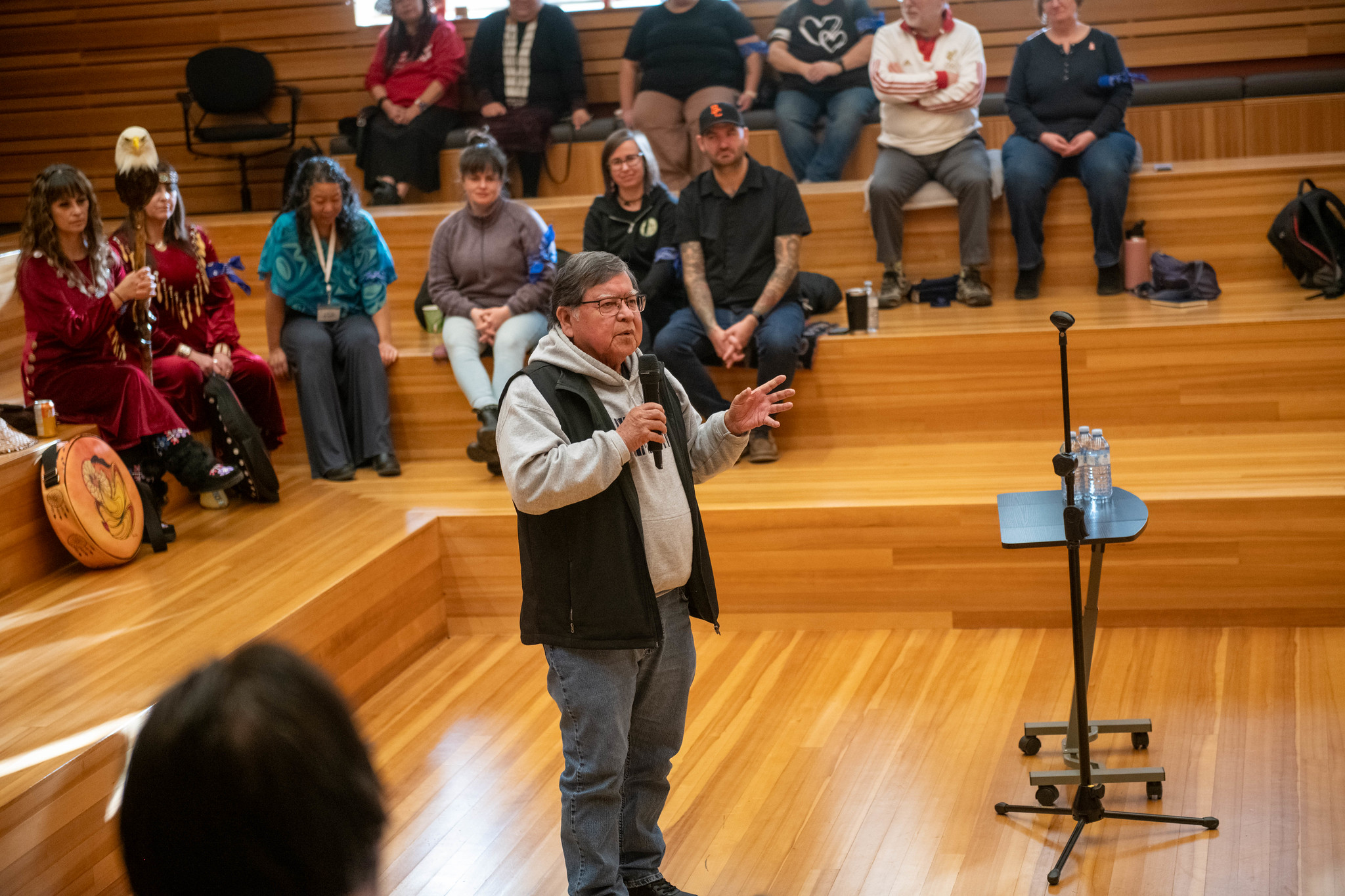
UFV highlighted the role of Continuing Education in connecting learners and communities on Sept. 22, when it launched its 2026 Community Report at the Clearbrook Centre in Abbotsford. The location was fitting: Clearbrook is CE’s main hub and a place where UFV’s commitment to accessible, community-responsive education is put into practice every day.
“We may have an 18-year-old who’s just finished high school and is starting their post-secondary journey, trying to discover their passion and lay the foundation for a future career,” says CE director Carolyn MacLaren. “But we may also have a 44-year-old engineer who’s relocated from Serbia and is returning to the classroom after many years away. We may have a newly single parent seeking financial stability, or someone who’s been downsized and suddenly needs to upgrade their skills.
“Whatever brings them here, they all have one thing in common: a desire to keep learning.”
The Clearbrook Centre in Abbotsford is the main hub for CE, which offers a wide range of courses. CE also works with community partners to develop customized curriculum, recently working with Métis Nation British Columbia (MNBC) to build a management skills program for its next generation of leaders.
“We also work closely with Archway Community Services,” Carolyn says. “For the past three years, we’ve provided a tailored English language training program for students recruited by Archway. These students earn university credits that are admissible to many post-secondary programs.
“We’ve also developed a Red Cross first-aid course specifically for the immigrant community, revising materials to make sure they’re culturally sensitive and accessible to students who come to us with diverse cultural and linguistic backgrounds.”
In 2022, CE was recognized by the Association of British Columbia Teachers of English as an Additional Language for developing this program.
CE works alongside employers, industry and community organizations to ensure programs reflect evolving workforce demands and prepare graduates with relevant, job-ready skills. Last June, CE celebrated the graduation of 378 students.
“I feel enormous pride in that because I know what it took for many of them to get there — the challenges and barriers they had to overcome to walk across that stage,” Carolyn says. “We love being part of their success, and we are proud of what so many of our graduates accomplish through hard work, with the support of our amazing team.
“Their success reflects UFV’s commitment to being a student-ready university — one that meets learners where they are and helps them take the next step.”
Important CE work is also happening at the Hope Centre, a modern, accessible facility serving the needs of a traditionally under-served community.
Guided by a comprehensive Community Needs Assessment produced in 2024, CE has worked to better understand the community, identify gaps in educational opportunities and determine how those gaps can be addressed.
In September 2025, CE launched the first in-person bookkeeping course at the Hope Centre. The Preparation for English for Academic Purposes program was also introduced to help English language learners prepare for university.
“We’ve also focused on recruiting instructors who are based in Hope, helping ensure the programs we offer are sustainable over the long term,” Carolyn says.
The Hope Centre has also become a gathering place for community organizations. Cedar Strong, a community service organization supporting people who are struggling or in transition, uses the building for meetings. The centre has hosted job recruitment fairs and created opportunities for people to connect with services and supports.
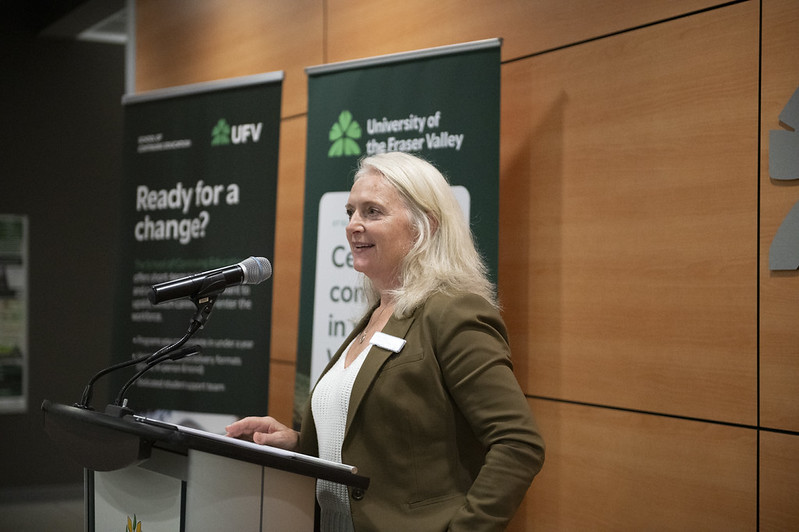
“It is not sufficient for us to simply identify needs. Action is required,” Carolyn says. “We are taking action, building a Hope Centre that serves and supports as many members of the community as possible.”
The effort has not gone unnoticed by Hope Mayor Victor Smith, who sees educational opportunities as an important part of the community’s future.
“As community leaders, there is a responsibility to remain committed to supporting individuals in achieving their educational goals,” Victor says. “This work should not be viewed solely through the lens of institutional survival, but rather through the lens of long-term community success. The benefits of that commitment will be realized in the future through the investments made today.”
Carolyn says CE will continue to listen to the communities it serves, work alongside valued partners and make education accessible to people wherever they are in their lives.
“There are countless different reasons someone might come through our doors,” she says. “Our job is to make sure that when they do, there is a pathway waiting for them.”