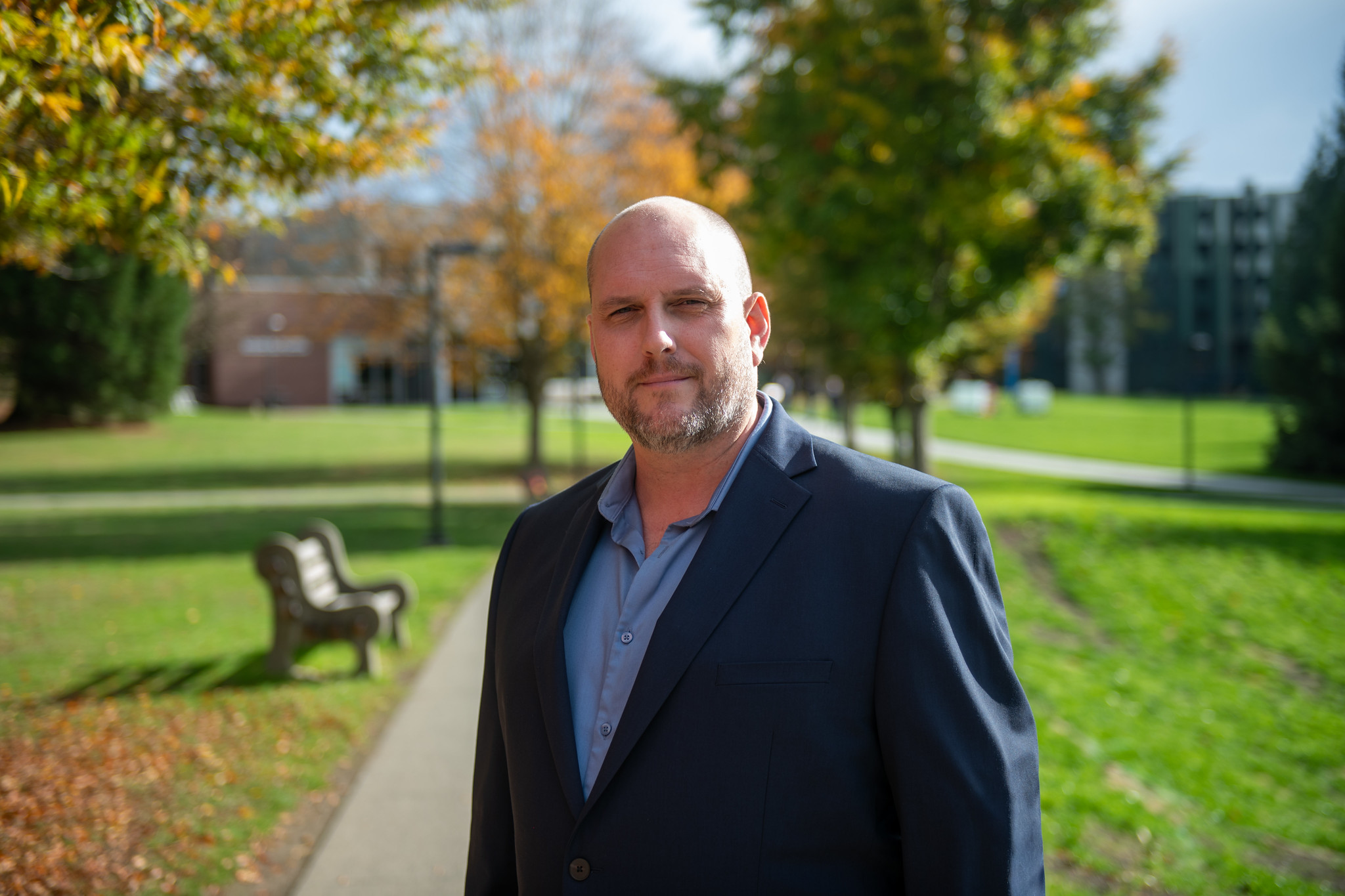

A UFV instructor’s sabbatical project becomes a global scoreboard solution
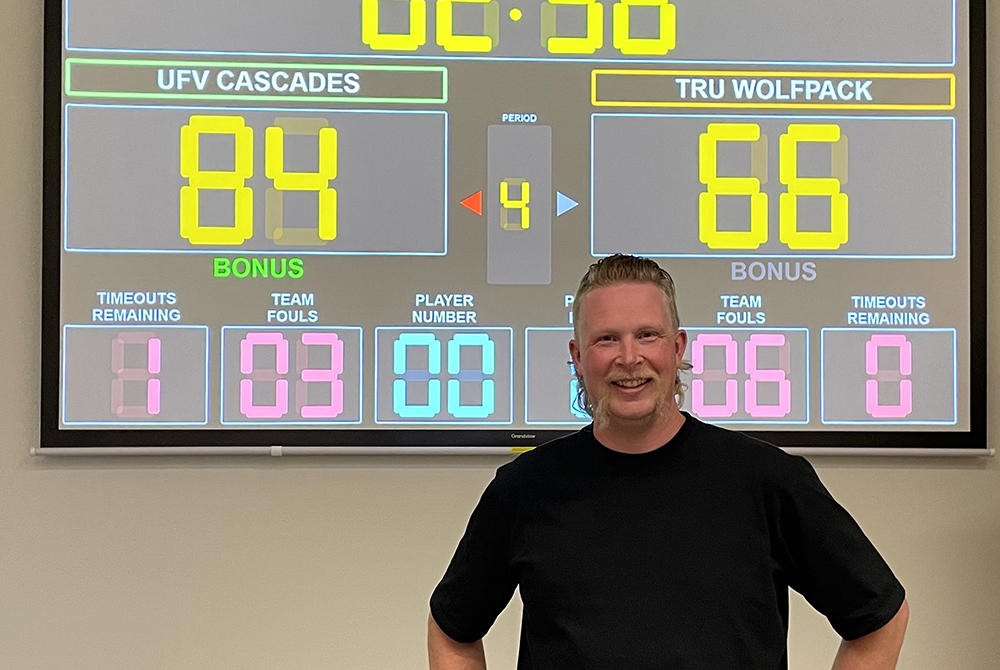
A University of the Fraser Valley instructor’s free basketball scoreboard software is finding a home in gymnasiums around the world, helping schools and small clubs in the Philippines, across Africa, and elsewhere.
When Joel Feenstra, an associate professor in UFV’s electrical program, took sabbatical leave last year, he enrolled in several computer programming courses. His original goal was to reimagine some of the classroom and lab activities involving live electrical wiring as safer, online learning experiences.
“All of my students are so familiar with first-person video games, I thought I could create virtual labs,” he says.
But another idea soon caught his attention.
Joel’s son plays high-level basketball, and years spent watching games in gymnasiums gave him a firsthand look at the limitations of many scoreboard systems.
“I was looking at how cheesy some of the setups are, and I saw a lot of places that needed something better,” Joel says. “Some schools are still running scoreboards that are decades old, if they have one at all.”
Drawing on his new programming skills, Joel created FreeScore, a free basketball scoreboard program that runs on a Windows PC or laptop connected to a projector or television.
After putting in some long days over the summer, Joel completed FreeScore in August and uploaded it to SourceForge, a platform for hosting and distributing software.
“I wanted to make something that was free for use for all of the small clubs, teams, and schools that can’t afford commercial dedicated scoreboards,” he explains. “A full scoreboard setup can easily run between $20-40,000 with installation, and that can be way too expensive for a lot of groups who’d love to have a scoreboard at their games.”
FreeScore includes game scoring and timing, a shot clock, team and player statistics, customizable displays and keyboard shortcuts. It can also export game logs and statistics to Excel spreadsheets.
Best of all, it doesn’t require an internet connection or network to operate. It’s particularly valuable in communities where traditional scoreboard systems are prohibitively expensive, but computers and televisions are more readily available.
Soon after uploading FreeScore, Joel began noticing downloads from Southeast Asia, particularly the Philippines. He was also contacted by Giants of Africa, a non-profit organization that uses basketball to create opportunities for young people across the continent. The organization asked whether it could distribute FreeScore to its partners and clubs.
“I’ve always been a huge fan of open source, and I take a lot of joy in sharing stuff,” Joel says. “I’m happy that I was able to put it out there for free, and I’ve had random emails from coaches in the Philippines thanking me for making it available. When I saw countries in Southeast Asia, Africa, and South America on the download list, having something I created being out there globally is a pretty cool feeling.”
Joel is considering one new way to expand FreeScore’s reach.
“I have been approached about making a Philippine version, and that may be a winter project,” he notes. “There are lots of Filipino basketball players in town who are happy to help me with translation.”
The software has attracted enough interest to earn a Rising Star Award from SourceForge after reaching 100 downloads in a month for the first time.
And FreeScore’s impact isn’t limited to communities overseas.
Joel and Teresa Kisilevich, UFV dean of Applied and Technical Studies, approached UFV’s Information Technology Services team about finding a new purpose for older computers.
“The processing power needed to run FreeScore is very low. It doesn’t need anything modern,” Joel says. “IT Services generously released several old laptops and desktops, and those are currently being built and distributed as portable scoreboards to local non-profit basketball clubs and schools.
“So, UFV is not only providing a boost to groups in the community through the software that’s been developed, but also recycling hardware that still has useful life in it.”
Story by Eric Welsh – eric.welsh@ufv.ca