
UFV researchers find blueberries may help trail runners pick up the pace
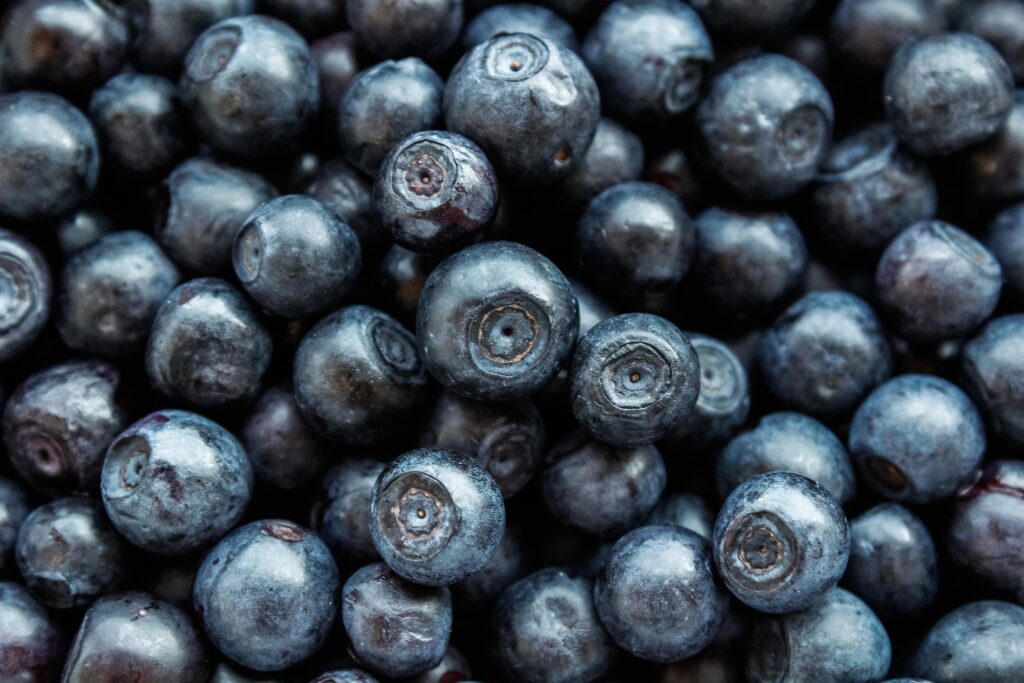
For competitive trail runners, every second can be the difference between winning a race or finishing a heartbeat behind the victor. Two University of the Fraser Valley professors are now suggesting that blueberries may be useful in shaving those precious seconds off your time.
Dr. Luisa Giles and Dr. Jason Brandenburg recently completed a study examining whether highbush blueberry supplements can improve trail-running performance. Their work was funded through a grant from the US Highbush Blueberry Council and was published in the International Journal of Sport Nutrition and Exercise Metabolism.
Trail running, particularly when running downhill, can cause muscle damage, inflammation, and oxidative stress — a process that can damage the body’s cells. All three are strongly linked to fatigue.
For their study, they recruited nine runners from the local recreational trail-running community. Those volunteers agreed to take either a freeze-dried blueberry powder supplement or a placebo for seven days (three times a day) before running a challenging 22.2-kilometre simulated race.
After a break, the runners switched treatments and repeated the process, meaning each participant eventually ran the course once after taking blueberries and once after taking the placebo.
It was a big commitment for participants, but Luisa says recruitment wasn’t that difficult.
“Trail runners are just really into what they do, and they don’t mind a bit of a suffer-fest,” she says. “But if some blueberries might help them to suffer less or go quicker, they’re keen.”
During each race, runners were asked to run as fast as possible, with Jason, Luisa, and UFV students monitoring their heart rate and perceived effort throughout the run. They also measured muscle, lung, and cardiovascular function, along with signs of physical stress or tiredness before each race, immediately afterward and again 24 hours later.
Those who took the blueberry supplement finished the 22.2-kilometre course about seven and a half minutes faster — without the exercise feeling harder or putting additional strain on their bodies.
The study establishes that blueberries help. As for why and how, Luisa has a theory that requires further study.
“Supplementation may reduce inflammation and oxidative stress, which helps to maintain muscle blood flow and to enhance the ability of muscles to contract with force. Also, carbohydrates are important for exercise, and when your stores run out, you start to get tired,” Luisa explains. “If you use them quickly, you get tired quickly and hit what we call an exercise bonk. Hypothetically, what blueberries may be doing is opening that tap at a slower rate, using those carbohydrates a bit slower so you get to that bonk later in the race.”
Post-race recovery also seemed to benefit from the blueberries.
When participants took the placebo, there was a reduction in muscle performance, measured by jump height, which didn’t occur with the blueberry supplement.
This is a topic Jason and Luisa have delved into before, publishing three previous studies along these lines.

“We didn’t see any differences in those studies, but they were all lab-based,” he says. “The exercise our participants performed may not have been stressful enough for the blueberry supplementation to have a meaningful impact. Maybe if we increased the stress, they might prove to be beneficial, so we took our work into the field.”
The interdisciplinary nature of UFV played a role in Luisa and Jason investigating blueberries in the first place. Both professors work primarily at UFV’s Chilliwack campus, which is also home to the Agriculture department.
“I did a presentation on beetroot juice for UFV Research Day a few years ago, and someone from Agriculture was there who suggested blueberries for their strong connection to the Fraser Valley,” says Jason, a recreational trail runner whose research focus is sports nutrition. “Given my interests, and where I live and work, it was a natural fit for me.”
Luisa, who’s also a trail runner, shares his interest in sports nutrition.
“The most common fuel source for trail running is carbohydrates,” she says. “Some people eat a banana and someone else might prefer one of those goop gels. They may also use a lot of things they’ve heard about on social media, whether proven or not, so it’s important to give them an option like blueberries that may have some scientific validity.”
Luisa says she’s been delighted to talk about the results of this work in her classroom, and she says there were several students involved in the study, either as participants or assistants.
“Students were integral to the project’s success. Given the logistics of the study, the number of lab and field measurements, and the time involvement, it wouldn’t have been possible without the help of UFV students,” Luisa says. “Jason and I were really thankful to have lots of keen kinesiology students who were excited to be involved.”
Story by Eric Welsh — eric.welsh@ufv.ca.